

Get paid by your customers faster following these seven practical tips. They will help keep your business afloat even in the most critical situations.
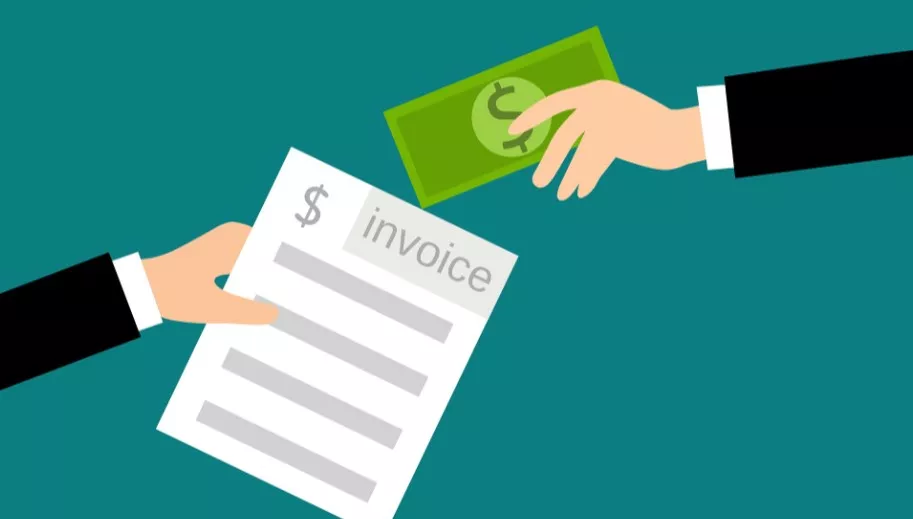
You love to get paid by your customers faster, and that’s a fact. However, it’s challenging to make the payment process fluid.
Asking your customers or clients to hasten the remittance may sometimes hamper the business relationship. But on the flip side, the lingering payments in the pipeline can also threaten your operations.
So, how to handle this tricky situation?
Our comprehensive article covers seven basic as well as some advanced tips to help you receive your payments earlier. These methods won’t hamper your relationship with your customers. On the contrary, they’ll help your business go further.
Let’s check the seven options below.
7 Practical and Effective Tips for Faster Payment from Customers
Mobilise your billing system to ensure faster payments from your clients since it helps your business run smoothly. It also consolidates your business relationship with your customers or clients for a long time.
Don’t shy away from adopting modern ways to expedite your billing and payment processes. The digital platforms and their advancement have significantly paved the way for faster business transactions and payments.
Numerous companies are adopting cutting-edge payment services such as FinXP and the like to strengthen their businesses. What makes these options valuable is their time-sensitivity, effectiveness, and transactional variances.
However, let’s check the seven conventional and modern ways to convince your clients or customers to quickly clear their names from the arrear section.
- Make a Prompt Invoice System
How fast should your invoicing process be? Well, according to most business analysts, business owners, and accounts executives, the billing process should be completed as soon as the service is rendered to your client. Because time has a price.
But a good practice for this process is to wait 2-3 working days after the service is provided before sending your invoice (paper or electronic) to the client.
The simple understanding here is that both parties, the client and your business, are dealing with innumerable issues daily. Those tasks include service, production, office maintenance, communication, accounts, billing, and events. So, it’s easy for things to fall through the cracks if they’re not addressed when they’re fresh.
Hence, billing or invoicing your client immediately after the service is the best practice to ensure they are aware of their due payment.
It’s an effective system of receiving your earnings in due time.
- Make Short and Precise Terms
Don’t create and send vague invoices to your clients. They should contain specific terms and information to let the customer or client know the importance of quick payment.
Make sure you put together the following information on your invoice:
- The date of invoice/billing at the top-right or top-left corner of the invoice.
- Mentioning the client/customer/business name very precisely.
- Mentioning the services/products rendered or delivered to the client in detail (consistent with the work order or voucher).
- Being specific with the foreign currency rate if it’s an international service.
- Adjustment of any pre-service advance or deposit.
- A note of net30 or net10.
A net30 term is a note requesting payment within thirty days of invoice. But you can always reduce that payment interval to fifteen or ten if you want your remittance quicker.
But does it really smoothen the payment process?
Well, the actual scenario is like this—your specific note may not get you paid within the expected time. But it’ll surely push the accounts clerk or executive to put your bill in the queue. Hence, the possibility of getting your earnings soon increases.
- Estimate to Move on with Invoice Disputes
You’ve ensured that your customer or client has received their due service. Still, you may face arguments and conflicts regarding some portion of the payment.
Even some outstanding bills may be disputed by the client when the payment time comes. There will be doubts, disagreements, and prolonged discussions.
How to resolve it in advance so this problem doesn’t occur in the first place?
There’s one way to do it—estimation.
Many businesses nowadays have stripped this conventional practice off their grids. However, this old practice is gold, and you should incorporate it into your business.
An estimation is similar to an invoice, except that you’ll issue it to the client before the actual product or service is delivered. It’s related to the work order. It allows your client or customer to have a precise idea of the future payment.
The amount in the estimation paper could be the exact amount mentioned in the final invoice. But it can be different too. Nonetheless, the benefit of doing this is that it helps ensure that the customer is well-prepared to make the actual payment when the time comes.
It puts you in a safer position to receive your service fee quickly and without dispute.
- Activate Multiple Payment Platforms
Cash is the most reliable and satisfactory mode of payment, no doubt. However, setting up multiple options for receiving payments can give your business wings.
So, let your business fly by incorporating as many payment methods as possible while ensuring maximum convenience for your clients.
Not every client or customer has the same cash liquidity to pay you upfront. Hence, setting your business with multiple payment options can put your customers in a better position to pay you faster.
Below are a few alternative payment options you can integrate with your business:
- Cards: Credit card, debit card, etc.
- Digital or online payment gateway (payment link through emails, site portals, etc.)
- Internet/online banking
- Mobile money or e-wallet payments
- E-cheque
- Cryptocurrencies (may not work for all clients due to security issues)
The above options are a few of the modern payment facilities that are effective and money-saving at the same time. You can set up the one most suitable for your business depending on its nature and payment frequency.
But there’s no reason to stay limited to the options we’ve laid out. You can explore more options to accelerate your receivables while maintaining a smooth partnership with your clients.
- Put Your Ongoing Service on Hold
It’s a strict measure indeed. But you can’t run your business on uncertain dates and promises from the client’s end. There will come a time when you must politely refuse to provide ongoing services.
Leveraging your service or product for a short period to receive the due payments is a wise move. You can either halt the ongoing service to your client or refuse to take on a new work order unless all previous dues are cleared.
Such a decision may hamper your relationship with your clients. But there’s a way to reconcile with your clients regarding this issue.
If you add this condition to your business terms and conditions before going into the service, the clients won’t be shocked to have their deliverables stopped.
Besides adding such a clause to the terms and conditions sections, use gentle reminders, so your clients can take proper measures to make the overdue payment.
- Offer Incentives for Early Payment
Getting incentivised is something everyone loves. It’s not so different with the clients as well. An incentive program in your business can make a big difference.
You can offer incentives to your clients for two types of payments:
- an early payment
- a full deposit in advance
If your incentive is lucrative or something that clients may find useful, it might work just fine. Offering a 1-2 percent discount for early or full payment in advance won’t harm your business; instead, it’ll keep your cash flow running.
It’s way better to get a discounted payment than borrowing money on interest to keep your business operational.
So, what incentives can you offer your loyal customers or clients?
Here’s a list:
- An extra unit of product(s)
- A free service
- A minimal discount on the full or advance payment
- A testimonial of the client’s transactional credibility
- A social media shoutout
- A discount on the client’s next bill
Giving incentives can get you paid faster while strengthening the business relationship simultaneously.
- Offer Discount on Subscriptions
If you have an online business where your customers can purchase products or receive services (online book reading, blogs, financial consultancy, online courses, etc.), offer them a discounted monthly subscription.
Customers love to get discounted monthly subscriptions since they’re getting a handful of products or services in a single deal. It’s economical and practical for them.
Discounting monthly subscriptions is similar to what you would do for an advance cash payment. Only the mode of payment differs since most monthly subscriptions are paid by customers through online portals.
You can take other contemporary businesses applying this method to keep their business running.
Bottom Line
Now that you’ve got your hands on the seven methods to get paid by your customers faster, you should equip your business with suitable options.
It may seem hard initially to introduce some of the new changes and make them palatable for your customers. But it’ll be worth it in the long run.
We’ve included the most effective tips that can put you in the best position to achieve quick results after implementation. But you can always explore more potential options to accelerate your customers’ payment process.
More By This Author:
Using SEC Form 13F to Track Warren Buffett’s Trades
Webull: A Great New Investment App Or "Cr"app?


Comments
Log in or sign up to join the conversation.