

Gold (XAU/USD) remains firm around the $4,600 region as markets assess inflation trends and Federal Reserve policy expectations. Reduced expectations for another interest rate increase continue to support the precious metal. Lower Oil prices have eased inflation concerns, while developments surrounding the Strait of Hormuz have influenced market sentiment. Markets will now focus on upcoming US economic data and Federal Reserve Chair Kevin Warsh’s Jackson Hole speech for the next direction.
Gold Remains Firm as Markets Assess Interest Rate and Fed Policy Outlook
Gold is consolidating around the $4,600 region as markets assess the latest inflation data and Federal Reserve expectations. Markets continue to reduce expectations for a Federal Reserve rate hike at the September policy meeting. The latest PCE report showed that headline inflation remained stronger than expected. However, core PCE matched market forecasts. The data had little impact on interest rate expectations, helping gold remain firm around current levels.
Federal Reserve policy expectations continue to influence gold prices. The CME FedWatch Tool indicates that markets see a greater than 60% probability that the Federal Reserve will keep interest rates unchanged at its next meeting. These expectations remained largely unchanged after the PCE report. A lower probability of another rate increase could continue to weigh on Treasury yields and the US Dollar. This environment could provide further support for gold if upcoming economic data does not strengthen the case for tighter monetary policy.
Improving risk sentiment has reduced demand for safe-haven assets. Reports of progress surrounding the Strait of Hormuz have eased some geopolitical concerns, while lower Oil prices have reduced inflation worries. Strong earnings from Nvidia have also supported sentiment across financial markets. Markets will now focus on upcoming US economic data for fresh signals about economic conditions. Federal Reserve Chair Kevin Warsh’s Jackson Hole speech will also attract attention as markets assess the outlook for interest rates.
Gold Price Extends Rally Following Descending Wedge Breakout
The gold chart below shows a large descending wedge that has shaped price action over recent months. Gold reacted to both trendlines several times as the formation gradually narrowed. Price later gained strength and reached the upper trendline. This area became an important resistance zone after limiting several earlier recovery attempts.
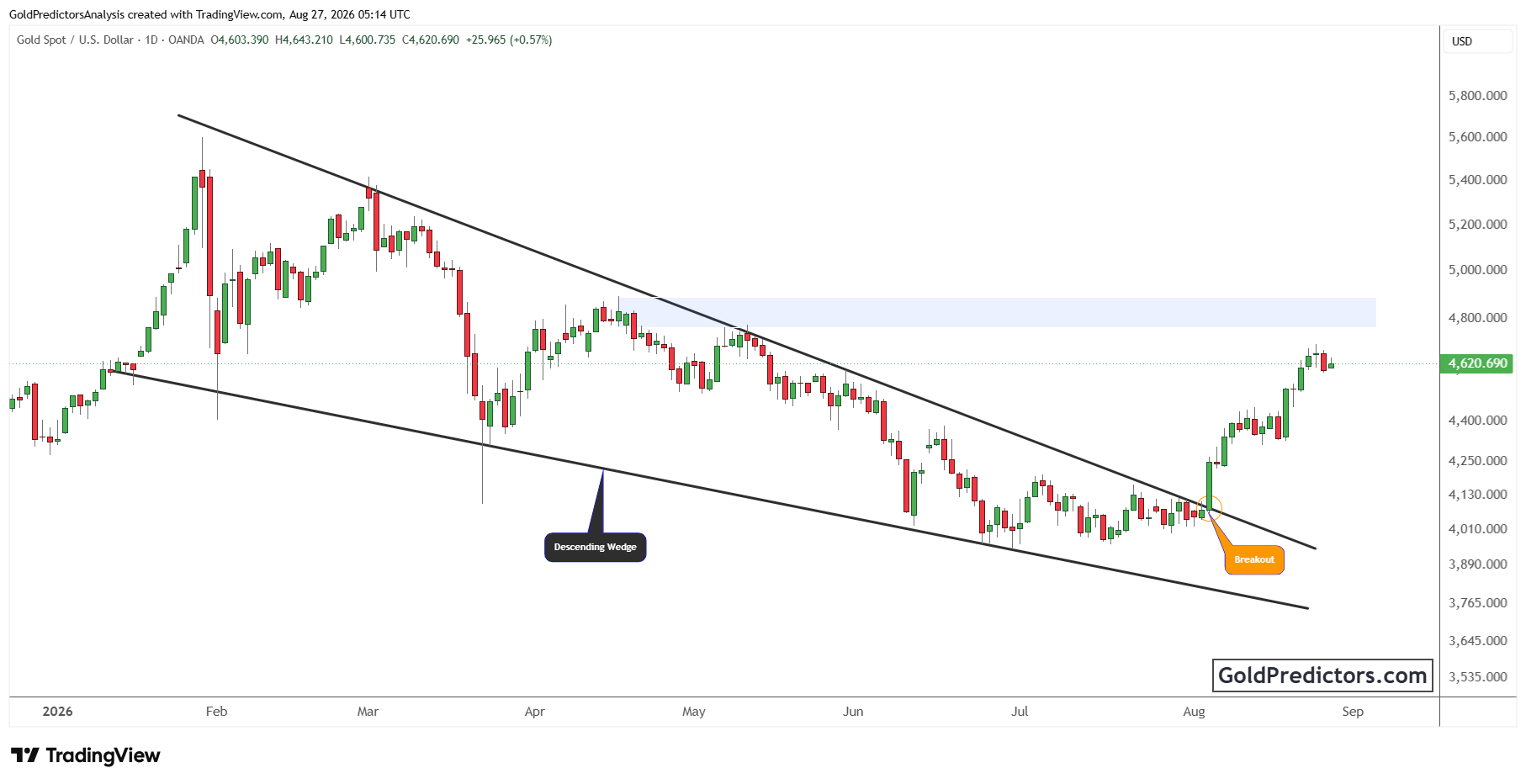
Gold eventually broke above the upper trendline and completed the wedge breakout. Price gained strength above the former resistance line and extended its advance toward the $4,690 region before turning lower. Despite the decline, gold remains well above the broken trendline, keeping the breakout structure intact. The former resistance trendline could now provide important support if weakness continues.
The next important resistance area lies around $4,750–$4,850. Further strength could bring this zone into focus and increase the possibility of a move toward higher levels. A clear break above this resistance could support additional gains. However, rejection from the area could lead to renewed weakness and bring the broken wedge trendline back into focus as support.
Conclusion
Gold remains steady as markets assess changing interest rate expectations and the outlook for Federal Reserve policy. Lower Oil prices have eased inflation concerns, while developments around the Strait of Hormuz have improved market sentiment. The technical outlook also remains positive after gold broke above the wedge resistance trendline. The $4,750–$4,850 region remains the next important resistance area. A break above this zone could support further gains, while the broken wedge trendline could provide support if weakness returns. Markets will now focus on upcoming US economic data and Kevin Warsh’s Jackson Hole speech for the next direction.
Comments
Log in or sign up to join the conversation.