


Gold (XAU/USD) fell toward $4,150 on Monday as rising oil prices increased fears of another Federal Reserve rate hike. Tensions between the US and Iran have kept the Strait of Hormuz in focus, but high Treasury yields and a firm dollar continue to weigh on gold. The decline has brought the price back to a rising trendline that has supported it since late 2023. A daily close below $4,150 would raise the risk of a move toward $3,900. A recovery above $4,300 would ease the pressure. The US jobs report on Friday could help decide the next move in gold.
Gold Price Faces Pressure from Rising Oil Prices and Fed Rate Bets
Gold remains under pressure as rising energy risks and firm interest-rate expectations keep the price near key support. The renewed tension between the United States and Iran has increased energy risk. Iran is waiting for a US response to its proposal concerning the Strait of Hormuz. Any disruption in the strait could restrict oil flows. A Houthi attack on Riyadh added to the concern. Higher energy costs can revive inflation pressure, making it harder for the Federal Reserve to ease policy. That backdrop can weigh on gold as it lifts yields and the US dollar.
The expectations for Federal Reserve policy are adding pressure. Markets are pricing a 66% probability of an October rate increase, according to the CME FedWatch Tool. Higher rates raise the opportunity cost of holding non-yielding gold and can improve demand for dollar-based assets. The direction for gold will remain sensitive to changes in yields and policy expectations.
Attention now turns to US labor releases, ending with Friday’s Nonfarm Payrolls report. Firm employment figures could strengthen the case for another rate increase. Weaker data may reduce those expectations and ease pressure from yields and the dollar. Federal Reserve comments will also matter. Meanwhile, US-Iran negotiations could affect oil prices and safe-haven demand. Gold’s response will depend on whether geopolitical demand outweighs the negative effect of higher rates and a firm dollar.
Gold Price Tests Long-Term Support as Downside Risk Increases
The gold chart below shows a long-term rising trendline that has supported the broader price structure for several years. Gold formed a series of higher lows as the price continued to move higher above this trendline. Several pullbacks approached the rising support before price turned higher again. This repeated reaction confirmed the importance of the trendline to the overall structure.
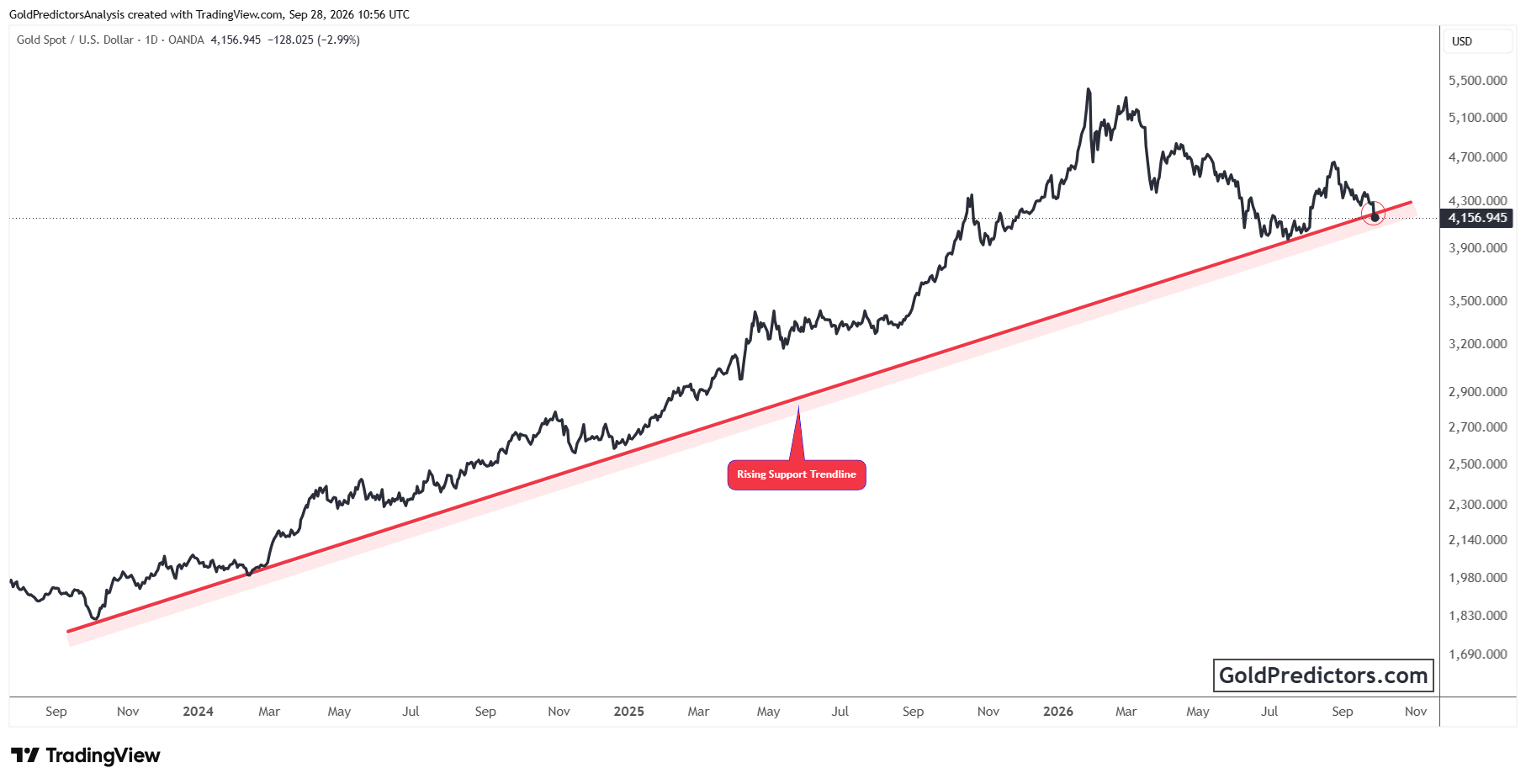
Gold later climbed toward a major peak before entering a broad correction. Price declined from the high and gradually moved back toward the long-term rising trendline. Gold is now testing this support as the correction continues. The reaction around this area remains important for the broader structure.
Gold is currently trading around $4,150. A move higher from the trendline could ease the current pressure and keep the rising structure intact. However, a clear break below this support could increase the risk of a deeper correction toward lower support areas.
Gold Outlook: US Jobs Data and Fed Policy Could Shape the Next Move
Gold enters NFP week at an important turning point. Oil-related inflation risks, hawkish Federal Reserve expectations, firm yields, and a stronger US dollar currently weigh on the outlook. However, geopolitical uncertainty could still generate safe-haven demand. The $4,200 area and rising trendline remain the main technical focus. If the gold price holds this support, it could enable a move toward $4,300 and higher resistance. A sustained break below it would signal a deeper correction. Labor data, Federal Reserve remarks, US-Iran developments, and daily closes around the trendline should guide the next forecast.



Comments
Log in or sign up to join the conversation.