

Gold (XAUUSD) prices remained steady as ongoing geopolitical tensions supported safe-haven demand, while expectations of tighter US monetary policy limited further gains. The conflict between the United States and Iran continued to shape market sentiment. At the same time, inflation concerns and a stronger US Dollar kept pressure on gold. Attention also remained on whether gold could clear a key resistance level and strengthen its near-term outlook.
Gold Price Remains Stable as US-Iran Tensions Offset Fed Rate Hike Expectations
Gold prices posted a slight recovery as geopolitical uncertainty continued to support demand for safe-haven assets. The United States carried out another round of military strikes against Iranian targets, while Iran responded with retaliatory attacks on US military bases and allied infrastructure across the Gulf region. These developments kept regional tensions elevated and maintained demand for defensive assets. Comments from US Secretary of State Marco Rubio suggested that diplomatic talks with Iran remained possible. This reduced expectations of a further escalation and limited gold's recovery.
At the same time, inflation concerns continued to support the US Dollar. Disruptions to oil shipments through the Strait of Hormuz raised fears of tighter global energy supplies. Yemen's Houthi movement also announced a maritime blockade against Saudi Arabia, adding to concerns about higher oil prices. Rising energy costs could increase inflationary pressure and encourage the Federal Reserve to maintain a restrictive monetary policy for longer.
Higher interest rate expectations continued to limit gold's upside because the metal does not provide interest income. According to CME FedWatch data, markets currently price in an 83% probability of a US interest rate hike before the end of the year. A stronger US Dollar also reduced the appeal of gold for international buyers. Although geopolitical risks continued to support prices, expectations of tighter monetary policy kept gold below key resistance and prevented a stronger recovery.
Gold Price Analysis: Triangle Pattern Keeps XAU/USD at a Critical Turning Point
The gold chart below shows a large symmetrical triangle that has developed after a strong long-term advance. The lower trendline continues to provide rising support, while the descending upper trendline has acted as a strong resistance area. This structure reflects a period of consolidation following a powerful bullish trend. Price has gradually moved toward the apex of the triangle, making this a key area to watch.
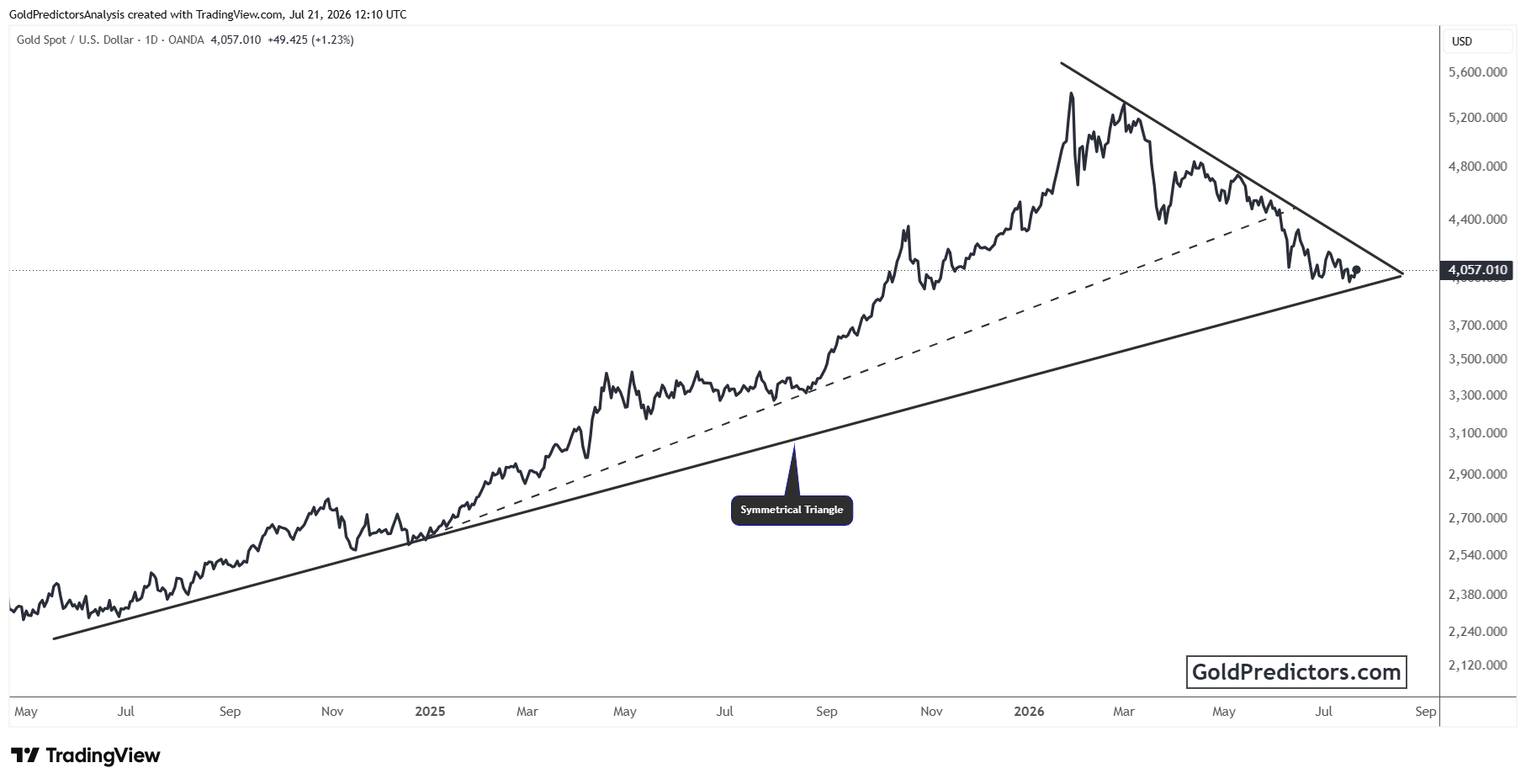
Gold is now trading near the apex while remaining below the descending resistance trendline. Previous advances have repeatedly stalled beneath this level, highlighting its importance as a key resistance area. Meanwhile, the rising support trendline continues to hold and has prevented a deeper decline. This ongoing balance between support and resistance suggests that the broader long-term outlook remains constructive despite the current consolidation.
The narrowing triangle suggests that volatility could increase as price approaches the apex. A confirmed move above the descending resistance would strengthen the long-term bullish outlook and confirm improving market sentiment. On the other hand, a break below the rising support would weaken the current structure and increase the risk of a deeper correction.
Gold Outlook: Fed Rate Expectations and Triangle Pattern Guide the Next Move
Gold continues to receive support from geopolitical uncertainty, but higher US interest rate expectations and a stronger US Dollar continue to limit further gains. The market remains focused on developments between the United States and Iran and the Federal Reserve's policy outlook. From a technical perspective, gold remains trapped inside a symmetrical triangle near a critical decision point. A confirmed breakout from this pattern is likely to determine the next major trend for gold prices.



Comments
Log in or sign up to join the conversation.