

Gold (XAUUSD) prices extend their decline as expectations for additional Federal Reserve interest rate hikes support the US Dollar. Markets are increasingly pricing in tighter monetary policy, with investors looking toward a possible rate increase in September. Attention now turns to the US Core PCE inflation report, which could influence the Federal Reserve's next move and determine the near-term direction for both the US Dollar and gold prices.
Gold Price Extends Decline as Fed Rate Hike Expectations Support US Dollar
Gold continues to weaken as markets anticipate at least two Federal Reserve interest rate increases before year-end. Investors now anticipate the first increase could arrive as early as September. Higher interest rate expectations continue to support the US Dollar. This creates a difficult environment for gold because the metal does not generate interest income. Elevated inflation and the Federal Reserve's hawkish tone have supported this trend and kept pressure on precious metals.
The US Dollar continues to draw support from expectations of steady economic growth. Demand for defensive assets has remained firm despite easing tensions in the Middle East. Although oil prices have retreated from their recent highs, investors remain cautious about global developments. Uncertainty surrounding future trade routes and international negotiations continues to influence broader market sentiment and supports demand for the US Dollar.
Attention now shifts to the US Core Personal Consumption Expenditures (PCE) Price Index for May. This report remains the Federal Reserve's preferred measure of inflation. A stronger-than-expected reading could strengthen expectations for additional interest rate increases. This could keep the US Dollar supported and maintain downward pressure on gold. A softer inflation report could reduce tightening expectations and provide temporary relief for the metal.
Gold Price Analysis: Breakdown below Rising Trendline Increases Bearish Pressure
The gold chart below shows a well-defined rising trendline that guided price action from late 2023 onward. Price consistently respected this trendline as higher lows developed over time, reflecting sustained upward momentum. This structure supported the broader advance and maintained the long-term bullish trend. Gold later accelerated sharply and reached new record highs before entering a corrective phase as momentum began to ease.
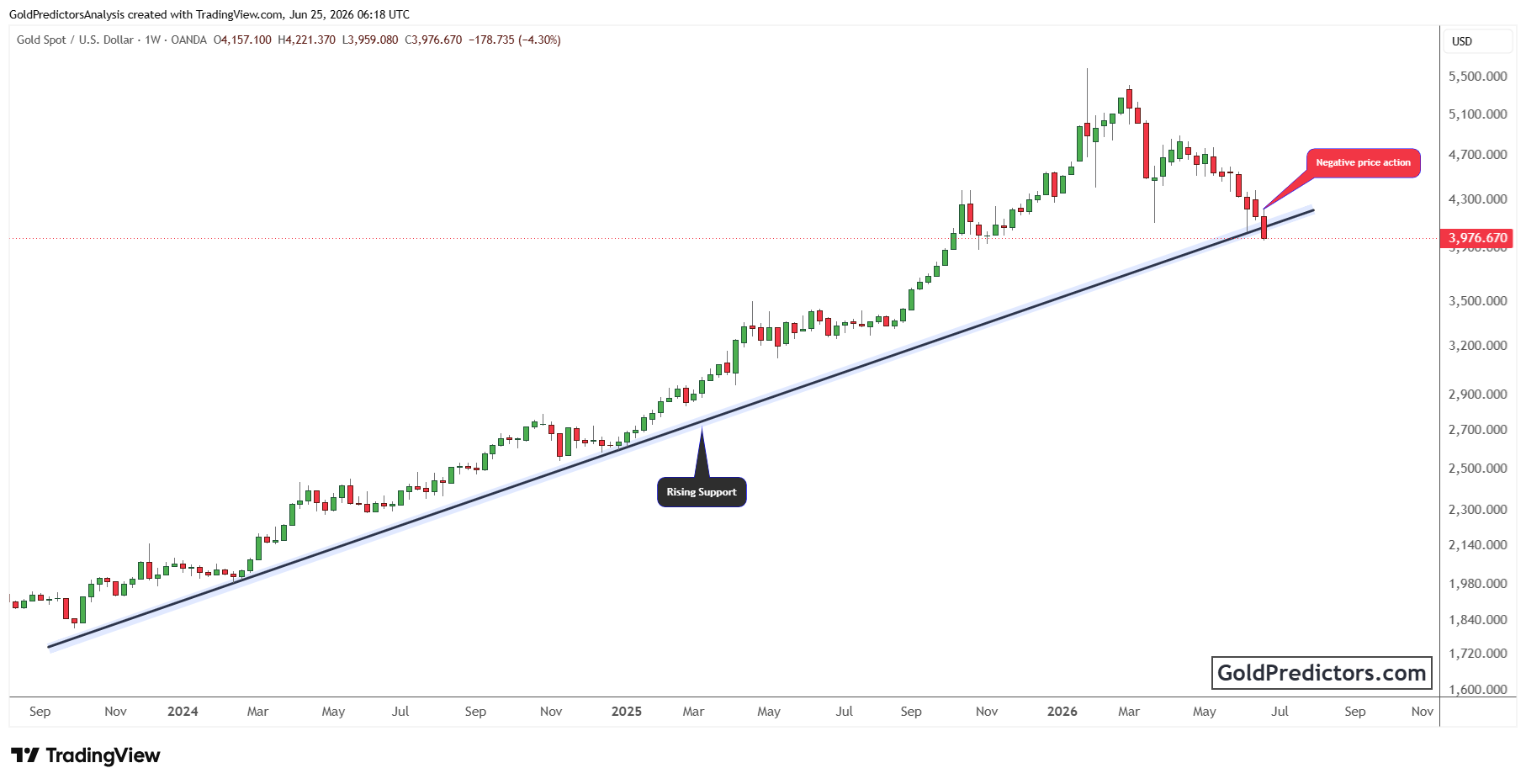
Recent price action shows a shift in momentum. Gold is slipping below the long-standing rising trendline that previously acted as support. This move suggests that the long-term upward structure is weakening. Price has also moved below the important $4,000 level and is now trading near the $3,950 region. The chart highlights this development as negative price action, reflecting increasing downside pressure.
The latest weekly candle reflects strong selling pressure as gold trades around the long-standing rising support line. Continued weakness could turn the trendline into resistance during any recovery attempt. Momentum continues to weaken as downside pressure builds. The next direction will depend on whether gold regains the rising trendline and moves back above $4,000 or continues declining toward lower support levels.
Gold Outlook: Strong US Dollar and Weakening Momentum Keep Gold under Pressure
Gold continues to trade lower as monetary policy expectations keep pressure on the precious metal. The upcoming US Core PCE inflation report could play a key role in shaping market expectations and determining gold's next move. From a technical perspective, the break below the long-term rising trendline and the loss of the $4,000 level signal weakening momentum and increasing downside risks. Gold must reclaim these levels to improve the outlook. Otherwise, prices may continue to drift toward lower support zones in the weeks ahead.



Comments
Log in or sign up to join the conversation.