

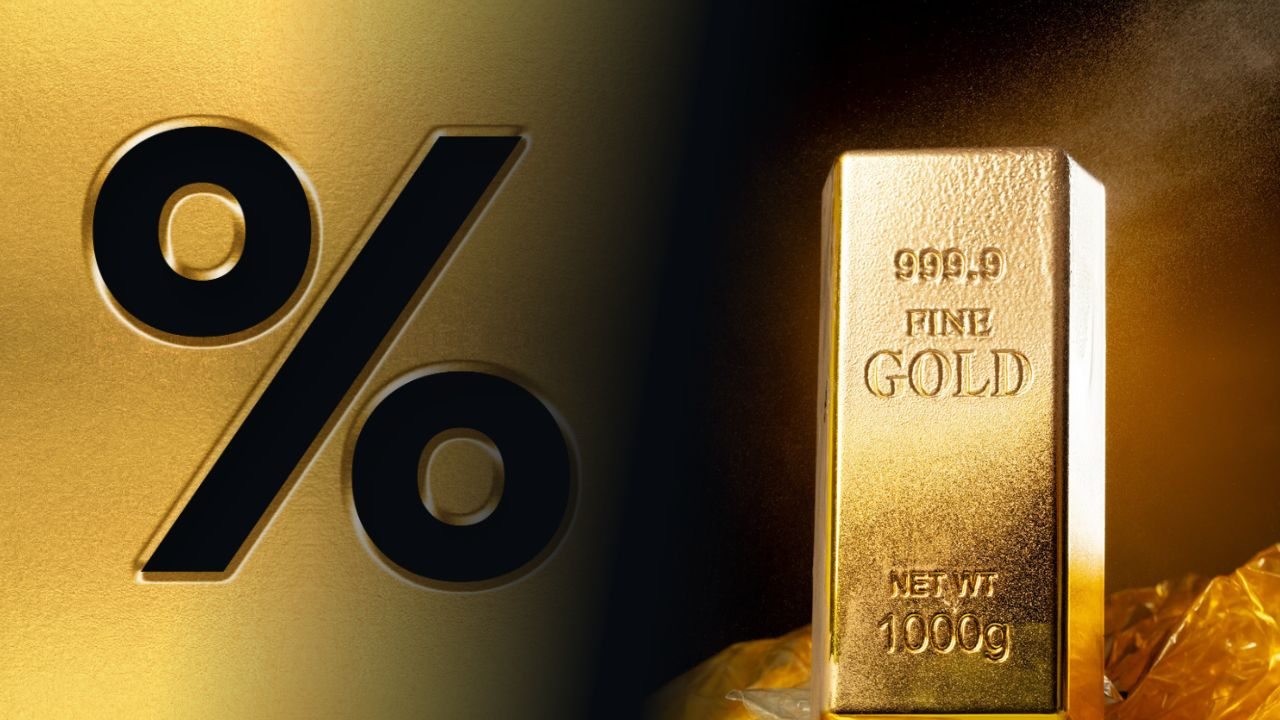
Most gold buyers focus on spot price, but that's not what you actually pay. The difference is called the gold premium, and it can quietly add hundreds of dollars to your purchase.
Any upcoming gold investor must understand how premiums affect a gold purchase. More than that, premiums also affect the resale value of several gold assets. That affects the liquidity of your asset.
We will explore what a gold premium is, the main types of premiums, and how premiums work differently for buyers and sellers in this guide.
What is a Gold Premium?
Gold premiums are prices that apply to a gold item beyond the spot price. For those unfamiliar with these terms, the gold spot price determines how much one troy ounce of gold is worth. It is the baseline price for any and all gold bullion items.
You can determine how much you pay in premiums with the following formula:
Gold premium = retail price - melt value based on spot
For example, let's say the current spot price of gold was $4,000. You are looking at an American Gold Eagle coin and see that the coin is selling for $4,370.
Gold premium = $4,370 - $4,000
In that example, you would get $370.
That's a pretty significant markup from the spot price. So, where does that price come from? Is it just there to help the precious metals exchange turn a profit?
Generally, that is not the case. Premiums cover several essential costs, including:
Minting and fabrication costs
Distribution fees
Credit card fees
Market demand
Dealer spread
Notice also in that description that we used an American Gold Eagle coin. That matters because different types of precious metals investment assets charge different premiums. Coins and rounds often have higher premiums attached than bars because they cost more to mint and fabricate.
Premiums can also differ depending on the product's size and the market conditions surrounding them. For example, larger bars like the kilo bar often have smaller premiums than 1 oz bars.
Gold Premium and Spot Price: Why the Extra Cost?
Gold does not reach the buyer as a raw, interchangeable lump of metal. By the time it becomes a coin or bar ready for retail sale, it has already passed through refining, assaying, fabrication, minting, packaging, shipping, and multiple layers of distribution. That entire chain adds cost, and those costs show up as a premium over spot.
Part of the premium reflects manufacturing and refining. Raw gold must be processed to a specific purity, then formed into bars, blanks, or finished coins.
If the product is minted bullion, there are added costs for striking, quality control, and protective packaging. Even simple bars require stamping, serializing, and authentication features. In other words, the premium is partly the cost of turning gold from a wholesale commodity into a viable tradable retail product.
Another portion comes from transportation, insurance, and storage. Physical gold is valuable, heavy for its size, and expensive to secure. Moving it from refinery to wholesaler to dealer adds real costs. Dealers also carry inventory risk, especially when prices move quickly.
Then there is dealer overhead and margin. Retailers have to cover staffing, security, compliance, payment processing, and operating expenses. The premium is not pure profit, but margin is built into it.
Some products also command extra premium because of recognition and trust. Well-known coins and bars are easier for buyers to verify and easier to resell. Finally, premiums can widen when retail demand surges or supply tightens. During strong buying waves, buyers are often willing to pay more to secure immediately available gold.
That is why spot is only the starting point. The premium reflects the real-world cost and market value of owning retail physical gold.
The Main Types of Gold Premium
Not all gold premiums are the same. Some are built into the product before it ever reaches a dealer. Others come from market conditions, branding, or the type of buyer willing to pay more. Understanding the different types helps explain why one gold product may sell just a few percentage points over spot while another carries a much steeper markup.
The first is the fabrication premium. This is the cost of turning raw gold into a finished retail product. It includes refining, assaying, minting, striking, stamping, packaging, and quality control. Even a plain bar has to be produced to a verified weight and purity. Coins usually carry a higher fabrication premium because they involve more design work, more precise minting, and more presentation value.
Next is the dealer premium. This is the markup added by wholesalers and retailers to cover overhead and earn a margin. Dealers have real costs, including security, payroll, storage, shipping, compliance, and payment processing.
This part of the premium is one reason the retail price of gold always sits above spot. In competitive markets, dealer premiums may stay relatively tight. In weaker or less transparent markets, they can widen.
A third category is the brand or recognizability premium. Buyers often pay more for products they already know and trust.
Gold from major sovereign mints or respected refiners tends to command stronger premiums because it is easier to verify and easier to resell. In that sense, part of the premium reflects market trust and resale demand. A more recognizable product often has a larger pool of future buyers.
Then there is the collector or numismatic premium. This goes beyond bullion value. A coin may trade far above melt because of rarity, condition, age, design, mintage, or historical significance. In those cases, the premium is driven less by gold content and more by collector demand. This type of premium behaves differently from standard bullion premiums and may rise or fall for reasons unrelated to spot gold.
Another important type is the market-demand premium. When retail demand surges, available inventory can tighten and premiums can expand quickly. This often happens during financial stress, supply-chain disruption, or panic buying. The underlying gold content has not changed, but immediate availability becomes more valuable.
There is also a convenience premium. Buyers sometimes pay extra simply because the gold is easy to access at the moment. Airport shops, tourist districts, gift-oriented retailers, and other high-friction settings often charge higher markups because convenience becomes part of the sale.
Finally, there is the fractional premium. Smaller gold products usually carry higher premiums per ounce than larger ones. That is because the same fabrication, packaging, and distribution costs are spread across less gold. A 1/10 oz coin usually costs far more per ounce than a 1 oz coin, even when both come from the same mint.
Taken together, these premium types show that “premium” is not one single thing. It is a mix of production cost, market structure, brand value, and buyer behavior.
Gold Coins vs Bars vs Rounds: How Premiums Differ
Gold coins often carry higher premiums because of legal-tender status, recognizability, and stronger retail demand. They also have much more intricate and artistic designs, which cost more to manufacture.
This table compares the premiums found in gold coins, bars, and rounds:
Product Type | Typical Premium | Best For |
|---|---|---|
1 oz Gold Bar | 2–5% | Cost efficiency |
Gold Coins | 4–10% | Liquidity |
Fractional Gold | 8–20%+ | Flexibility |
Gold rounds have similar pricing to coins. Rounds do not have the legal-tender status or recognizability of gold coins, as they are not produced by sovereign mints. However, they also have intricate designs that cost a lot to manufacture.
Gold bars often have lower premiums, especially larger bars. Bars have less intricacy in their designs, which makes them less expensive to refine. The bigger the bar, the more gold you get for the cost.
The takeaway: small gold products often carry higher premiums per ounce than larger products.
So, how can you find the best premium for your gold investment? The answer depends on your financial goals. If you want the lowest cost per ounce, you would likely prefer to buy a larger bar. A 10 oz bar might be a good place to start.
Coins tend to be good for resale. Their legal tender status makes them trusted assets, as they come with government backing. That gives investors a sense of security when they purchase these products.
Finally, there is collectibility. Several gold commodities can have collector value, including coins, rounds, and bars. However, collectible items tend to have higher premiums. They often do not make the best investments, but they can still bring some benefit to your portfolio.
How a Gold Premium Affects Buyers
Gold premiums affect buyers by requiring higher upfront acquisition costs. Lower premiums can improve your ounce accumulation efficiency. In simpler terms, this means that the item has more real gold value.
Often, if your goal is to hedge against inflation and secure your wealth, lower premiums are the better choice. However, there can be a caveat to that.
Higher premiums can still make sense for hedge investors when the premiums buy liquidity, trust, and resale value. That's why many investors still purchase gold coins, despite the higher premiums they bring. Because coins come from sovereign mints, they have excellent liquidity. Many investors see them as secure investments and are willing to pay higher premiums for them.
In contrast, large bars that have more gold value tend to have less liquidity than coins. They are still highly liquid, but they take longer to sell. In an emergency situation, you would likely have an easier time cashing out a gold coin stack than a large gold bar.
So, how can you decide what premiums are worth it? The best way is to evaluate premium charges in light of your expected holding period, the type of product, and your expected sale venue.
If you're trying to calculate the true cost of ownership, this formula can help:
True cost of ownership = premium paid - premium recovered + selling friction
How Gold Premiums Affect Sellers
Resale value of a gold product depends on several factors, including:
The product
Local supply and demand
The venue (precious metals exchange, coin shop, etc)
Urgency
Recognizable bullion may recover a part of its premium more easily than obscure pieces. For example, let's say you wanted to sell a Gold Canadian Maple Leaf coin and a Tree of Life round.
The Gold Canadian Maple Leaf comes from the Royal Canadian Mint, one of the most respected mints in the precious metals world. This mint uses state-of-the-art technology to ensure its products are secure and identifiable, making them very difficult to counterfeit. Many buyers around the world are willing to pay higher premiums for their products.
In short, if you're selling this coin, you can expect to recover at least some of its premium. In contrast, the Tree of Life round might have a beautiful artistic design, but it does not come with the same trust and prestige as the Maple Leaf coin. You are not as likely to recover the premium for this product as you are for the coin.
Something else worth considering that dealers, private buyers, and online marketplaces can all price the same item differently. It's worth looking around at what venue is most likely to give you the best price for your gold asset before you pick one to sell. Weigh your options to decide what will give the best balance of convenience and pricing for you.
Can You Recover a Gold Premium When You Sell?
Sometimes, but not always. A gold premium is not automatically lost on resale, yet it is never guaranteed either. Whether an investor recovers part of that premium depends on three things: the product, the buyer, and the selling venue.
The biggest mistake many buyers make is assuming all gold sells the same way. It does not. A dealer buyback price is usually the lowest benchmark because the dealer still needs room for margin, inventory risk, and resale spread.
A peer-to-peer sale can recover more premium because the next buyer may be willing to pay extra for a product that is recognizable, trusted, and ready to own. Numismatic resale is different again. In that case, value may depend far more on rarity, condition, and collector demand than on melt value alone.
That is why popular bullion products often hold a premium better than obscure ones. Widely recognized coins and bars from respected mints are easier to verify and easier to resell, so buyers are often willing to pay above spot for them even in the secondary market. In stronger retail markets, that resale premium may hold up quite well.
By contrast, generic pieces, novelty items, and high-markup tourist products often have weaker resale support because the next buyer may care only about gold content, not the story or packaging around it. Recognizable bullion may recover part of its premium, while inflated convenience markups often do not.
Urgency matters too. If an investor must sell quickly to a local shop, they may get little or none of the original premium back. If they have time to sell into a stronger retail channel, the outcome may be much better. So the right question is not, “Will I get my premium back?” It is, “Who will want this product from me later, and how will I sell it?”
How to Judge Whether a Gold Premium Is Worth Paying?
There are several ways to determine whether a gold premium is worth paying. First, ask whether the product is widely recognized. Gold coins or bars from reputable mints often hold instant recognition in the world of precious metals.
Next, compare the premium percentages, not just the dollar amount. What percentage of the total cost comes from the premium? That figure gives you a more objective view of whether the premium is worthwhile.
The next factor to consider is how you can capitalize on the item's liquidity. What is your resale path if you buy this item? Can you sell it locally at a coin shop? Or, will you have to resort to an online sale with a precious metals exchange?
Finally, avoid paying steep convenience markups unless there is a clear reason. Instead, take time to consider how your product can match your financial objectives.
Are you looking for low-premium gold accumulation? Is flexible resale ability more important to you? Or, is there a collectible upside to owning this item?
Questions like these can help you decide whether a premium is worth paying.
Common Mistakes Buyers Make With Gold Premiums
There are several common mistakes that buyers make with gold premiums. These include:
Looking only at the spot price
Ignoring premium percentages on fractional gold
Assuming every premium is recoverable
Assuming every premium is wasted
Buying in high-markup locations without comparing alternatives
Final Takeaways On Gold Premium Prices
A gold premium is factored into every gold asset you can purchase. That's not a bad thing; it just means you have to figure out what premiums you are willing to pay.
The gold products with the lowest premiums tend to be gold bars. If you want the most ounce gain for the least cost, these are often the best place to start. However, gold products with higher premiums, like coins, can also have advantages. Sometimes, those premiums can buy liquidity for you and make resale easier.
In the end, the gold premium is where many investors quietly lose money. Focus only on spot price, and you miss the real cost of ownership. Understand premiums, and you gain an edge most buyers never develop.

Comments
Log in or sign up to join the conversation.