


Gold (XAUUSD) continues to face headwinds as escalating geopolitical tensions and rising inflation shape market sentiment. The growing conflict in the Middle East has increased uncertainty across financial markets, while stronger U.S. inflation data has raised expectations of tighter Federal Reserve policy. At the same time, gold has weakened technically after breaking below a major long-term support trendline. These developments have shifted attention toward key support levels and the potential for further downside in gold prices.
Gold Faces Growing Pressure from Inflation and Geopolitical Uncertainty
Gold remained under pressure and hovered near the $4,000 region despite escalating tensions in the Middle East. The conflict intensified after the United States launched a fresh round of strikes on Iran. President Donald Trump warned that additional military action could follow if no agreement is reached. Iran responded by claiming attacks on military bases in Kuwait, Jordan, and Bahrain following the latest US strikes. These developments increased uncertainty across global financial markets.
The situation became even more serious after Iran announced the complete closure of the Strait of Hormuz. Iranian officials also claimed that two vessels in the waterway had been targeted. Meanwhile, US Central Command stated that its latest military operations in Iran had been completed. In addition, Israel issued civil defense warnings following launches from Lebanon toward northern Israel. These events raised concerns that the conflict could expand further and prolong instability across the region.
At the same time, economic data from the United States added another layer of pressure on gold. Annual Consumer Price Index inflation rose to 4.2% in May, marking the fastest pace since April 2023. The stronger inflation reading increased expectations that the Federal Reserve could raise interest rates again later this year. Higher oil prices linked to the Middle East conflict also increased concerns about future inflation pressures. Investors are now looking for fresh economic signals that could influence expectations for the Federal Reserve’s next policy move.
Gold Breaks Long-Term Support as Downside Pressure Increases
The gold chart below shows a long-term ascending trendline that guided price action for an extended period. Price consistently reacted to this trendline during the prolonged advance. Multiple pullbacks found support near the trendline before fresh rallies emerged. These repeated reactions confirmed the importance of the trendline as a key technical structure.
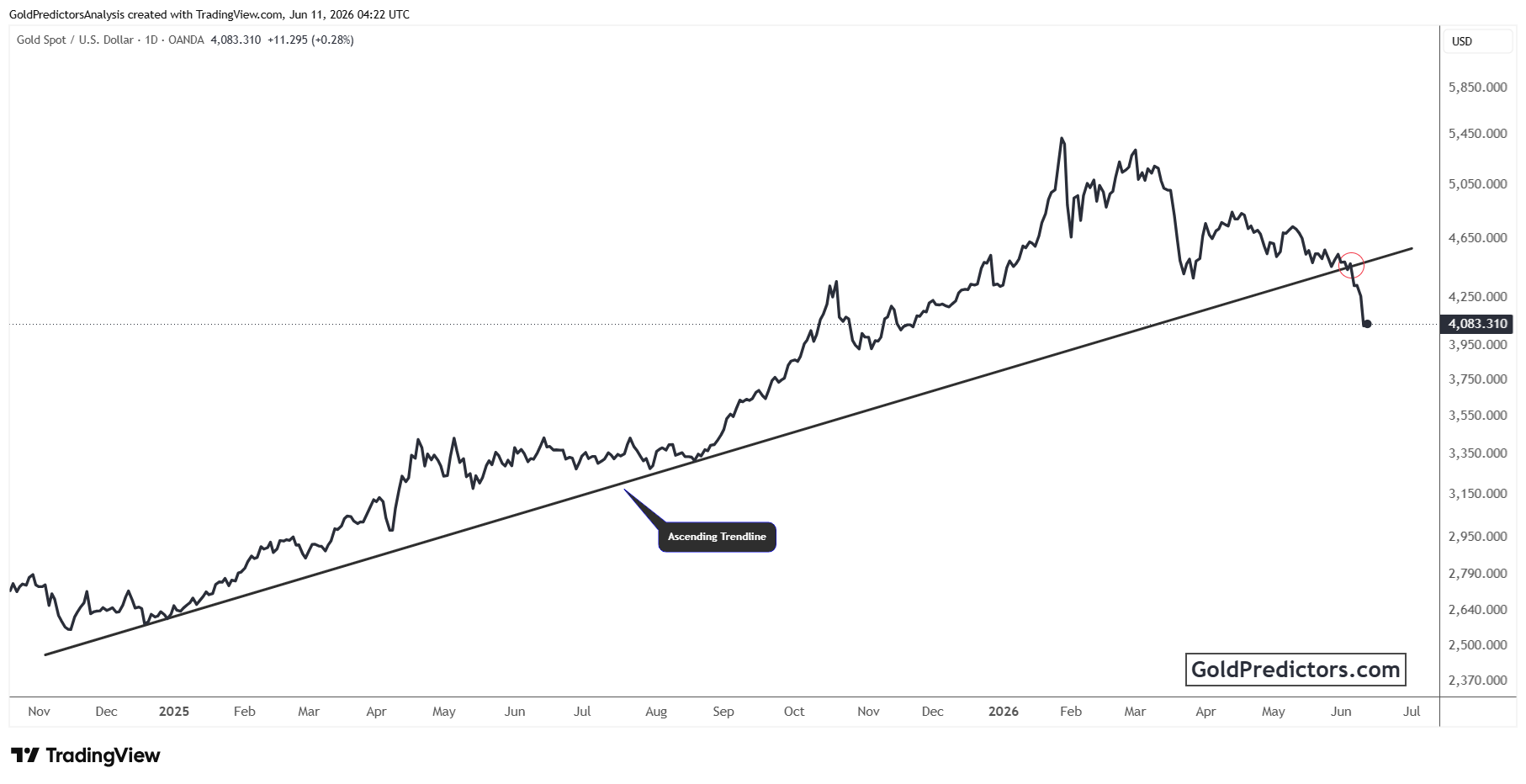
Gold continued to trade above the ascending support line for several months and steadily climbed higher. The rally eventually carried the price to a record high before momentum started to fade. After reaching the peak, gold entered a corrective phase and turned lower. Price gradually moved back toward trendline support as downside pressure increased.
More recently, gold broke below the ascending trendline support and accelerated lower. The breakdown marked a significant shift in market structure and signaled that the long-term support had failed. Price remains below the broken trendline, indicating that recovery attempts continue to face pressure. As long as gold stays beneath this former support zone, the technical outlook may remain cautious in the near term.
Gold Outlook: Middle East Tensions and Fed Expectations Influence Market Direction
Gold continues to face challenges as geopolitical uncertainty and rising inflation influence market sentiment. Escalating tensions in the Middle East have increased concerns about global stability, while stronger U.S. inflation data has strengthened expectations for tighter Federal Reserve policy. Meanwhile, the recent break below a major long-term trendline has weakened the technical outlook and placed greater focus on key support levels. Investors will continue to monitor geopolitical developments and upcoming economic data for clues about the next direction in gold prices.



Comments
Log in or sign up to join the conversation.