

Gold (XAUUSD) weakened further as escalating Middle East tensions and inflation concerns weighed on market sentiment. Fears of a broader regional conflict increased uncertainty across financial markets. At the same time, attention shifted toward the upcoming Consumer Price Index report, which could influence expectations for Federal Reserve policy. The combination of geopolitical uncertainty and interest rate expectations continues to shape the near-term outlook for gold.
Gold Slides Lower as Escalating Middle East Tensions Shake Market Sentiment
Gold extended its decline as renewed geopolitical tensions in the Middle East weighed on market sentiment. Concerns about a broader regional conflict intensified after the United States launched strikes against Iran following allegations that Tehran was responsible for the downing of an American Apache helicopter near the Strait of Hormuz. The situation escalated further after Iran announced strikes on multiple U.S. military targets across the region and warned of additional consequences if American forces remain involved.
Meanwhile, investors are shifting their focus toward the latest U.S. inflation data. The Consumer Price Index report is expected to provide important clues about inflation trends and the Federal Reserve’s next policy move. Markets currently expect annual core CPI inflation to rise to 2.9% in May from 2.8% in April. Monthly core inflation is also projected to increase by 0.3%, highlighting persistent price pressures across the economy.
The inflation data carries significant importance for gold because it could influence expectations for interest rates. Markets have already increased the probability of at least one Federal Reserve rate hike before the end of 2026. A stronger-than-expected CPI report could increase expectations for additional Federal Reserve tightening and strengthen the U.S. Dollar, creating additional pressure on gold. On the other hand, softer inflation data could reduce rate hike expectations and provide temporary support for the precious metal.
Gold Extends Decline within Descending Channel as Support Comes Into View
The gold chart below shows price trading within a well-defined descending channel. Price has consistently respected both channel boundaries since peaking near the January highs. Each recovery attempt has stalled below resistance, while successive declines have pushed gold toward lower levels. The channel midpoint has also acted as a dynamic resistance zone throughout the correction.
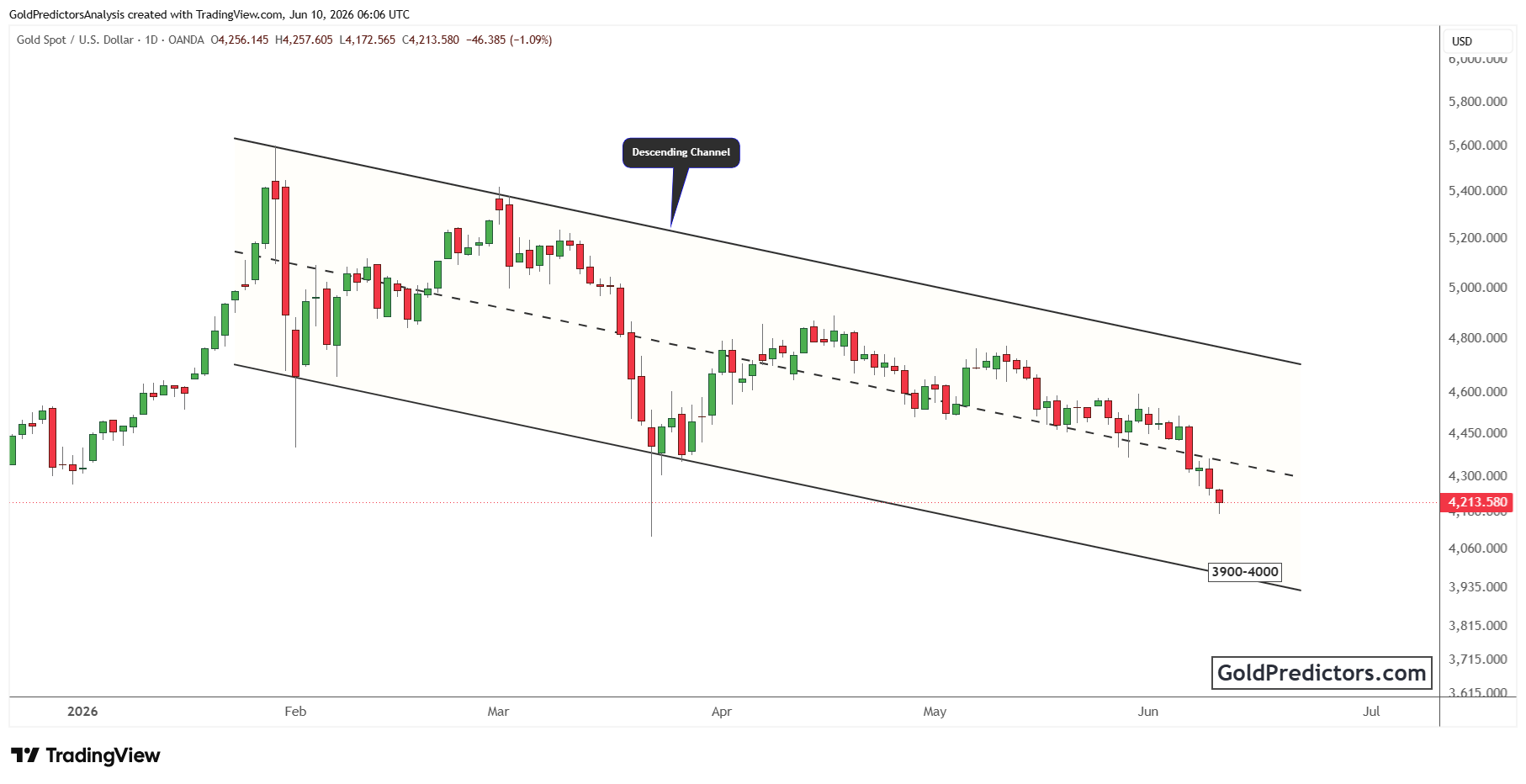
Recent price action shows a clear loss of momentum following the rebound from the March low. Gold failed to sustain gains near the upper half of the channel and resumed its downward movement. The latest decline pushed price below the recent consolidation area, confirming that bearish pressure remains intact.
Gold is now approaching the lower boundary of the descending channel, where a major support zone between $3,900 and $4,000 comes into focus. Previous reactions near channel support have produced temporary recoveries, making this area important for near-term direction. A hold above this zone could encourage a corrective bounce, while a breakdown may open the door to a deeper decline.
Gold Price Forecast: CPI Data and Key Support Levels Remain in Focus
Gold remains under pressure as geopolitical tensions and inflation concerns continue to influence market sentiment. Investors now await the U.S. CPI report for fresh direction on Federal Reserve policy expectations. Higher inflation could strengthen expectations for additional rate hikes and keep gold under pressure. From a technical perspective, the $3,900–$4,000 support zone remains a key area to watch. A successful hold could support a short-term recovery, while a break below support may extend the current decline. To receive gold and silver trading signals and premium updates, please subscribe here.



Comments
Log in or sign up to join the conversation.