


Gold (XAU/USD) continues to face weakness as markets turn their attention to upcoming US economic data. Rising expectations for another Federal Reserve rate increase continue to weigh on the metal. Higher Treasury yields and a stronger US currency have added pressure. Meanwhile, escalating US-Iran tensions could provide some support for gold. Markets will now watch US employment data for clearer signals on the Fed’s next policy move.
Gold Faces Downside Risk as Fed Hike Bets Rise and Dollar Strengthens
Gold remains under pressure as markets increase expectations for a September Federal Reserve rate hike. Fed Chair Kevin Warsh recently indicated that further rate increases may be necessary to bring inflation back toward the central bank’s target. Markets now see a 66% probability of a September increase, compared with 41% a week earlier. Higher interest rate expectations have pushed Treasury yields higher and strengthened the US currency. These conditions have weighed on gold because the metal does not provide interest income.
Geopolitical uncertainty could provide some support for gold. Tensions between the United States and Iran have increased following another exchange of direct attacks. President Donald Trump has also threatened further strikes against Iran. Meanwhile, reports of an attack on a tanker near the Strait of Hormuz have increased concerns about energy supplies. Further disruption in the region could push energy prices higher and add to inflation concerns. It could also increase demand for gold as a safe-haven asset.
Attention will now shift toward a series of important US employment indicators. The JOLTS Job Openings report could provide fresh signals on US labor market conditions. Markets will then focus on ADP Employment Change and Friday’s Nonfarm Payrolls report. Strong employment figures could strengthen expectations for another rate increase and keep gold under pressure. Weak figures could reduce those expectations.
Gold Holds above Rising Support as Ascending Broadening Wedge Stays Intact
The gold chart below shows price moving within a large ascending broadening wedge. The two rising trendlines continue to define the overall structure as the formation gradually expands. Gold previously reached the upper trendline before reversing and declining toward the lower rising support. This lower trendline remains an important support area and continues to play a key role in the current price structure.
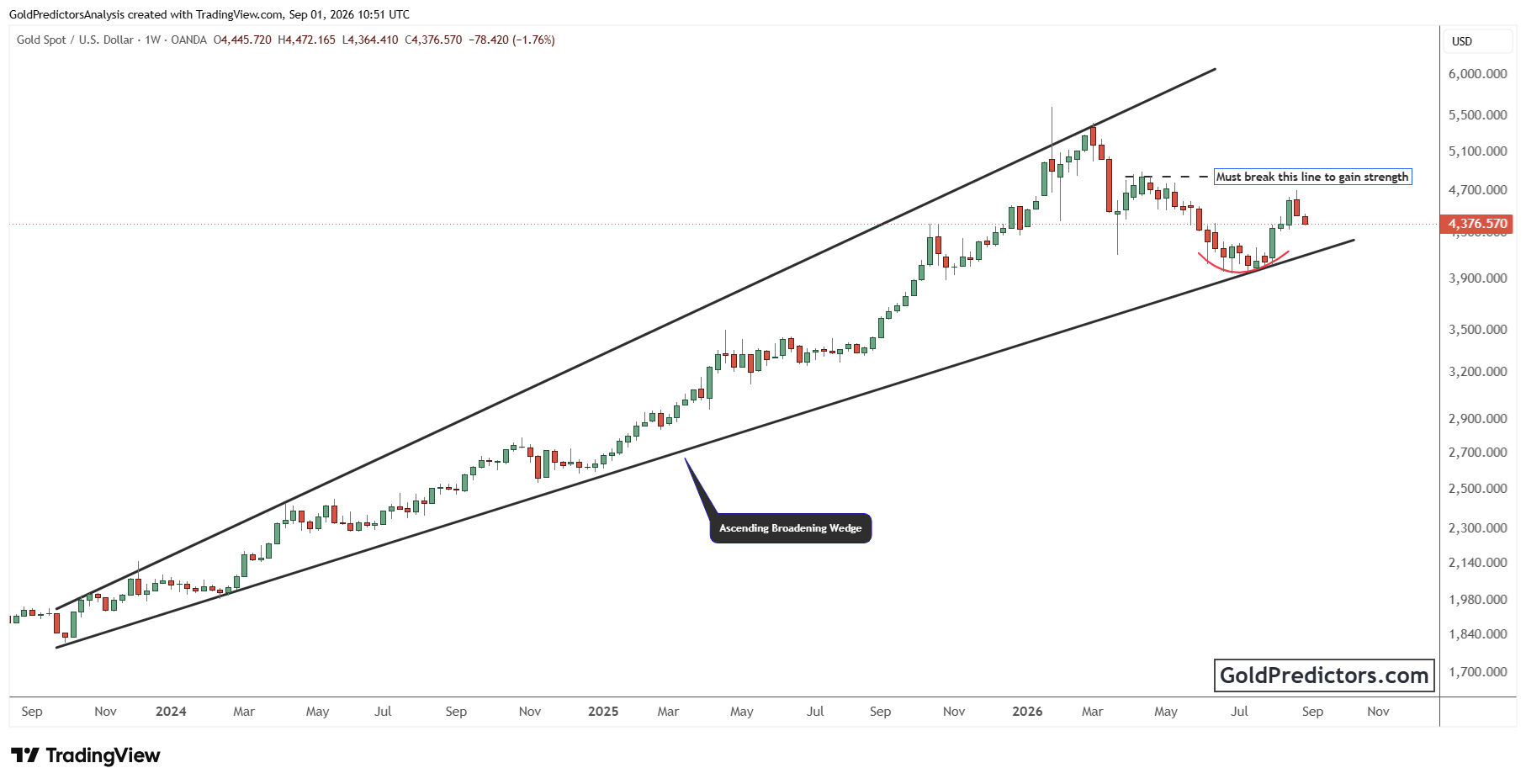
Gold formed a rounded bottom close to the lower trendline after the recent decline. Price then advanced from this area and reached the $4,600 region before losing momentum. The latest weakness has brought gold back toward the $4,300 area, but price remains comfortably above the major rising support. As long as this trendline holds, the larger ascending broadening wedge structure remains intact.
The chart also highlights an important resistance area near $4,800. Gold needs to break above this level to strengthen the current structure and support further gains. A clear move above this resistance could open the way toward higher levels within the wedge. However, continued weakness below this area could keep pressure on gold and bring the rising support trendline back into focus.
Gold Price Outlook: Fed Policy and US Jobs Data Drive Market Focus
Gold remains under pressure as higher interest rate expectations weigh on the outlook. Rising Treasury yields and a stronger US currency could keep the metal under pressure. However, escalating US-Iran tensions may support safe-haven demand. Markets will now focus on upcoming US employment data for fresh guidance on Federal Reserve policy. A strong labor market could extend the downside, while weaker data may ease pressure on gold. To receive gold and silver trading signals and premium updates, please subscribe here.



Comments
Log in or sign up to join the conversation.