

We see a high risk of the US job data coming in weaker than expected tomorrow. Historical evidence suggests G10 activity currencies could be the biggest beneficiaries.

Downside risk to payrolls
Payrolls growth has slowed markedly over the past 12 months. After averaging 223,000 per month in 2018, job creation is down to 161,000 per month for 2019 so far. Business surveys suggest that economic uncertainty and trade protectionism is making firms more cautious and less prepared to put money to work. Indeed, business investment has contracted for the past two quarters and lead surveys suggest that we are likely to experience another contraction in 4Q19. This does not bode well for payrolls growth in the months ahead.
Moreover, consumer sentiment has been softening of late, led by weakness in the labor components while the GM strike will exacerbate the downside risks to payrolls growth this month – although this should gradually unwind. Admittedly, the ADP employment report wasn’t perhaps as bad as feared, but this too is still telling a story of decelerating job growth, which is likely to limit the upside for wages. As such, consumer spending looks set to become a less powerful engine of growth for the US economy.
History suggests positive impact on activity currencies
We analyzed the reaction of the G10 currencies versus the dollar in the thirty minutes after the release for the five instances when the data disappointed expectations in the last year (Figure 1). The reference consensus values are those provided by the Bloomberg surveys. The “surprise” column is calculated as the difference between the actual and forecasted value, divided by their standard deviation.
Intuitively, in all these cases except the latest release (October 2019) the DXY dollar index depreciated. The October case was indeed a peculiar one given that markets had materially resized its expectations right ahead of the release (mostly due to the ADP report) and the actual consensus was likely lower than the survey (which is usually finalized a weak before). This explains why in October the dollar was actually stronger after the release: markets had scaled down their expectations excessively, certainly below the 136k level.
Fig. 1 - FX performance 30 minutes after US payrolls disappointment
(Click on image to enlarge)

Source: Bloomberg, ING
What is most interesting to notice is the behavior of the main activity currencies (CAD, AUD, and NZD). It is fair to assume that weak payrolls has quickly been translated into a higher chance of monetary easing by the Fed, which more than offsets the negative impact on risk sentiment of a key data disappointment and ultimately helps risk-sensitive currencies.
The Canadian dollar has been, on average, the biggest beneficiary of the disappointing payrolls reads, likely thanks to its steadily attractive rates outlook compared to the AUD and NZD. Tomorrow, things could be a bit different: loonie’s momentum has waned after the Bank of Canada delivered a more dovish-than-expected message yesterday, and markets are now seeing higher chances of a cut.
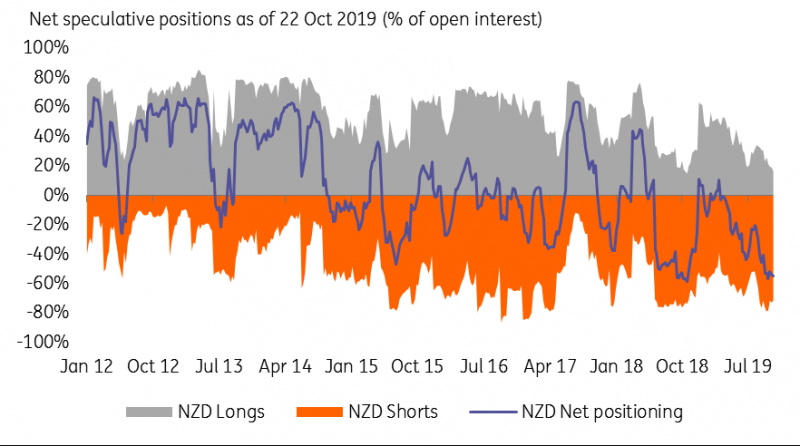
Fig. 2 - CFTC Net speculative positions: NZD
(Click on image to enlarge)
Source: CFTC, Bloomberg, ING
On the opposite, appetite for the NZD has grown as the market continues to jump out of their bets on an RBNZ November cut (currently 57% priced in, compared to 100% two weeks ago). The Kiwi dollar is also likely to benefit from some short-squeezing effect, given that the latest CFTC data labeled it as the most oversold currency in G10, with net short positions piling up to 55% of open interest (Figure 2).
Ahead of the payrolls release tomorrow, we see some non-negligible risk of a disappointment that may shed some doubts that the Fed will be able to restrain from cutting rates again in December. In line with previous instances, the G10 activity currencies may be the key outperformer and we think that ongoing re-pricing of RBNZ cut expectations and extended short positioning set a breeding ground for the NZD.



Comments
Log in or sign up to join the conversation.