

CFTC data for the week 15-21 January shows net sterling positioning retracting as investors eye the Bank of England meeting on Thursday. There are no signs of coronavirus fears in FX positioning yet, as the yen keeps dropping and the dollar-bloc rises. Swiss franc buying continues.

Mark Carney, Governor of the Bank of England
GBP positioning ends its run
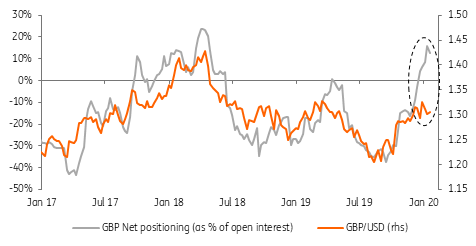
The CFTC FX positioning data, covering the period 15-21 January, shows net sterling speculative positions at 13% of open interest, down 3.2% - after consistently rising since the end of November 2019.
This measure has recently lost its correlation with spot movements in the pound (as shown in Figure 1), and speculation about a possible Bank of England rate cut at the 30 January meeting seems to have contributed to this dynamic. While talk of easing has limited the pound's upside, it has only marginally affected buying among speculators. Last week’s relatively marginal correction in positioning has done little to dent the view that speculative investors remain broadly skeptical about the possibility of a cut.
Fig. 1 - GBP Speculative positioning detached from spot movements
(Click on image to enlarge)
Source: CFTC, Bloomberg, ING
We are not expecting a BoE move on Thursday, but the market is pricing an approximate 60% probability of a cut, despite the long-awaited PMI numbers on Friday beat expectations. More details in our recent article: “Four Bank of England scenarios for Thursday’s meeting”.
No impact from Chinese virus
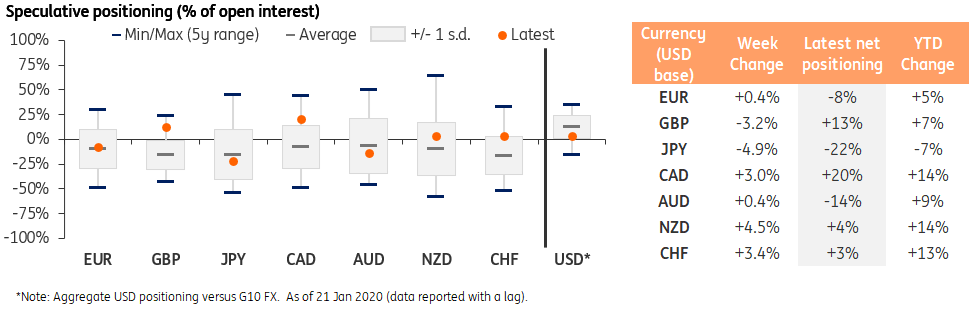
Figure 2 provides an overview of the latest CFTC data on FX positioning. Dollar speculative buying remains subdued in general, although EUR/USD net positioning appears to be stuck in a tight range again as low appetite for the common currency prevents it from taking advantage of USD selling. It must be noted that the data does not cover the European Central Bank meeting on Thursday 23 January, which triggered a drop in the pair.
Fig. 2 - FX positioning overview
(Click on image to enlarge)
Source: CFTC, Bloomberg, ING
The spread of the coronavirus and the related market fears had not hit speculative sentiment by the time the data was collected on Tuesday 21 January. Net positioning in the Japanese yen dropped for a second consecutive week, consolidating the currency’s role as the biggest G10 speculative short.
At the same time, commodity currency buying intensified. The increase in Australian dollar positioning lagged that of the Canadian and New Zealand dollars, keeping the gauge for the Aussie in negative territory, in line with recent dynamics. Such dynamics were mostly explained by the rising prospects of easing from the Reserve Bank of Australia while interest rate expectations at the Bank of Canada and Reserve Bank of New Zealand have not changed. However, the CFTC report does not cover the latest Australian jobs report (which more than halved the implied probability of an RBA cut in February) and the BoC meeting that marked a dovish shift.
Speculative buying on the Swiss franc kept rising in the week under analysis, which continues to indicate market appetite to test the SNB's limits for an intervention. Such appetite appears to be confirmed by the EUR/CHF response to the market-friendly news on Italian politics (ruling coalition winning key regional elections). This prompted a jump in Italian sovereign bond prices, which are usually well correlated with the pair.



Comments
Log in or sign up to join the conversation.