


As we write this new issue of Pretiorates’ Thoughts, the U.S. Federal Reserve (Fed) has not yet announced its interest rate decision. Whether it raises the benchmark interest rate by a quarter of a percentage point, as the bond market has already priced in, or decides against it, we do not consider this to be the decisive factor. In the short term, Wall Street will of course react to the decision—though likely not with stoic composure.
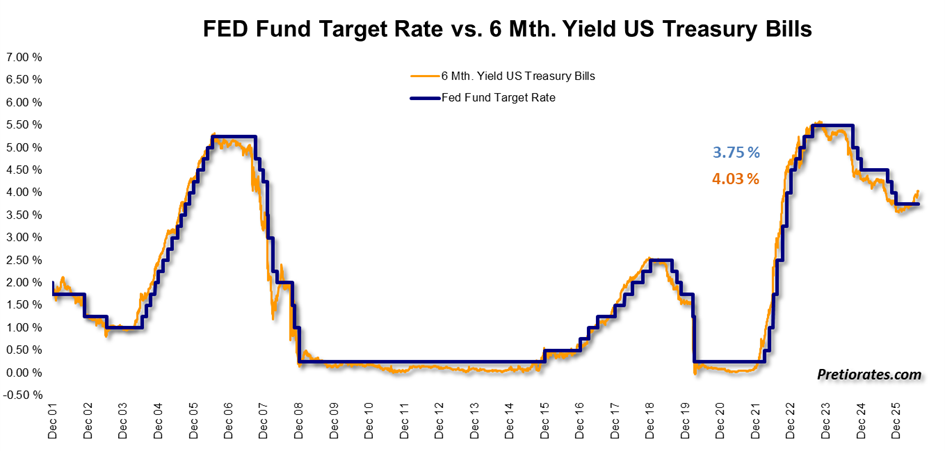
The reason is that the market is still struggling to assess how the new Fed Chairman, Kevin Warsh, will communicate. In any case, Wall Street is openly displaying its nervousness: The Dow Jones is down about 800 points, and market participants are so unsettled that even small bets ahead of the decision suddenly seem like high-risk ventures.
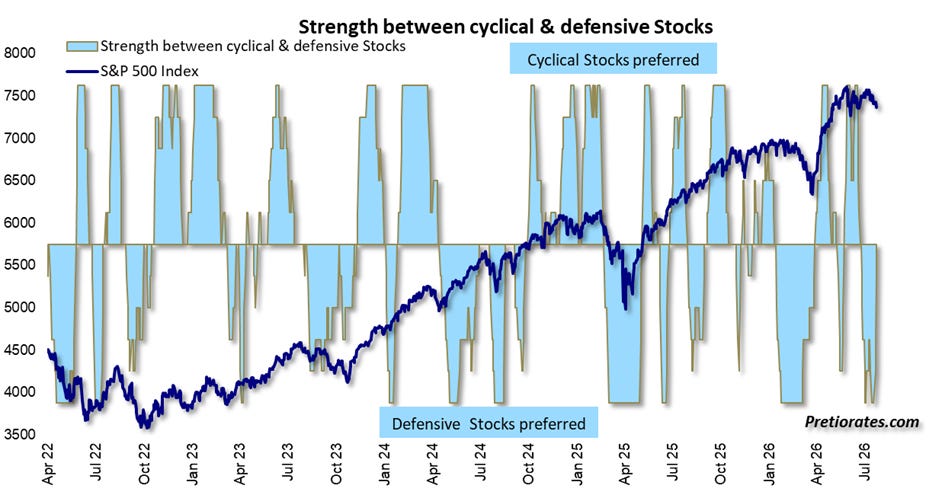
You can’t really blame the market. The Fed Chair’s aversion to traditional “forward guidance” increases unpredictability—and, as is well known, unpredictability is just a fancier word for uncertainty on the stock market. At the same time, the market is feeling increasingly uneasy given the high valuation levels and the geopolitical developments that are nearly impossible to assess. The stock market has already reacted accordingly: Investors have already sold off cyclical companies—which are more dependent on a robust economy—as well as more speculative sectors, many of which still lack significant cash flow. The latter, of course, include numerous stocks in the AI and quantum sectors.
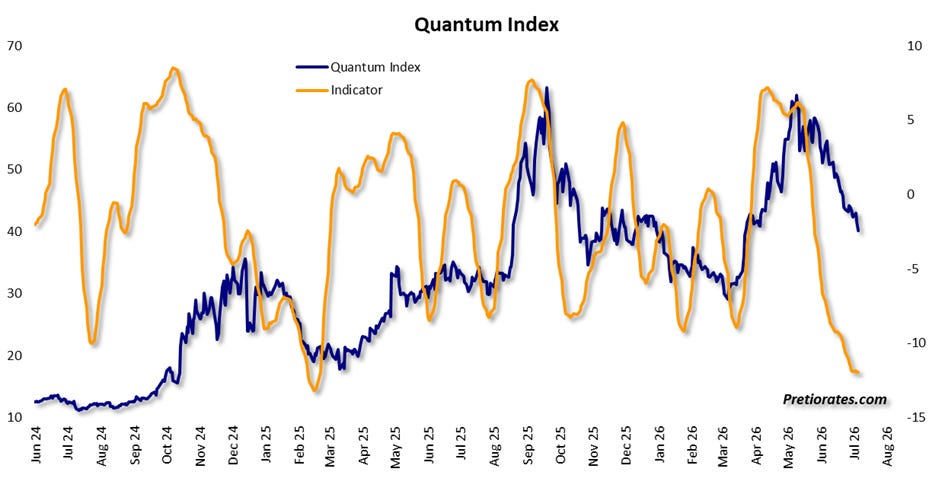
Nevertheless, we stand by our assessment: Both of these still-young sectors are likely to reach new heights, especially if they converge in the not-too-distant future. We therefore believe this is more likely to be a fierce summer storm than the definitive bursting of the bubble. Furthermore, our Quantum Strength Index has now reached its lowest level since February 2025—precisely the point in time when the penultimate major uptrend began.
Currently, Wall Street favors defensive stocks—that is, companies that offer products for everyday needs and are less easily disrupted by economic cycles.
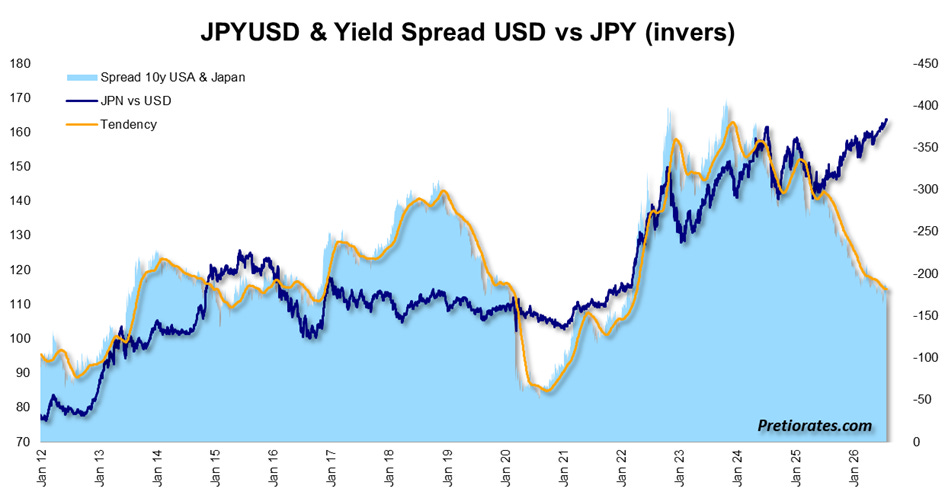
In the medium to long term, however, the Bank of Japan’s interest rate decision this coming Friday is likely to carry greater significance. In economics, one learns that interest rate differentials have a decisive influence on currency movements. In practice, however, the market doesn’t always follow the textbook. The yield spread between 10-year U.S. and Japanese government bonds has narrowed significantly in recent months, as shown by the light blue area in the chart below. One would therefore expect the Japanese yen to have gained ground against the U.S. dollar. But far from it: the yen continues to lose value, as shown inversely in the chart.
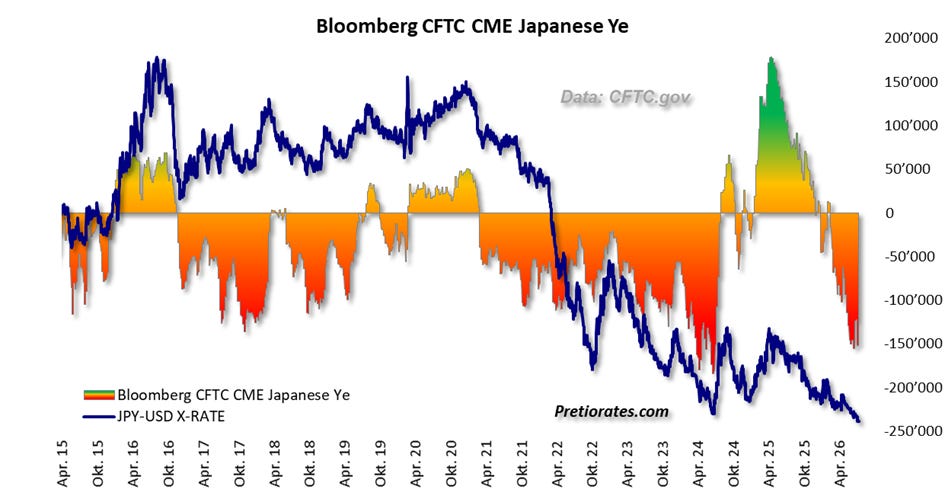
As recently as the spring of 2025, speculative investors in the futures market were betting on an appreciation of the Japanese currency. At the time, the market assumed that the many billions in loans taken out via the yen carry trade would be gradually unwound. This would have meant that yen would need to be purchased to repay these loans. However, the extremely opaque market suggests that this has hardly happened at all. On the contrary: Over the past few months, investors have built up immense short positions. These are now approaching the historic record set in May 2025.
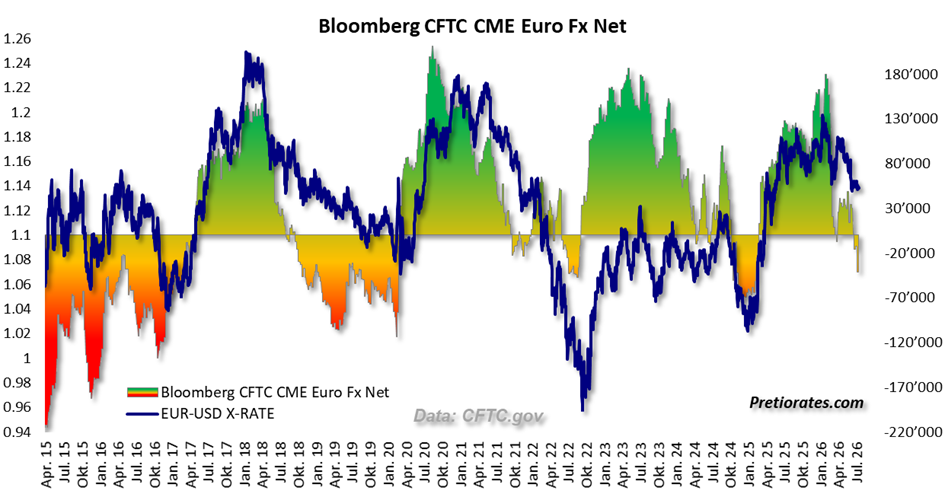
It is also interesting to note that there has recently been increased betting on a falling euro. It’s important to keep in mind that investors are often correct in their long and short positions. It is therefore entirely conceivable that the euro could come under greater pressure in the coming months.
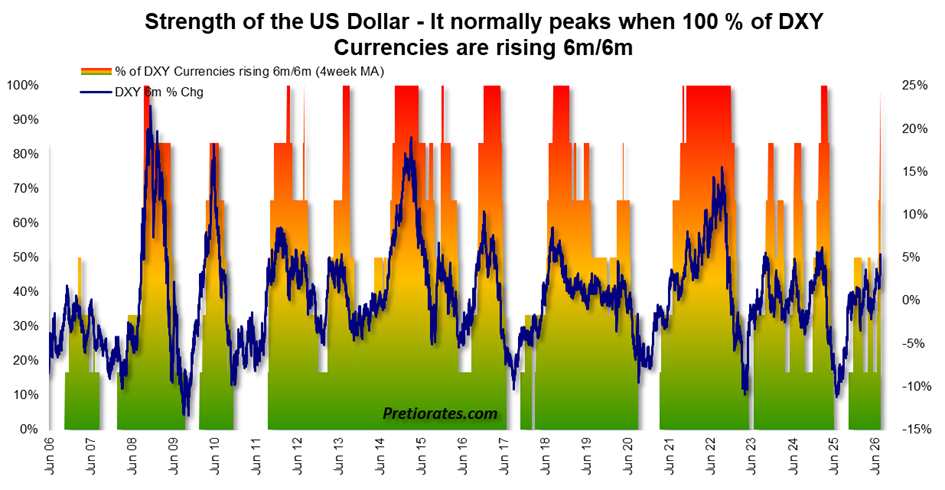
When several major currencies weaken at the same time, another usually benefits. Unsurprisingly, the US dollar’s internal strength has risen to 100%. The strength of the US dollar was, in fact, one of the developments we had already identified in January as a potential surprise for the current year. However, history also shows that the US dollar was often already in the final stages of an uptrend when this strength chart reached its peak. The chart below shows that only the uptrend of 2021 untill 2022 lasted longer.
The answer to the question of which of the three currencies will take the lead in the coming months is therefore likely to depend largely on the Bank of Japan’s interest rate decision. The U.S. dollar could soon relinquish its role as the favorite—but for that to happen, the geopolitical situation would have to calm down. The long-term outlook also appears to be clouding over against the euro, while the Japanese yen is heavily oversold. A potential reversal could be correspondingly sharp, especially given the enormous short positions in the futures market and the still massive carry trades that remain open.
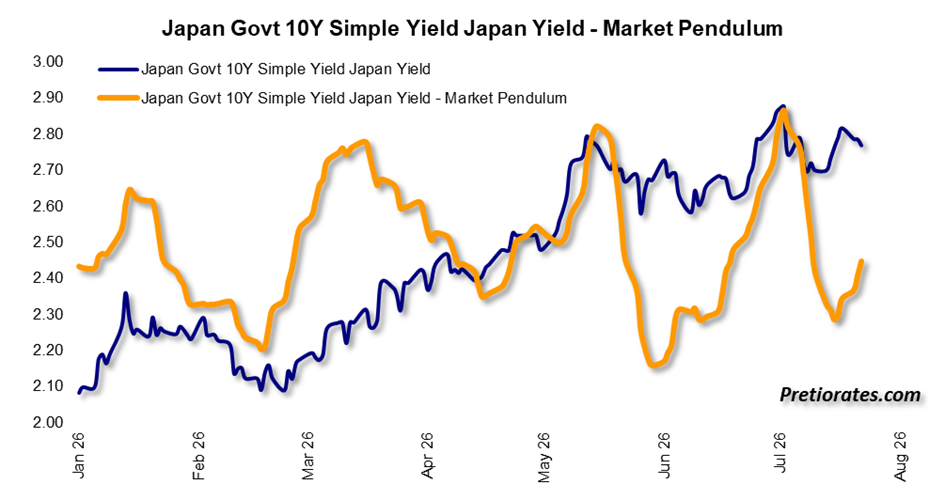
The market pendulum for Japanese bond yields is showing a positive trend, suggesting that higher interest rates are to be expected. This could also have a positive effect on the Japanese currency—even if, as noted at the outset, this correlation has recently failed with surprising reliability.
The Japanese stock market could also behave differently from the usual script. Normally, a weak yen is positive for export-oriented Japanese companies. However, over the past few months, the weak yen has led to rising costs for energy, which Japan must import almost entirely. The market’s focus is therefore clearly on inflation—and that is precisely likely to be the Bank of Japan’s main topic this coming Friday.
As a result, the Japanese Nikkei Index has recently corrected significantly, while pessimism has now reached extreme levels.
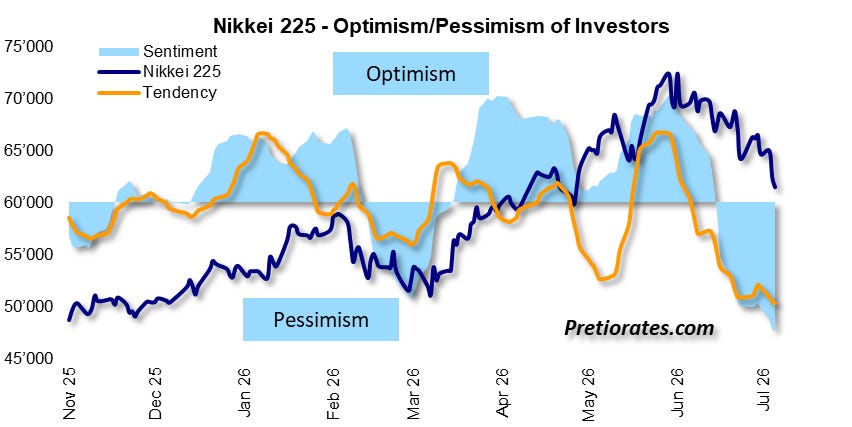
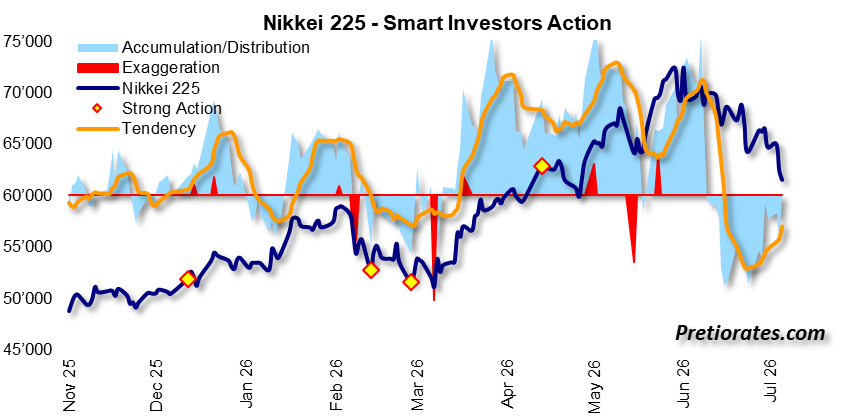
This, of course, is precisely where the preferred playing field of contrarians begins—those investors who feel particularly at home when the masses are moving as uniformly as possible in the opposite direction. In fact, Smart Investors Action shows that distribution has decreased significantly in recent days. There is therefore a good chance that both the Japanese currency and the stock market are poised for a revival.


Comments
Log in or sign up to join the conversation.