


On Friday, the US stock market finished the session in the green zone, breaking a four‑day losing streak amid stabilizing oil prices and falling Treasury yields. By the end of the day on Friday, the Dow Jones Index (US30) rose by 0.98% (weekly result: -1.89%). The S&P500 Index (US500) gained 0.86% (weekly result: -1.20%). The Technology Index NASDAQ (US100) closed Friday in the green at 0.96% (weekly result: -0.96%). The pause in the rise of energy prices on Friday restored investor interest in interest-rate-sensitive sectors. Shares of Alphabet, Amazon, and JPMorgan added 1.5%, 1.9%, and 0.8%, respectively, while in the technology sector, chipmakers AMD (+2.5%) and Intel (+2.6%) showed confident growth. The true leader of the session was Dell, whose shares jumped 11.9% to an all‑time high thanks to a rating upgrade from RBC, while Oracle shares fell by 1.8% despite strong corporate earnings.
The upcoming week will be dominated by the September meeting of the US Federal Reserve, which will be a serious test for the regulator amid accelerating inflation. It is expected that on Wednesday the FOMC will raise the rate by 0.25%. In addition to the Fed meeting, investors face a dense block of US macroeconomic data. Against the backdrop of the US-Iran conflict and rising energy prices, import prices are expected to rise 0.2%, while retail sales may recover 0.9% after the July decline. Industrial production is expected to add 0.3%, and additional market benchmarks will include housing market data and inventory figures. In Canada, consumer and producer price indices are expected: the headline CPI for the month may remain neutral, while the core CPI may rise by 0.2%.
The Mexican peso (MXN) strengthened to 16.98 per US dollar, holding near two‑year highs thanks to strong macroeconomic indicators. In July 2026, industrial production in Mexico grew by 2.7% year‑on‑year, exceeding expectations of 1.8%, while fixed‑asset investment in June jumped by 7.7%. The Bank of Mexico’s decision to keep the key rate at 6.50% amid economic recovery in Q2 reinforces the regulator’s hawkish stance and supports capital inflows.
In Europe, by the end of the day on Friday, Germany’s DAX (DE40) rose by 0.82% (weekly result: -1.81%), France’s CAC 40 (FR40) closed up 0.78% (weekly result: -1.12%), Spain’s IBEX 35 (ES35) gained 0.91% (weekly result: -1.07%), and the UK’s FTSE 100 (UK100) closed the session higher by 0.39% (weekly result: -1.67%). In Europe, the key event next week will be the Bank of England meeting on Thursday: analysts expect the key rate to remain at 3.75%. The publication of August data on the trade balance, current account, industrial production, and the construction sector of the Eurozone risks going largely unnoticed by financial markets. This reaction is explained by the fact that the recent ECB meeting already confirmed a rate hike, and investors are highly likely to be pricing in another tightening in December.
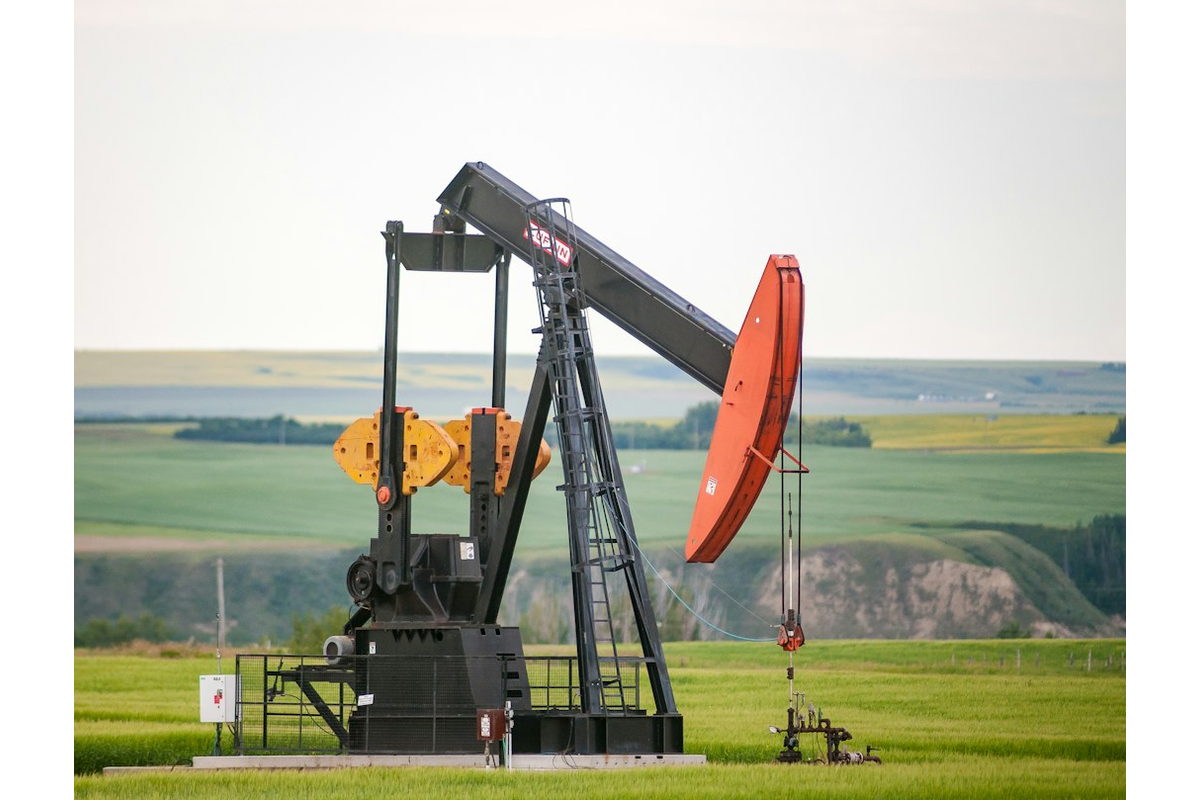
Global oil prices have resumed a rapid rally: benchmark Brent surged to $108 per barrel, updating a four‑month high. The main driver of growth was a sharp deterioration in logistics prospects in the Middle East after Riyadh halted operations of the 7‑million‑barrel‑per‑day East–West pipeline. A drone attack on this key artery, which allowed crude to be shipped to Red Sea ports bypassing the vulnerable Strait of Hormuz, effectively blocked alternative export routes for Saudi oil and intensified fears of a prolonged supply shortage. An additional inflationary impulse came from the breakdown of diplomatic efforts toward de‑escalation.
In Asia on Friday, Japan’s Nikkei 225 (JP225) fell 1.93% (weekly result: -2.42%), China’s FTSE China 50 closed lower by 0.63% (weekly result: -1.26%), Hong Kong’s Hang Seng (HK50) declined 0.60% (weekly result: -3.30%), and Australia’s ASX 200 (AU200) closed Friday down 0.89% (weekly result: -3.13%). On Monday, Hong Kong’s Hang Seng Index fell 0.5%, marking its fourth consecutive session of decline. The main factor behind the negative dynamics remains investor caution caused by renewed oil price growth due to the escalation of the Middle East conflict. Rising energy prices have intensified concerns about a new wave of global inflation and potential monetary tightening by major central banks.
The Asia‑Pacific region is preparing for a busy macroeconomic week, with the key focus on the publication of China’s August data package. The figures are expected to show uneven recovery in the world’s second‑largest economy: industrial production growth may accelerate to 4.8%, and retail sales may add 0.8%. At the same time, fixed‑asset investment risks continuing its decline, falling by 7.1%. Investor attention will also be drawn to the Bank of Japan meeting, where a widely expected rate hike of 25 basis points to 1.25% is anticipated to curb inflationary pressure.
S&P 500 (US500) 7,718.60 -29.11 (-0.38%)
Dow Jones (US30) 53,414.25 -271.86 (-0.51%)
DAX (DE40) 26,046.40 +43.08 (+0.17%)
FTSE 100 (UK100) 10,831.09 -0.43 (-0.01%)
USD Index 99.16 +0.25 (+0.25%)
News feed for: 2026.09.14
Japan Industrial Production (m/m) at 07:30 (GMT+3) – JPY (MED)
Switzerland Producer Price Index (m/m) at 09:30 (GMT+3) – CHF (LOW)
Canada Consumer Price Index (m/m) at 15:30 (GMT+3) – CAD (HIGH)


Comments
Log in or sign up to join the conversation.