


There’s an old joke about a man on his hands and knees under a streetlight, searching for his keys…
A police officer stops to help and asks if this is where he dropped them.
“No,” the man says, “I dropped them in the park. The light’s better here.”
The gold industry runs its exploration budget the same way.
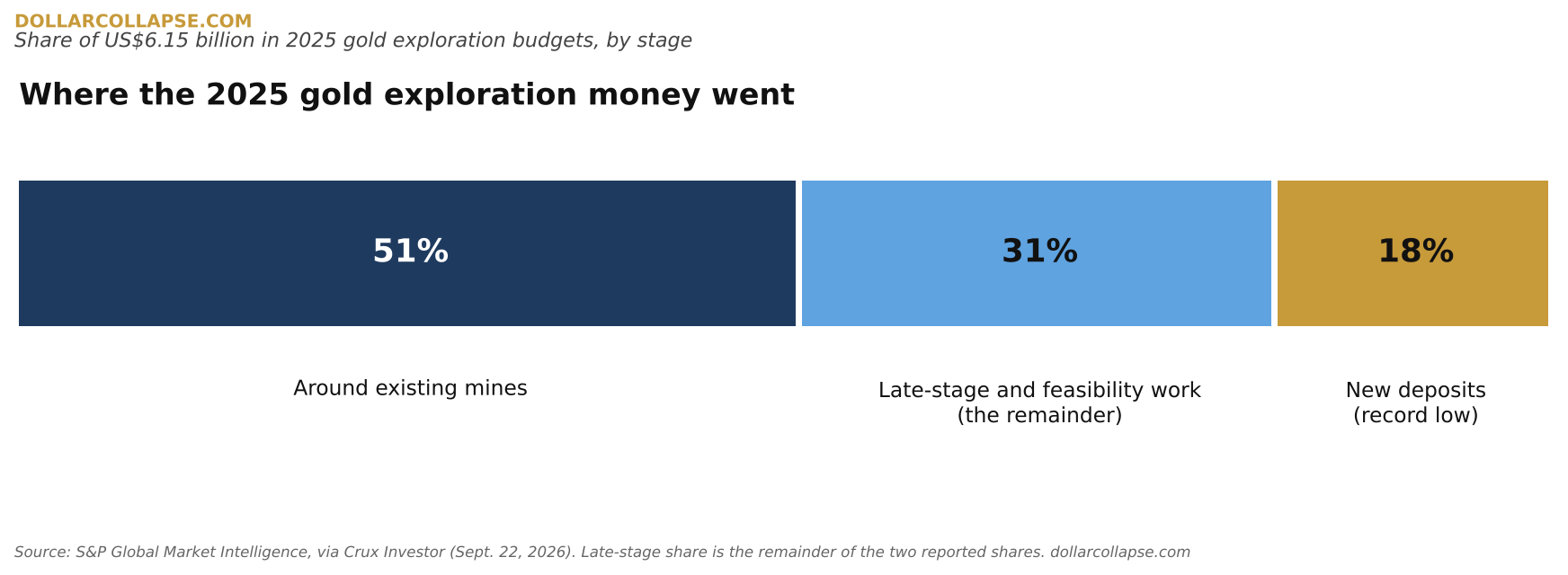
In 2025, with gold at record prices, the world’s gold miners raised their exploration budgets by 11% to $6.15 billion, according to S&P Global. That sounds like an industry on the hunt for its next big mine. Look at where the money went, though, and the picture changes. Just over half, $3.13 billion, went to drilling around mines that already exist. The share spent on grassroots work, which means the search for brand-new deposits, fell to 18%, the lowest on record.
It wasn’t always like this. When Mining.com reported S&P’s numbers last year, it put the 2024 grassroots share at 19% and called that “a significant drop from the 50% in the mid-1990s.”
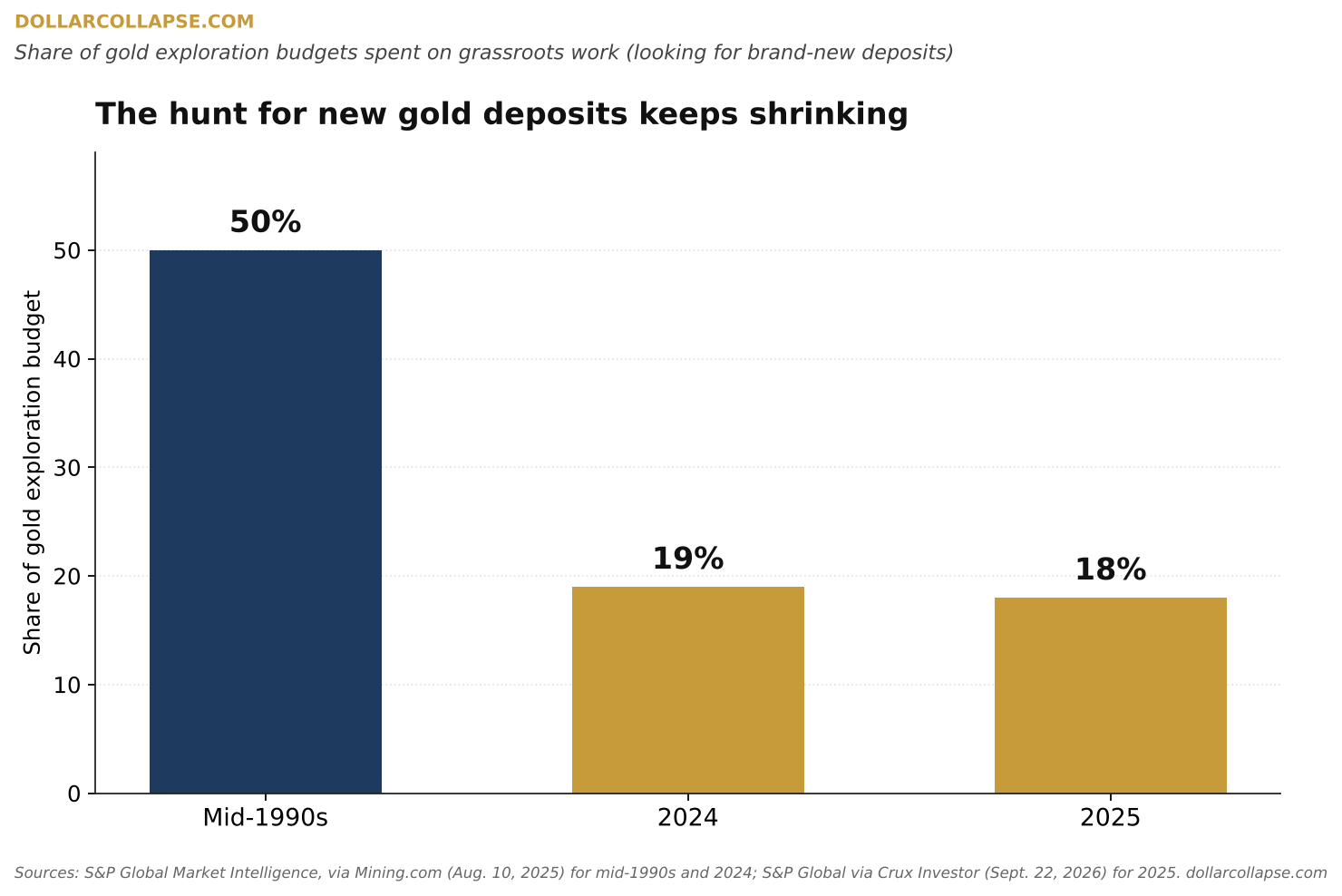
So about 30 years ago, half of every exploration dollar went toward finding new gold. Today it’s less than a fifth.
It’s hard to blame any one company for this. Drilling next to a working mine is cheaper, faster and already permitted, and the results show up in next year’s reserve numbers, which keeps shareholders happy. As I wrote in my last post, each brand-new discovery now costs about $142 million on average, so a board that skips the long shot is making a rational call.
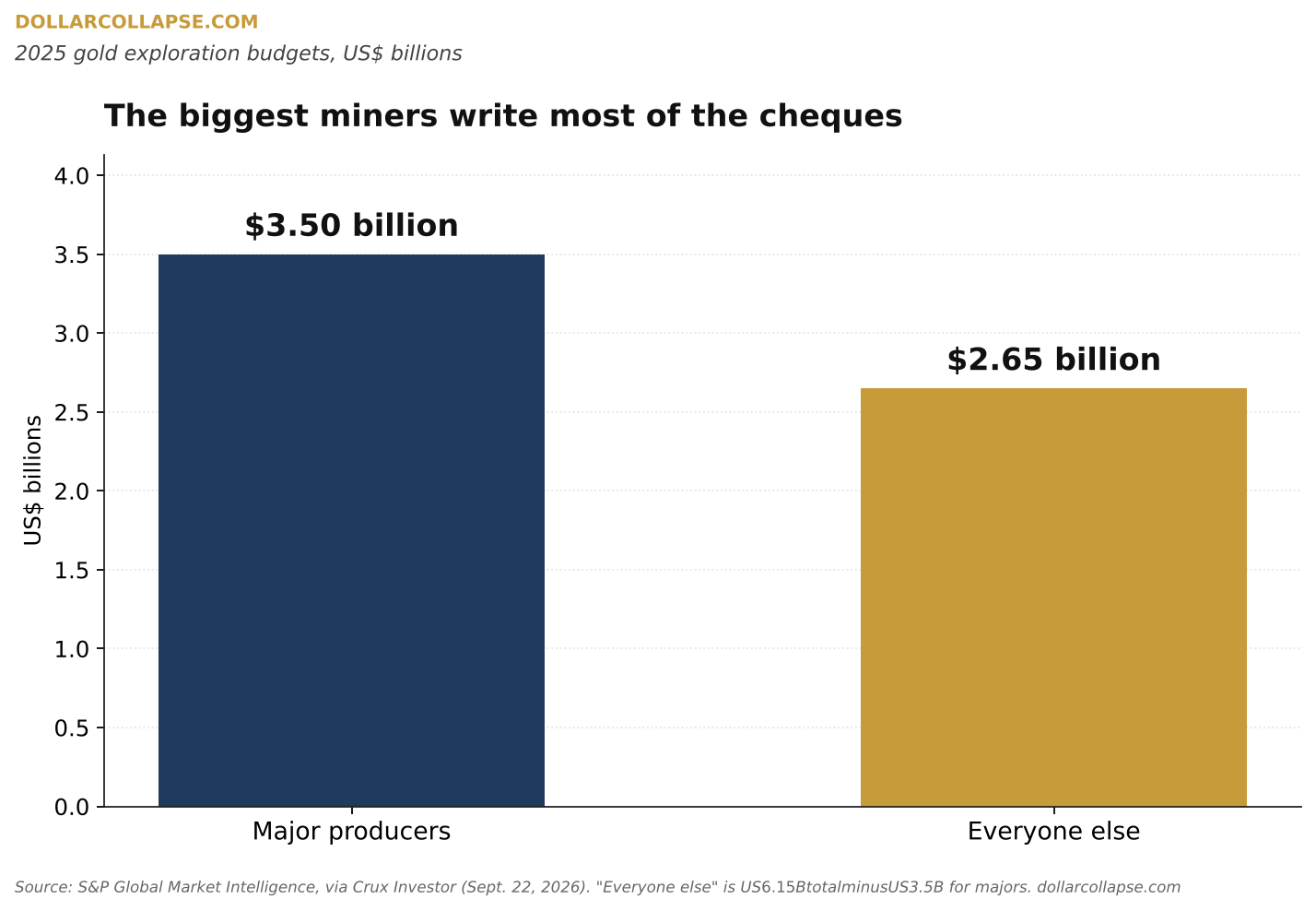
The big producers set the tone. They budgeted $3.5 billion for gold exploration in 2025, up 15% from the year before, which works out to 57% of the total.
The trouble starts when everyone makes the same rational call at once. It takes ten years or more to turn a discovery into a mine, so the deposits that should feed production in the late 2030s have to be found now. With 82% of the budget spent somewhere other than the search for new deposits, the pipeline thins out a little more every year.
So, there’s the streetlight problem for you. The light is better around the old mines, so that’s where the money goes, and the next generation of big deposits stays out in the dark.
Next, I’ll look at the other squeeze on the miners:
What it costs to dig up the gold they already have.
Sources: S&P Global Market Intelligence, 2025 gold exploration budgets, as reported by Crux Investor, “Gold Grassroots Exploration Hits 18% Record Low, Favoring Advanced Projects,” September 22, 2026; Mining.com, “Gold exploration spend trending down despite higher prices,” August 10, 2025; MinEx Consulting, “Trends in Gold Exploration,” PDAC 2021.


Comments
Log in or sign up to join the conversation.