

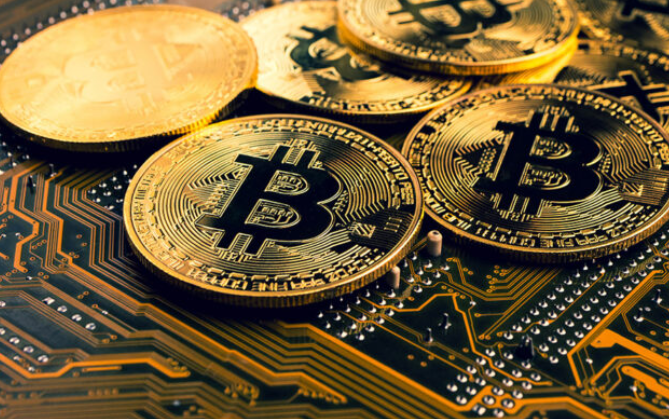
The classic definition of a “safe-haven asset” is one that holds its value during times of market or economic turbulence. When investors want to reduce the risk in their portfolios, they tend to migrate to safer assets. Safe-haven assets are able to hold their value because they are either less volatile than or correlate poorly with the asset classes that one wants to hedge.
Sometimes, the concept of “safe-haven” is a matter of context. Institutional investors who must be fully invested in stocks tend to move to low-beta sectors[i], like utilities. Investors who allocate their investments between equities and fixed income tend to view their bond holdings as the safer portion of their portfolios. Cash and short-term fixed income securities are perhaps the ultimate safe haven assets since their prices rarely move. The latter can even appreciate somewhat if investors seek safe havens en masse. While it is true that cash and so-called cash equivalents can lose value over time if inflation exceeds their rate of return, the logic is that they would depreciate far more slowly than riskier holdings.
Many cryptocurrency proponents advocate the idea that bitcoin and other cryptocurrencies can be considered safe haven assets. The logic parallels the assertions used by gold bugs, who see gold as a safe haven in times of global uncertainty or inflation. Inflation occurs when more currency is required to purchase a given amount of assets. If you consider an ounce of gold to be a real asset rather than a currency, its price should rise during periods of inflation. Unfortunately, that relationship doesn’t always hold[ii]. Gold sometimes acts like a real asset, other times like a currency.
Why then would we expect cryptocurrencies to act more like real assets than currencies? The goal of crypto advocates is for their use as a means of exchange, which is not something that we can reliably do right now. That puts it on par with something like, say, real estate, which is also not easily fungible. It seems to imply that the logic behind cryptocurrency as a safe-haven asset is that it does not act like a currency. I’m sorry, but I find that to be a specious argument.
There are indeed currencies that are considered safe havens. These include the Japanese Yen and Swiss Franc. They tend to have low volatility, with each averaging about 0.3% per day against the US Dollar. Compare that with bitcoin, which averaged about 4% per day over the past year. Over that same period, the S&P 500 Index (SPX) averaged about 0.8% per day. If one feature of a safe haven is low volatility, we simply can’t consider an asset that has 5X the volatility of stocks and over 10X the volatility of relatively safe currencies to be a safe haven.
That volatility could work to one’s advantage if cryptocurrencies were decorrelated with equities. Yet that is increasingly not the case. Consider the following graph of SPX vs Bitcoin and their correlation. We see that bitcoin has come to act more like equities’ more volatile cousin than a decorrelated asset class:
SPX (white) and Bitcoin (orange), 3 Month Daily Graph (top) and 10 Day Correlation (bottom)

Source: Bloomberg
We see the correlation has been relatively high since August. If two assets move generally up and down at the same time in the same direction, the more volatile one can hardly be considered a safe haven.
This does not mean that cryptocurrencies can never be considered safe havens. That could evolve over time, but when we consider the short history of the asset class and the wild moves that have occurred, it is neither advisable to make a long-term blanket statement nor assert that relationships can’t change. But for now, investors seeking a safe haven in this current period of stock market turbulence are not likely to find it in cryptocurrencies.
[i] Beta is a way of measuring the volatility of an asset versus the overall market. Beta = (Covariance of stock with desired measure, usually S&P 500) / (Variance of stock). Low beta stocks tend to be less volatile than the market as a whole, and vice versa.
[ii] Gold can indeed be an excellent hedge against currency devaluations if you live in a country that borrows in other currencies. This is not the case for most developed-market citizens.



Comments
Log in or sign up to join the conversation.