

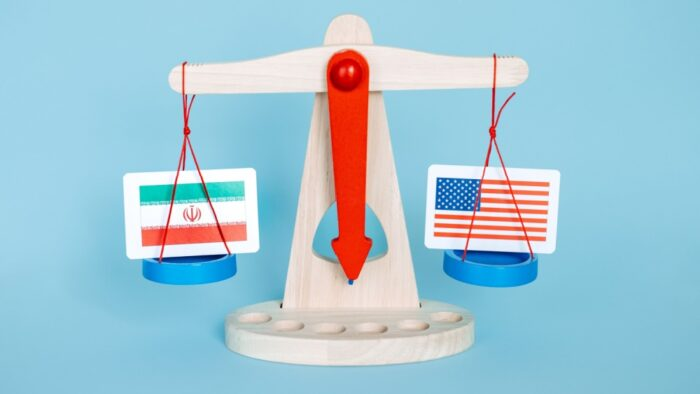
The historic bond market meltdown is catching a break as oil prices drop on news that Washington and Tehran are negotiating a phased deal that would restore traffic through the Strait of Hormuz within a week and bring peace to the region, at least temporarily. An obstacle, however, is that Iran is sustaining its hardline on the conditions necessary to reach an agreement, and Wall Street doesn’t have reasonable visibility on whether the conflict will pause or not. The confusion is generating bumpiness across asset classes, with stocks and fixed income switching between gains and losses throughout the day in response to wild movements in WTI crude. But for now, the four major equity benchmarks are advancing amidst 8 of the 11 principal sectors and all subcategories climbing, and the economic calendar is helping with a beat on durable goods as well as an upward revision to the UMich Consumer Sentiment Index. Meanwhile, Treasuries are rebounding strongly as rates and the greenback fall, with the yield curve descending in bull-steepening fashion led south by the monetary policy sensitive shorter tenors. The outperformance is occurring as expectations for future Fed decisions have become incredibly hawkish, which has brought disproportionate relief to the front-end of the complex. Still, the tallest borrowing costs in over two decades for duration are weighing on cryptocurrencies, although non-energy commodities, including precious metals, are increasing in value. Elsewhere, volatility protection instruments have fluctuated in light of the uncertain macro backdrop, nonetheless, they are currently relatively unchanged, while prediction markets have experienced engagement.
Durable Goods Beat Expectations
After two straight months of increases, durable goods orders were virtually unchanged on a month-over-month basis in August, according to a preliminary release from the US Department of Commerce. Even with the goose egg result, however, the print surpassed the economist consensus expectation for a 0.3% decline. In July, transactions expanded at a downwardly revised 0.9%. When excluding transportation, August requests were up 0.3%. Similarly, excluding defense capital goods resulted in orders climbing 0.1%.
The transportation equipment category, which sank 0.6%, was weighed down by a 4.3% drop in nondefense aircraft and parts, but defense aircraft and parts orders jumped 5.9%. Also in the transportation equipment category, motor vehicles and parts fell 0.6%. In other areas, orders for defense capital goods and fabricated metal parts sank 1.5% and 1.3%. The broad computers and electronic products category was flat m/m despite orders for computers and related products and the communications equipment subcategories climbing 1.5% and 0.3%. While fabricated metals product demand fell 1.3%, new requests for primary metals and machinery ascended by 1.2% and 1.1%.
September Consumer Sentiment Stronger Than Expected
The University of Michigan’s (UMich) September Consumer Sentiment Index was upwardly revised from 47.6 to 48.1, a welcome improvement, although the indicator remains near its record low of 44.8 from May. Pain at the pump, elevated interest rates, affordability pressures and geopolitical uncertainty have negatively affected household moods for most of the year.
Wall Street Needs Geopolitical Follow Through
With fixed-income bedlam threatening to worsen and yields breaching nosebleed highs almost every day, Wall Street needs real geopolitical follow through to continue thriving. The bond bear market that began in the aftermath of the COVID-19 pandemic is currently raising the bar for corporate profitability to justify elevated valuations in stocks, as the risk premium sinks deeper into basement territory. But cyclical shares are having trouble participating because of the current tight financial conditions, leaving investors vulnerable to potential weakness in AI names, including semis and the Mag7. For that reason, it’s the tech-oriented Nasdaq 100 that’s closest to a fresh record out of the four major domestic benchmarks, as money managers rotate into the area of equities that has the balance sheet fortitude and earnings power to overcome the pressures of soaring borrowing costs amidst an appreciating greenback. Finishing 2026 strong requires a relaxation in the Treasury complex, as equities are going to face challenges with climbing through the end of 2026 with a 30-year that has broken out of the critical 5.50% level and potentially headed towards a 6-handle. I think credit gains are justified though, considering core inflation is at 2.4% and I believe slowdown risk should be increasingly considered on the curve in response to AI activities that are poised to eventually decelerate from the speed of light.
International Roundup
UK Consumer Confidence Climbs Marginally
Consumer confidence in the UK rose in September, marking the third consecutive month of improvement but shoppers were still deeply pessimistic, according to the GfK Consumer Confidence Index. GfK, furthermore, questions if confidence can continue to improve against the headwind of persistent inflation, including higher energy costs. On a positive note, the gauge climbed from -14 to -13 and was stronger than the economist consensus expectation of -16. Consumers’ views of the past and their expectations of the future both improved, but the subindex tracking opinions regarding making major purchase sank one point to -8. The score is based on asking survey respondents if the general economic situation makes this a good time to buy large-ticket items, such as furniture or electrical goods.
The other categories improved as follows:
General economic situation over the next 12 months moved from -23 to -22
Personal financial situation over the next 12 months moved from 4 to 5
General economic situation over the last 12 months moved from -40 to -22
Personal financial situation over the last 12 months moved from -6 to -3
August Wholesale Transactions Likely Fell in Canada
Sales in Canada’s wholesale sector are estimated to have sunk 1.5% month over month in August, according to an estimate from Statistics Canada. The result would be a reversal from July when wholesale transactions ascended 0.3%. August weakness is likely to have resulted from lower sales of motor vehicles and parts and the agricultural supplies.
And Canadian Tourist Appear to Warm to the US
The volume of Canadians who hopping flights to the US climbed 5.9% year over year in August after declining for 18 consecutive months, according to Statistics Canada. Of the country’s three largest airports, only Vancouver International reported a decline.


Comments
Log in or sign up to join the conversation.