


Global markets entered a blockbuster policy day with an abrupt reminder that central bankers will not be handcuffed by market pricing. The Reserve Bank of New Zealand delivered a major Asian session shock by holding its benchmark rate steady against a 70%+ market-implied hike probability. The Kiwi cratered over 1%, propelling AUD/NZD up 2% to 13-year peaks following hot Australian Q3 CPI prints. The RBNZ’s pause fractures the narrative of mechanical, globally coordinated monetary tightening, proving that policymakers are willing to preserve optionality when real-economy headwinds clash with supply-side energy inflation.
This divergence sets an asymmetric stage for today's Bank of Canada decision, where markets discount an ~80% probability of a 25 bps hike to 2.50% despite an evenly split economist consensus. With elevated survey inflation expectations battling household rate sensitivity, any pause would trigger sharp Canadian Dollar liquidations. Meanwhile, the Federal Reserve is universally expected to hold rates steady this evening ahead of the US midterms. Chair Kevin Warsh will likely lean into data dependence without offering explicit forward guidance—balancing volatile AI credit spreads against tomorrow’s looming data heavyweights: annualized Q3 GDP tracking above 3% and September core PCE seen sticky above 3.5% y/y. Any repeat of July's hawkish dissents would signal an active push toward a December rate hike.
Equity markets found localized support in semiconductor hardware after South Korea’s SK Hynix announced a massive $75bn shareholder return package on a sevenfold surge in quarterly profits. However, the AI trade faces a critical capital-discipline test as Alphabet and Microsoft report tonight, followed by Amazon tomorrow. Institutional desks are scrutinizing monetization timelines, margin durability, and surging infrastructure debt costs—punctuated by widening CoreWeave bond spreads and record-high CDS on Meta Platforms—as capital-intensive AI capex increasingly collides with elevated global funding rates.
Energy and geopolitical tail-risks remain firmly embedded. While Brent crude has retreated from its recent highs following attacks on Saudi Arabia’s Shaybah oilfield, crude remains elevated enough to maintain structural pressure on headline consumer prices and global transport costs. Ongoing political paralysis in Israel injects an additional layer of regional friction into global energy logistics, as exit polling shows both major blocs falling short of a clear parliamentary majority.
In the UK, Chancellor John Healey presents the Autumn Budget at 12:30pm GMT. The real cross-asset volatility will land when the OBR publishes its Economic and Fiscal Outlook alongside the Debt Management Office's updated 2026–27 financing remit. Markets anticipate roughly £15bn in net issuance additions to cover energy-shock deficits, while projected fiscal headroom shrinks to £19bn by 2029–30. For sterling rates desks, resilient UK PMIs (53.1) and accelerating CPI (3.5%) solidify bets on a November BoE hike. However, persistent usage of the Bank of England's Short-Term Repo (STR) facility continues to insulate front-end gilt asset-swap (ASW) spreads from balance-sheet run-off, ensuring any gilt supply concessions manifest through curve steepening and term premia rather than acute bank-reserve strain.
Macro to Micro: The macro landscape is undergoing a rigorous policy and earnings stress test. The RBNZ’s dovish shock exposes the fragility of aggressive rate-hike pricing, elevating surprise risk for the Bank of Canada and Chair Warsh’s post-FOMC press conference. Concurrently, the UK Budget will challenge gilt curve absorption just as Big Tech earnings must validate surging infrastructure capex against high corporate debt costs. For traders, immediate tactical focus centers on NZD and CAD rate repricing, FOMC voting dissents, UK DMO gilt remit revisions, Big Tech capex commentary, and Brent crude price floors.
Overnight Headlines
Fed Expected To Remain On Hold, Avoiding Midterms Maelstrom
BoC Set To Hold Rates As Inflation Risks Complicate Policy Outlook
BoE To Kick Off Short And Precautionary Tightening Cycle In Nov
RBNZ Unexpectedly Holds OCR At 2.75%, Sending Kiwi Lower
Australia’s Sep CPI Accelerates, Strengthening Case For RBA Hike
RBA’s Bullock Warns Upside Inflation Risks Are Materialising
CBA Now Expects RBA To Raise Rates To 4.85% In Nov
US Warns Gulf Allies Of Potential Resumption Of Iran War After Midterms
Houthis Claim Missile Strike On Saudi Arabia’s Ras Tanura Oil Refinery
Russia And Ukraine Begin Local Ceasefire In Frontline City
EU Pressures Allies As Ukraine Faces Looming Funding Shortfall
UK’s Healey Prepares Budget Measures To Cut Household Gas Bills By £50
UK Chancellor Set To Reverse Planned Cuts To Cash ISA Allowances
China Plans To Accelerate Govt Bond Issuance To Support Growth
China Moves To Stabilise Struggling Financial Markets
Israel Exit Polls Show Neither Political Bloc Near Governing Majority
SK Hynix Profit Surges Sevenfold On Strong AI Memory Demand
NXP Semiconductors Profit Jumps On Automotive, Industrial Growth
Visa Earnings Beats Estimates As Payments Volume Rises 9%
Standard Chartered Raises Outlook Following Quarterly Profit Beat
Boeing Slide On Slower-Than-Exp 737 Production, Weaker FCF Outlook
Anthropic Reportedly Selects JPMorgan To Lead US Retail Offering For IPO
FX Options Expiries For 10am New York Cut
(1BLN+ represents larger expiries and is more magnetic when trading within the daily ATR.)
EUR/USD: 1.1215 (EU2.16b), 1.1600 (EU1.38b), 1.1150 (EU1.34b)
USD/JPY: 155.00 ($921.3m), 158.50 ($828m), 158.00 ($797.8m)
USD/BRL: 4.9000 ($760m), 5.7800 ($454.8m), 5.0100 ($450m)
AUD/USD: 0.7005 (AUD972.3m), 0.7050 (AUD800.2m), 0.6950 (AUD692.5m)
USD/CAD: 1.4000 ($495m), 1.4050 ($479.2m)
GBP/USD: 1.3200 (GBP341.2m)
NZD/USD: 0.5700 (NZD413.8m), 0.5650 (NZD389m), 0.5710 (NZD357.9m)
EUR/GBP: 0.8415 (EU309m), 0.8380 (EU305.1m)
USD/KRW: 1490.00 ($367.5m), 1325.00 ($310m)
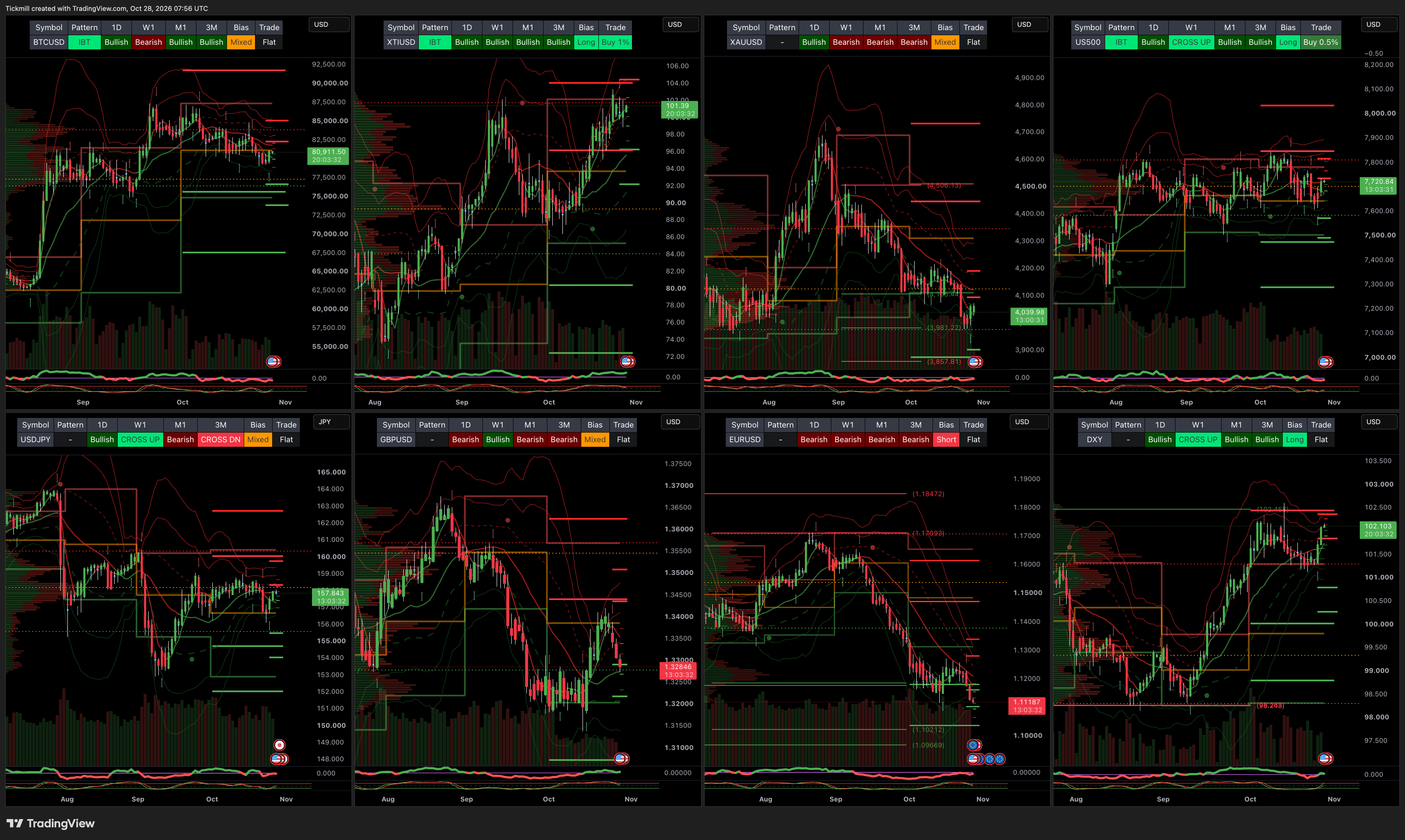
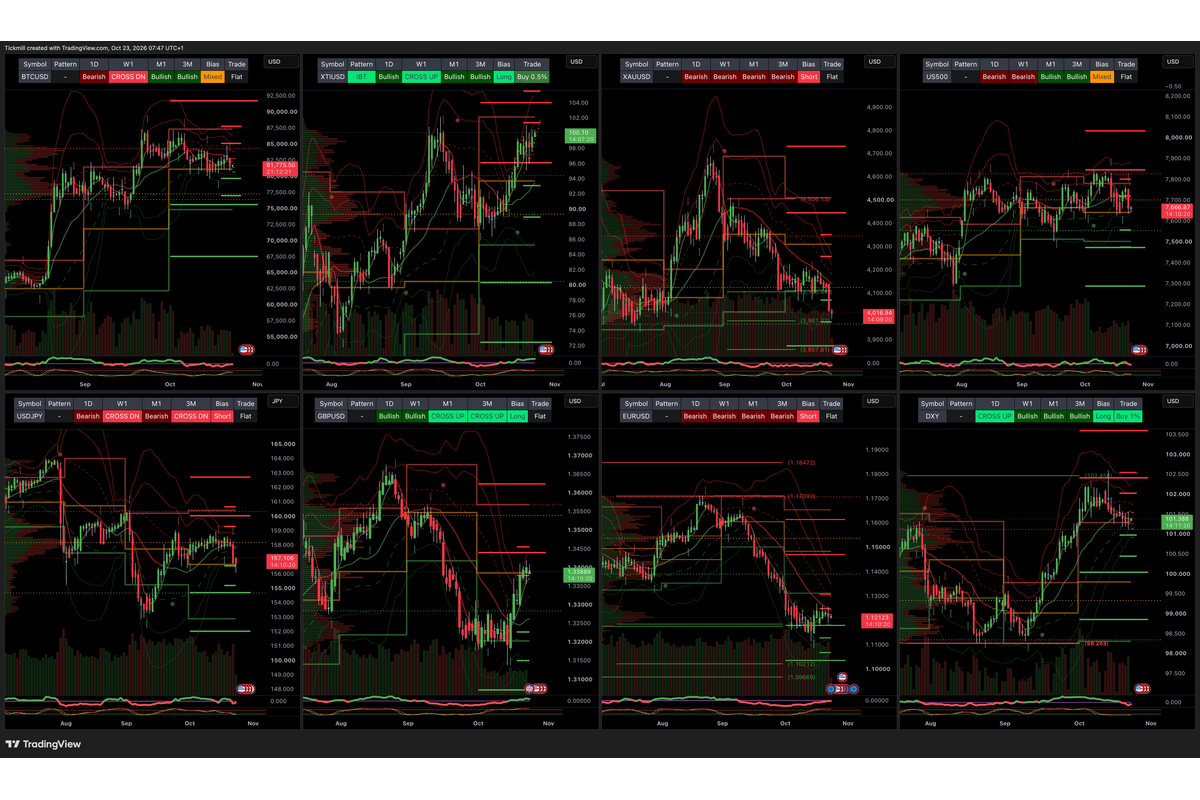
Technical & Trade Views

Comments
Log in or sign up to join the conversation.