

Global equities are back within touching distance of record highs, helped by a tech-led Wall Street rally and a sharp improvement in US manufacturing momentum. The immediate fear from last week’s AI unwind has faded, but the market is not exactly calm: oil has partially retraced its diplomacy-driven slump, the yen is giving back some intervention gains, and Treasury supply is returning as a live issue after the US raised its Q3 borrowing estimate. The mood is better, but it still has plenty of moving parts.
The MSCI All Country World Index is trading around 1,130, just below its record high of 1,136.59, as futures point to further gains across developed markets. Wall Street provided the impulse, with the S&P 500 moving closer to its all-time peak after a strong large-cap session. A measure of megacap stocks posted its best performance since March, while semiconductors rose around 1%, stabilising after the violent AI-stock selloff that dominated late July.
The tech rally has fresh earnings support. Palantir jumped 14% after-hours after raising its forecasts, giving the AI trade another company-specific validation point. That matters because the market has moved from rewarding AI exposure indiscriminately to demanding evidence of revenue conversion. Strong guidance from high-profile AI-linked names helps repair sentiment, even if investors remain more selective than they were during the first-half melt-up.
Still, the AI complex is not fully healed. The fact that Coatue Management’s hedge fund fell 8.3% last month underlines how painful the July de-rating was for tech-focused investors. Forced selling, crowded positioning and doubts about AI capex returns have not disappeared just because the tape bounced. The difference now is that earnings beats and upgraded guidance can once again overpower the macro anxiety, at least tactically.
European stock futures are pointing to a firmer open, helped by the improved Wall Street lead. The region should benefit from the global risk bid, though Europe still lacks the same megacap earnings engine as the US. That means European upside may remain more dependent on lower energy volatility, stable bond yields and evidence that global manufacturing momentum is improving rather than merely recovering from tariff and inventory distortions.
Asia was more uneven. South Korea remains the pressure point, with markets still digesting last week’s extreme volatility in chipmakers. The Kospi’s swings are a reminder that the region’s AI exposure is high-beta both ways. When the global AI story works, Korea looks like leverage to the theme; when confidence cracks, it becomes the shock absorber.
Oil has partially reversed Monday’s sharp decline. After Brent fell toward the low $80s/bbl on news that Trump had called off strikes on Iran and restarted diplomacy, prices rebounded, with Brent touching $85/bbl and WTI up 1.2% after its prior 5% drop. The market is now trying to price a more nuanced geopolitical path: lower risk of immediate military escalation, but no guarantee yet that the Strait of Hormuz returns to normal functioning.
Trump’s warning that this is Iran’s “last chance” keeps a hard edge on the diplomacy. Talks between Iran and Oman over improving traffic through the Strait of Hormuz continue, but the gap between negotiations and operational reopening remains important. Oil can shed risk premium quickly when talks resume, but it can also rebuild that premium quickly if talks stall. For central banks, the difference between Brent at $81 and $85 is not dramatic, but the volatility itself matters for inflation expectations.
Treasuries pulled back as oil bounced and the US borrowing picture returned to focus. The 10-year Treasury yield rose 2bps to 4.69%, retracing part of Monday’s rally. Lower oil gave bonds relief at the start of the week, but the supply side is now harder to ignore. The US Treasury lifted its estimate of Q3 marketable borrowing by $68bn to $739bn, while Q4 financing needs are estimated at $628bn. Tomorrow’s quarterly refunding announcement will therefore be closely watched for auction-size changes.
The Treasury market is balancing three competing forces. First, lower geopolitical oil risk reduces near-term inflation anxiety. Second, stronger US data argues against a rapid decline in yields. Third, heavier issuance raises questions about term premium and long-end demand. Last week’s post-Fed bear-steepening showed how sensitive the long end has become to any combination of inflation risk, policy uncertainty and supply.
Japan’s bond market had its own supply warning. JGB futures fell and yields rose after a 10-year JGB auction saw the weakest demand since May 2025. That is awkward timing for the BoJ. The Bank has just delivered a cautious hold while acknowledging firmer inflation pressure, yen weakness and import-cost pass-through. A weak auction suggests investors are demanding more compensation to hold duration even as the BoJ tries to move gradually.
The yen gave back part of its intervention-driven rally. USD/JPY rose around 0.3% to 157.54, and at roughly 157.7 the pair is about 1.5% above Monday’s low, though still nearly 4% below Thursday’s peak. The coordinated US-Japan intervention has changed the psychology of the trade, but it has not eliminated the underlying pressure from yield differentials and Japan’s cautious policy stance.
That is the key FX lesson. Intervention can punish one-way positioning and slow disorderly depreciation, especially when backed by the US Treasury. But for yen strength to persist, markets need more than official resolve. They need a combination of lower US yields, credible BoJ tightening risk and less pressure from Japan’s import bill. The oil pullback helps on the terms-of-trade side, but the yen’s retreat shows traders are still willing to test the line.
The US macro data were notably firm. The July ISM manufacturing index rose to 55.6 from 53.3, the strongest reading since 2022. The details were even better than the headline. The employment index moved back above 50, signalling expansion, while the output index surged more than six points to 58.5. New export orders and backlogs also improved, pointing to a robust start to Q3 manufacturing activity.
That matters for the Fed. A stronger manufacturing survey makes it harder to argue that the economy needs near-term support, even as lower oil reduces inflation anxiety. The July FOMC already produced three hawkish dissents, and Chair Warsh’s communication strategy leaves markets less sure about the reaction function. Strong production, better employment components and rising backlogs all support the idea that the Fed can remain patient rather than pivot dovish.
The labour-market calendar remains the week’s main test. June job openings arrive today, followed by ADP on Wednesday, jobless claims on Thursday and the July payrolls report on Friday. The unemployment rate is sitting at 4.2%, but weak participation has made that look somewhat flattering. A rebound in participation could push unemployment to 4.3% even without a major deterioration in hiring. Markets will need to separate healthy labour-force normalisation from genuine demand weakness.
The big picture is that the market has moved back into a pro-risk configuration, but not a low-risk one. Stocks are close to records, tech is regaining leadership, and manufacturing data are improving. At the same time, oil is still hostage to Middle East diplomacy, the yen is still hostage to intervention credibility, and Treasuries are still hostage to refunding and term-premium concerns.
Tuesday’s market message; equities are behaving as if the July shock has been contained, not erased. Palantir’s guidance, Amazon’s cloud strength and a strong ISM print have helped rebuild confidence in growth and AI monetisation. But Brent back near $85/bbl, USD/JPY back above 157, weak JGB demand and heavier US borrowing needs all argue against complacency. The rally has momentum; the macro backdrop still has teeth.
Overnight Headlines
Iran Attacks US Base In Kuwait, Vessel Hit By Projectile Near Hormuz
Status Of US-Iran Talks Uncertain As Ship Struck In Hormuz
Trump Claims Iran Talks Under Way Despite Denial From Tehran
Iran Sees US As Weak After Trump Backs Off Strikes, CSIS Says
Japan’s Economy Minister Says Cost Pass-Through Remains Limited
US Treasury’s Bessent Seeks Fed Help In Defending Yen
Bessent’s Yen Rescue To Boost US Pressure On Japan Trade, Rates
Japan’s Use Of Fed Tool Could Test Yen Resolve, Evercore Says
Japan Defence Report Warns On China, Russia And North Korea Military Links
Australia Household Spending Exceeds Expectations Ahead Of RBA
South Korea’s Inflation Cools More Than Expected, Offering Some Relief
Trump’s Latest Tariffs Hit With New Lawsuit By Group Of States
White House To Host AI Companies To Review AI Framework
OpenAI, Anthropic And Google To Join White House AI Safety Meeting
HSBC Announces Fresh $1B Share Buyback After Profit Beats
FX Options Expiries For 10am New York Cut
(1BLN+ represents larger expiries and is more magnetic when trading within the daily ATR.)
USD/JPY: 163.50 ($1.42b), 164.00 ($1.18b), 163.00 ($755.3m)
EUR/USD: 1.1450 (EU2.06b), 1.1500 (EU1.09b), 1.1550 (EU907.4m)
AUD/USD: 0.6900 (AUD1.35b), 0.7000 (AUD1.19b), 0.7200 (AUD536.1m)
USD/CAD: 1.4050 ($1.15b), 1.4300 ($710.8m), 1.4085 ($500m)
EUR/GBP: 0.8500 (EU577.9m), 0.8720 (EU447.3m), 0.8580 (EU403.3m)
USD/BRL: 4.8825 ($300m)
GBP/USD: 1.3415 (GBP956.2m), 1.3475 (GBP398.8m), 1.3375 (GBP356.1m)
USD/MXN: 17.33 ($988.9m), 17.94 ($629.4m)
NZD/USD: 0.5640 (NZD425.8m)
CFTC Positions as of 31/7/26
Equity fund speculators reduced their S&P 500 CME net short position by 28,795 contracts, bringing it to 287,277. Meanwhile, equity fund managers increased their net long position by 12,702 contracts to 939,115. The Bitcoin net long position stands at 3,904 contracts.
In currency positions, the Swiss franc has a net short of -33,462 contracts, the British pound -64,814, the euro -72,447, and the Japanese yen -163,412.
Speculators also decreased their net short positions in various Treasury futures: CBOT US 5-year by 126,929 contracts to 1,146,400; CBOT US 10-year by 3,587 contracts to 876,119; CBOT US 2-year by 30,023 contracts to 1,124,574; and CBOT US UltraBond by 642 contracts to 320,708. However, they increased their net short position in CBOT US Treasury bonds futures by 30,707 contracts to 217,497.
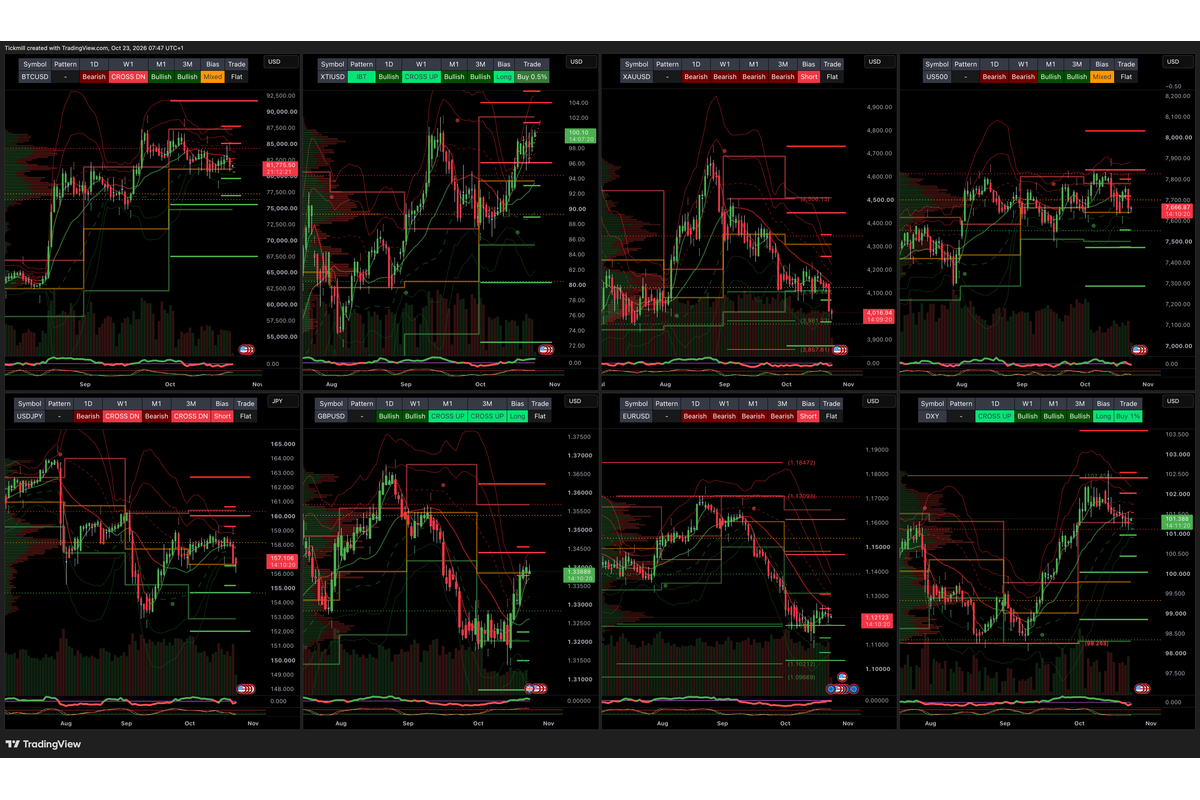
Technical & Trade Views
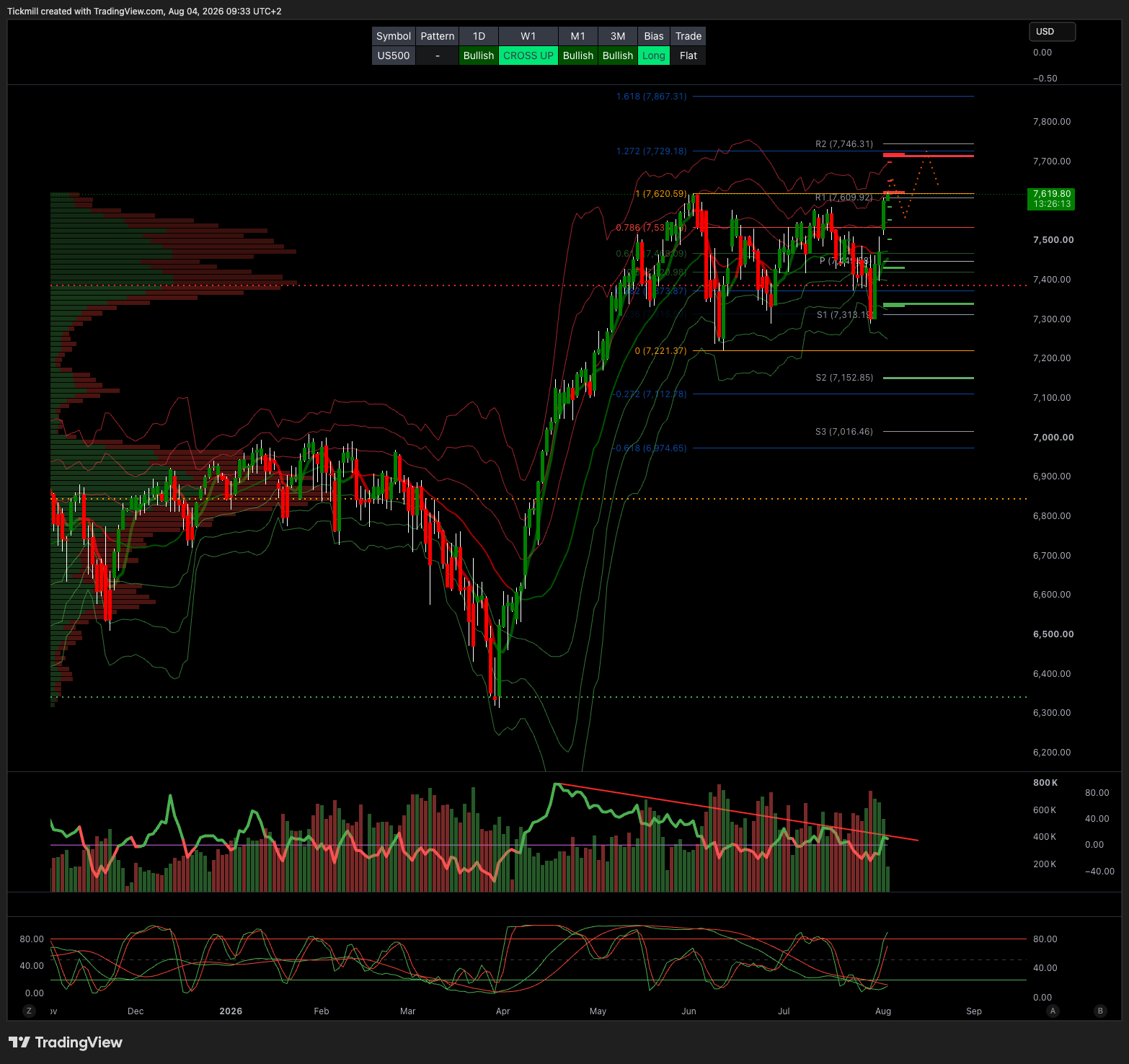
SP500 - 7485 weekly bull/bear level
Daily VWAP Bullish
Weekly VWAP Bearish>Bullish
Above 7485 Target 7620 > 7720
Below 7475 Target 7400
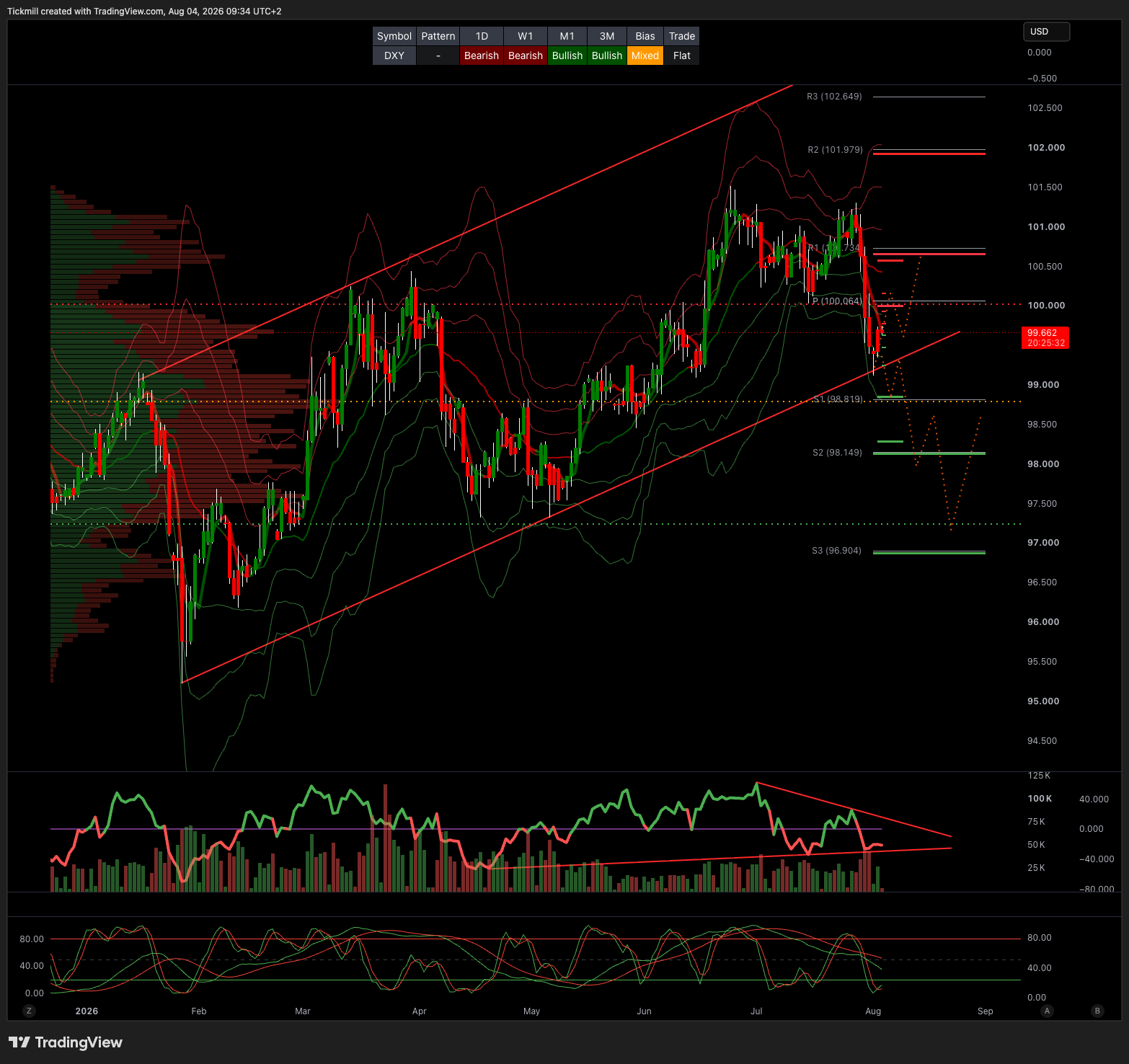
DXY - 99 weekly bull/bear level
Daily VWAP Bearish>BULLISH
Weekly VWAP Bearish
Above 99 Target 98
Below 99 Target 100
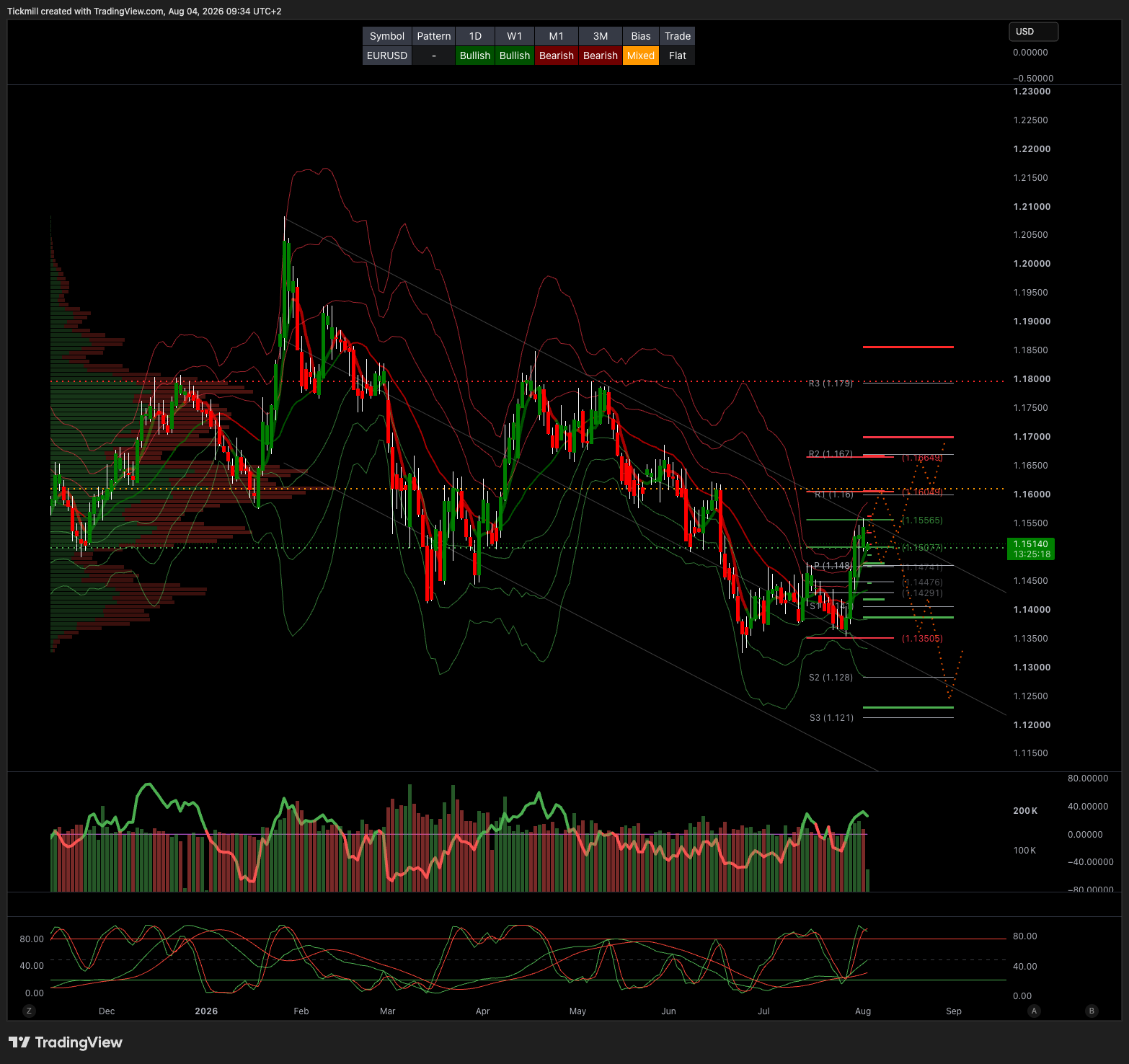
EURUSD - 1.1550 weekly bull/bear level
Daily VWAP Bullish
Weekly VWAP Bullish
Above 1.1550 Target 1.17
Below 1.1480 Target 1.1420
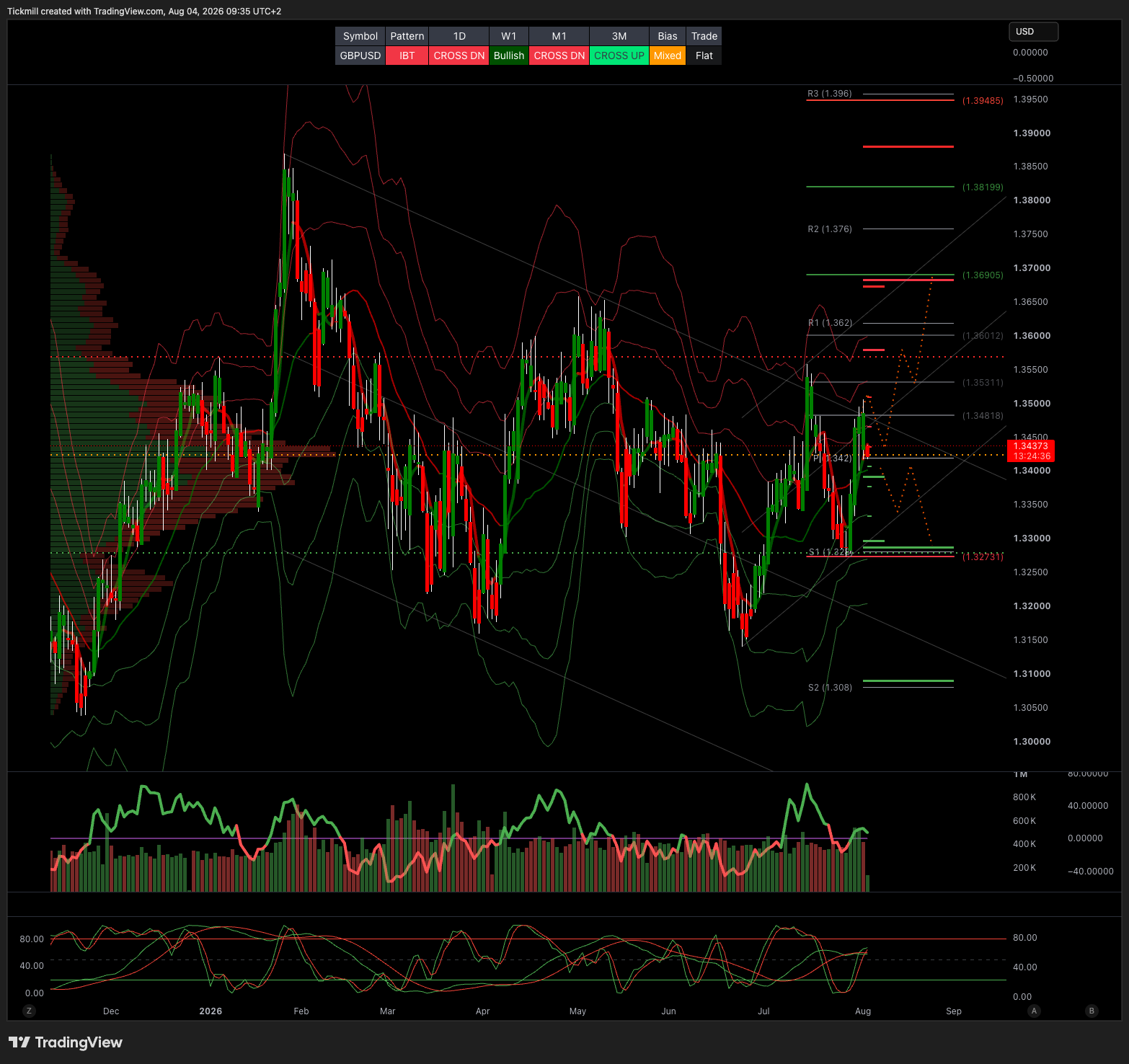
GBPUSD - 1.3450 weekly bull/bear level
Daily VWAP Bullish>Bearish
Weekly VWAP Bullish
Above 1.3450 Target 1.3690
Below 1.34 Target 1.33
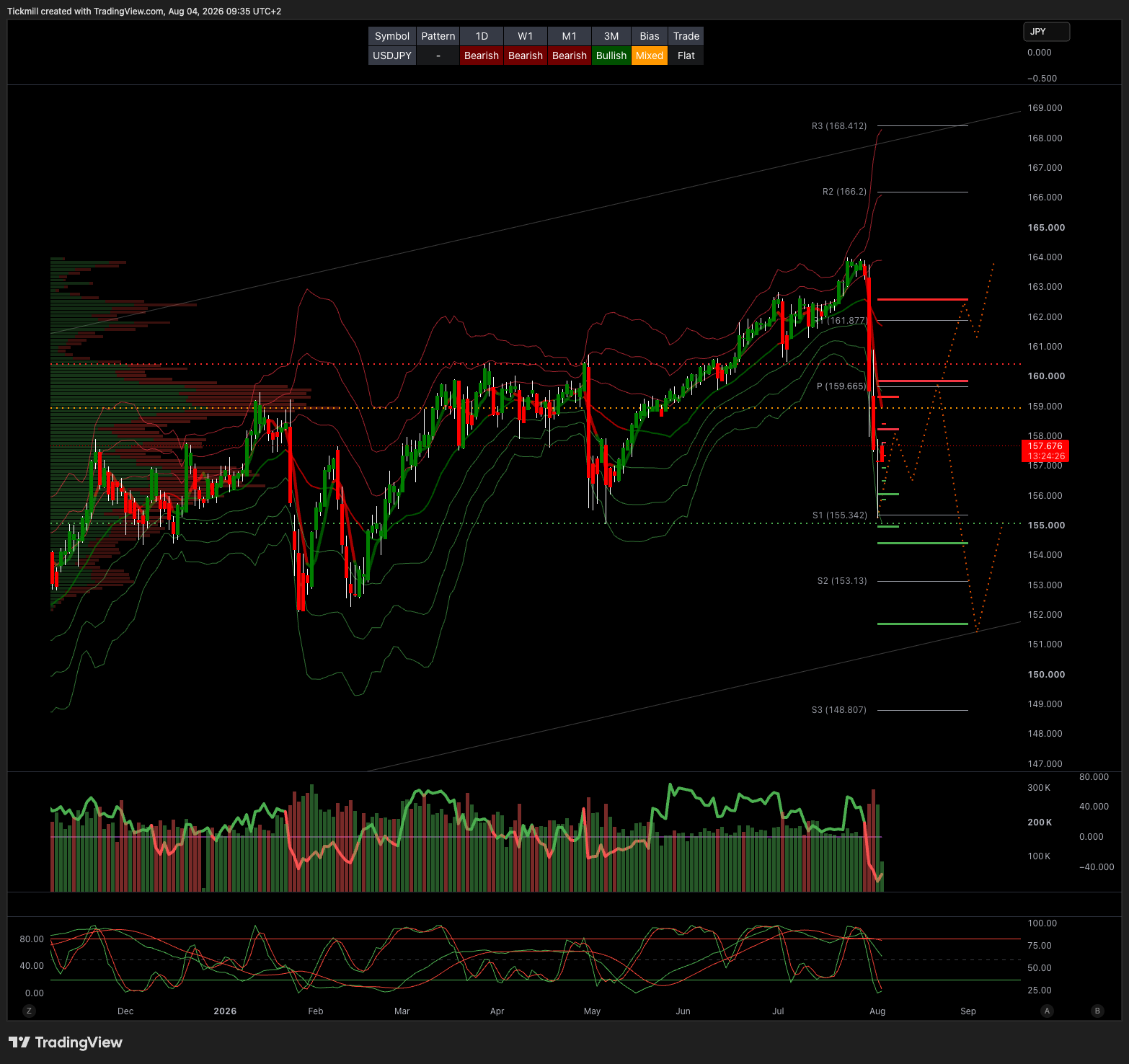
USDJPY - 160 weekly bull bear level
Daily VWAP Bearish
Weekly VWAP Bearish
Above 155 Target 160
Below 155 Target 152
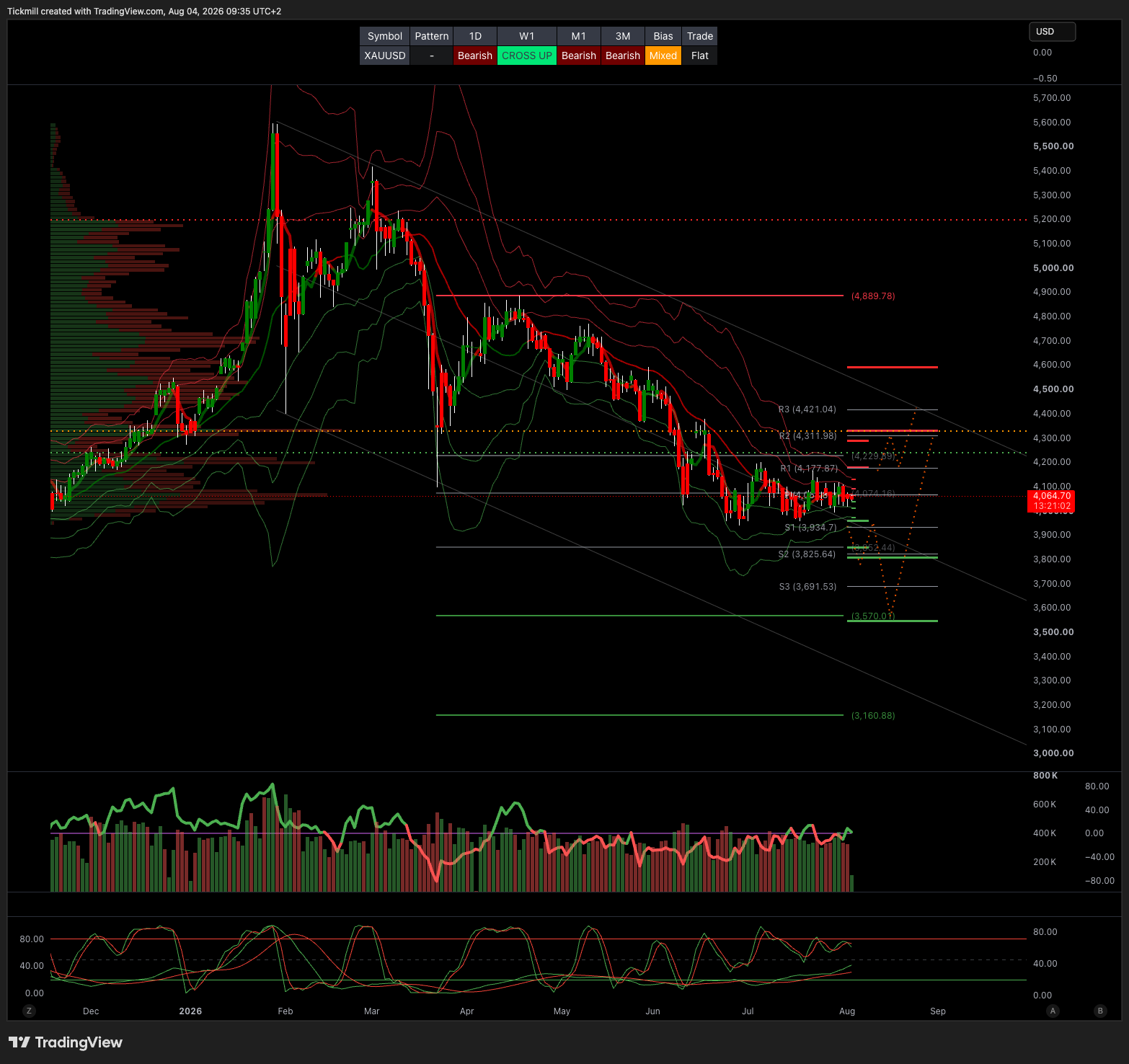
XAUUSD - 4170 weekly bull bear level
Daily VWAP Bearish
Weekly VWAP Bearish>Bullish
Above 4170 Target 4400
Below 3940 Target 3570
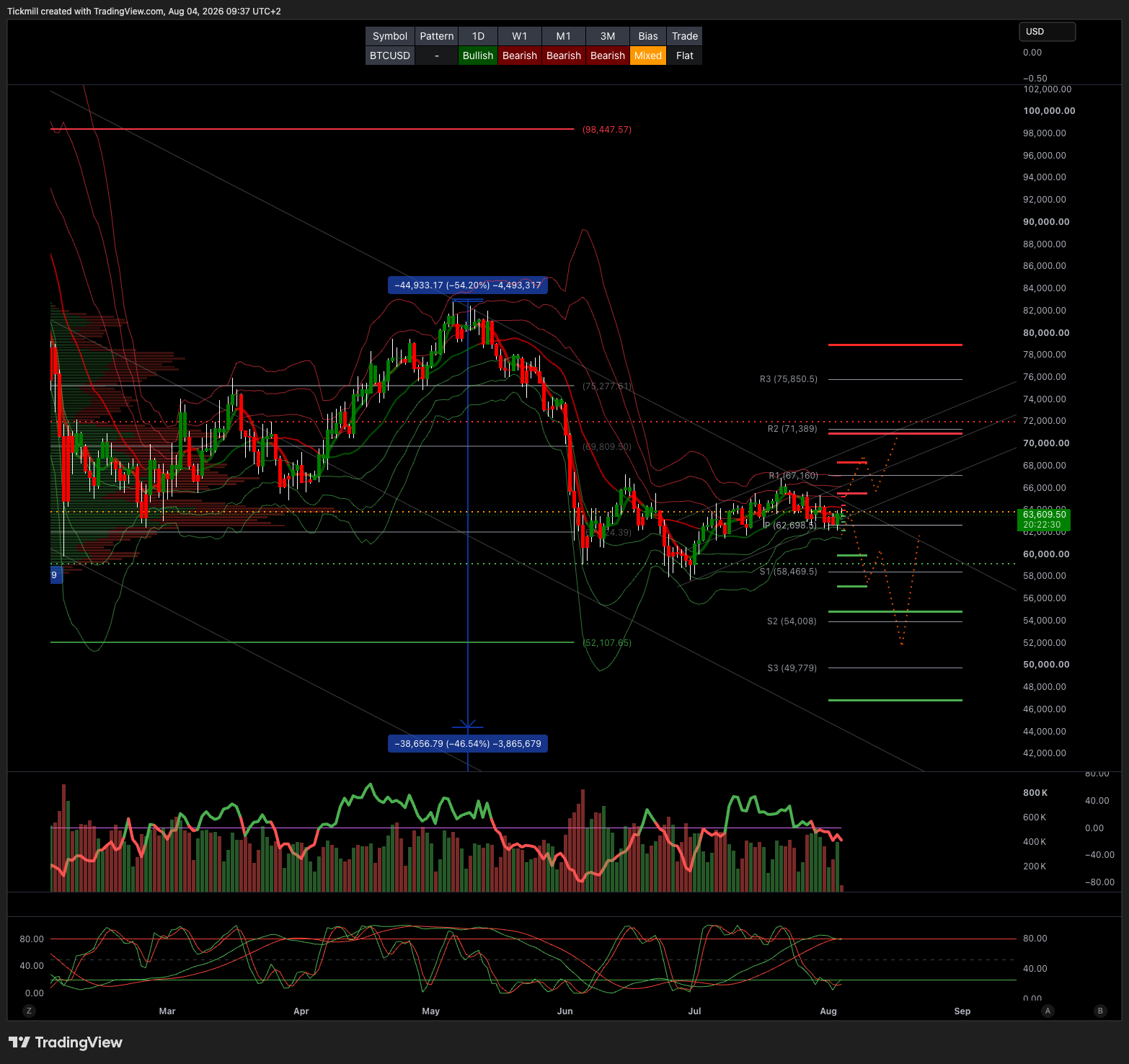
BTCUSD - 64k weekly bull bear level
Daily VWAP Bullish
Weekly VWAP Bearish
Above 64k Target 71k
Below 61k Target 52.2k


Comments
Log in or sign up to join the conversation.