

✨ Takeaways by Axi Select
• The rally is real but increasingly narrow, with leadership concentrated in a handful of mega cap and semiconductor names, while broader participation weakens
• Macro signals are flashing stagflation risks, yet equities continue to ignore them, creating a growing disconnect that rarely resolves without volatility
• Buybacks and earnings have supported the move so far, but with both pillars showing signs of strain, the market’s next leg will depend heavily on geopolitics and positioning rather than fundamentals
Curious Exuberance
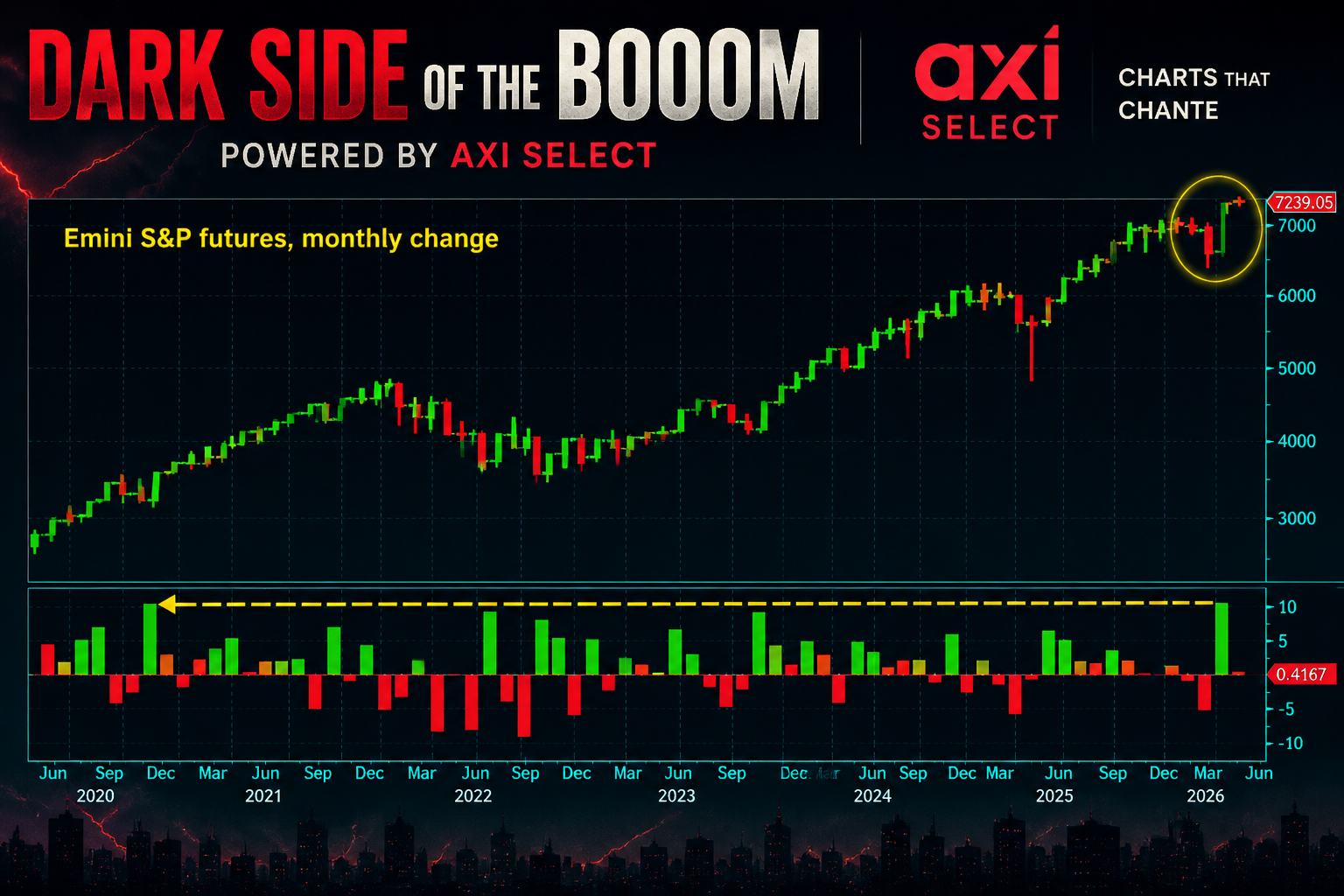
The tape is moving like a well-rehearsed orchestra playing to a crowd that has stopped listening to the underlying score, a five-week advance that marks the longest winning streak since 2024, driven less by conviction and more by a collective willingness to believe that the Iran war will resolve itself neatly into a market-friendly ceasefire.
The S&P 500 continues to print fresh records, five straight weeks of gains now etched into the board, as traders lean into the idea that diplomacy will eventually outrun disruption, that supply chains will remain intact, and that the economic damage feared at the onset of conflict will fade into a manageable footnote.
The latest push higher was greased by a combination of solid earnings and a steady drumbeat of AI exuberance, with roughly 81 percent of companies clearing the earnings bar and forward guidance holding firm enough to keep risk appetite alive. President Donald Trump added another layer to the narrative, suggesting Tehran is seeking a deal even as he made clear that the terms remain far from acceptable, a reminder that the geopolitical backdrop is less resolved than the equity market would have you believe.
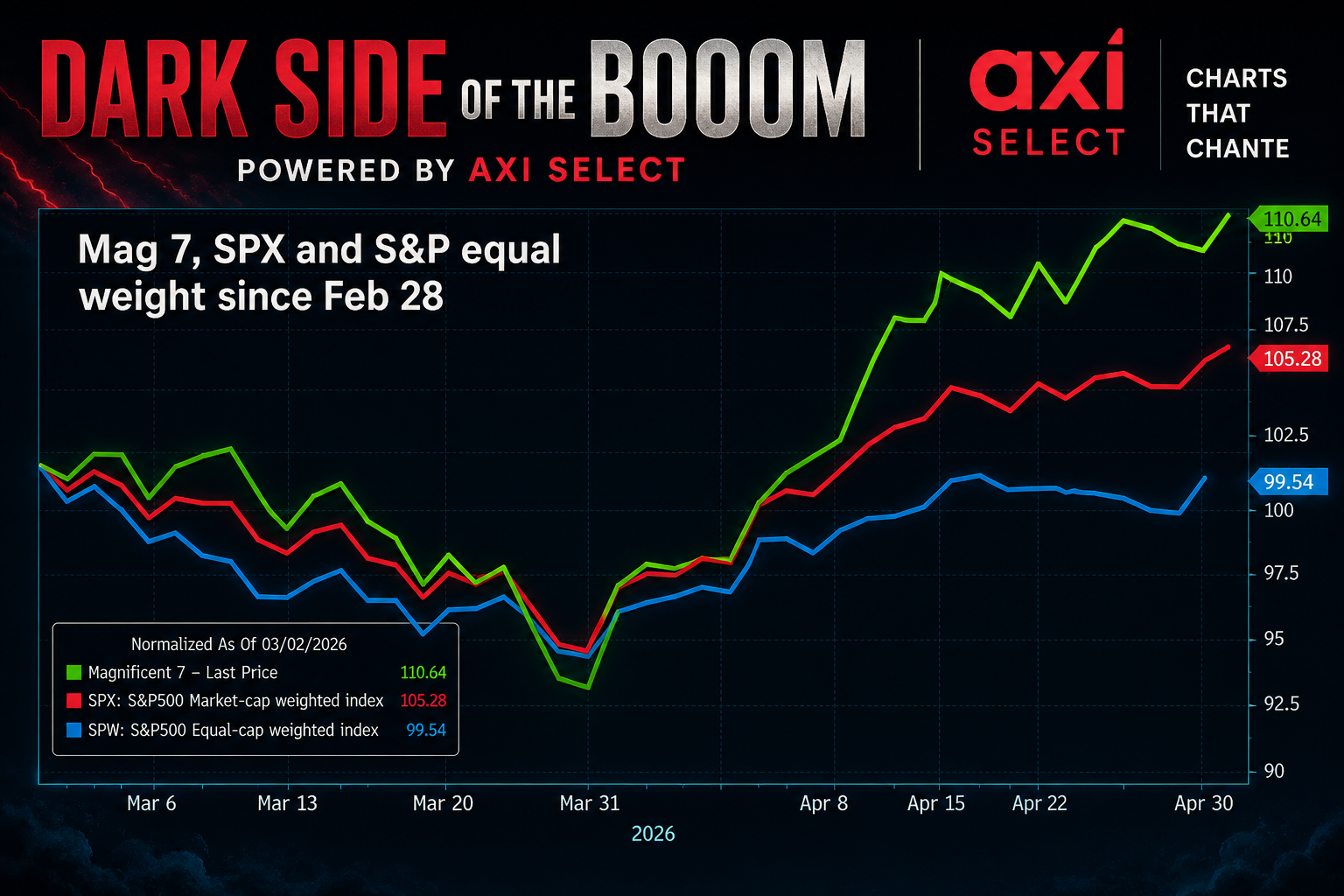
And yet beneath the surface, the market is telling a very different story, one that feels less like broad-based strength and more like a narrow corridor of momentum names dragging the index higher while the rest of the field quietly loses ground. The S&P has now delivered multiple record highs where decliners have overwhelmed advancers, including a recent session with 328 stocks down against just 172 up, the fourth such instance in the last five peaks. This is not a rising tide lifting all boats; it is a handful of heavily weighted vessels towing the index forward while the majority drift in the opposite direction. The Magnificent 7 have gained around 10 percent since the war began, double the broader index's advance, while the equal-weighted S&P has actually slipped by about 1 percent over the same period. The leadership is not just narrow, it is aggressively concentrated, and history has a way of punishing that kind of imbalance when positioning becomes too crowded to unwind gracefully.
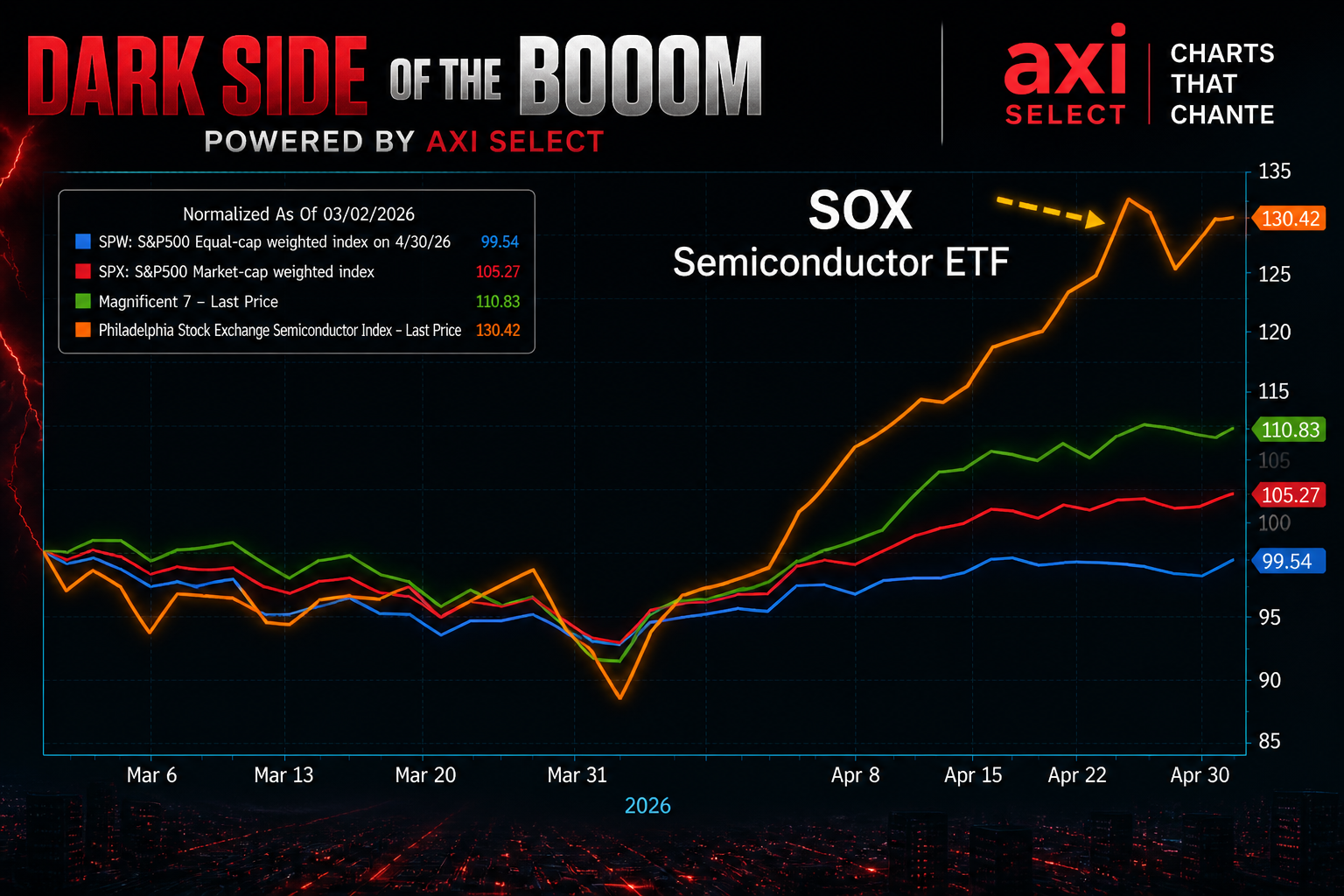
If the Mag 7 are the engine, then semiconductors have been the afterburner, with the SOX Semiconductor Index surging roughly 30 percent since the onset of the Iran conflict. The rally is being fueled by belief rather than delivery, a forward-priced dream that massive capital expenditure plans will materialize and cascade through the economy, even as the reality on the ground shows spending running well below those ambitious projections and a meaningful portion of data center buildouts delayed or quietly shelved. It is a classic market construct, pricing tomorrow’s promise at today’s peak multiple, assuming execution will eventually catch up with expectation. It rarely does in a straight line.
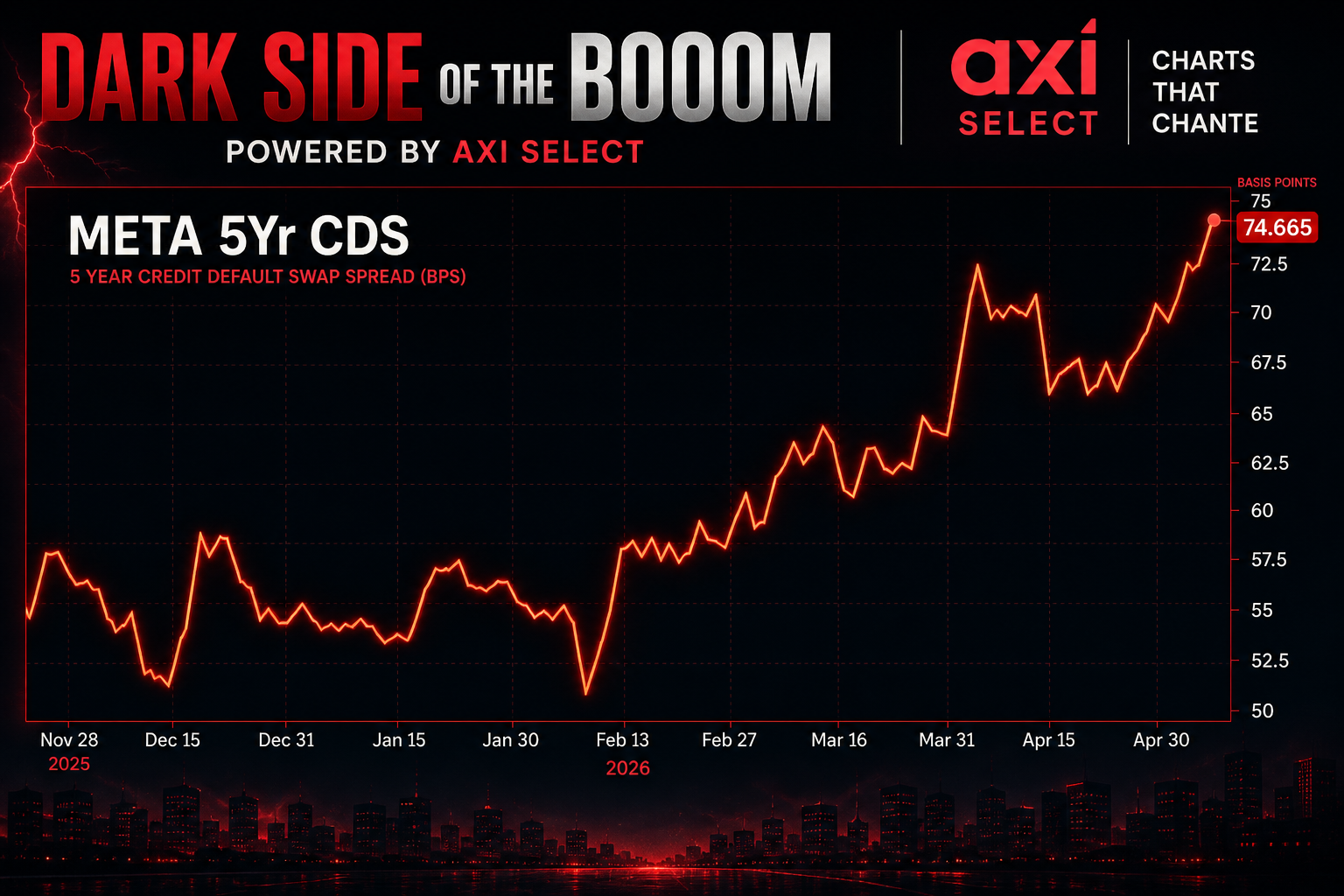
Meanwhile, stress signals are beginning to flicker at the edges. Credit markets are starting to whisper what equities refuse to say out loud, with Meta Platforms (META) seeing its CDS levels spike to record highs just as it taps the market for a massive 25 billion bond issuance, a move that underscores the growing tension between aggressive capex ambitions and deteriorating free cash flow. This is the kind of dislocation that tends to appear late in a cycle, when balance sheets are asked to stretch further than they were designed to go in order to sustain the growth narrative that markets have already priced in.
The rotation beneath the surface adds another layer of odd complexity. Software, long left for dead, staged a sharp rebound as beaten-down names delivered earnings beats and raised guidance, with stocks like Twilio (TWLO) and Atlassian (TEAM) surging more than 20 percent on the day. The move was enough to spark debate over whether this is the start of a genuine inflection or simply a mechanical bounce from deeply oversold levels, especially given that the software versus semiconductors ratio had collapsed to a record low, down roughly 50 percent year to date. Flows suggest some real money interest is returning, but the burden of proof remains high in a market that has repeatedly rewarded momentum over mean reversion.
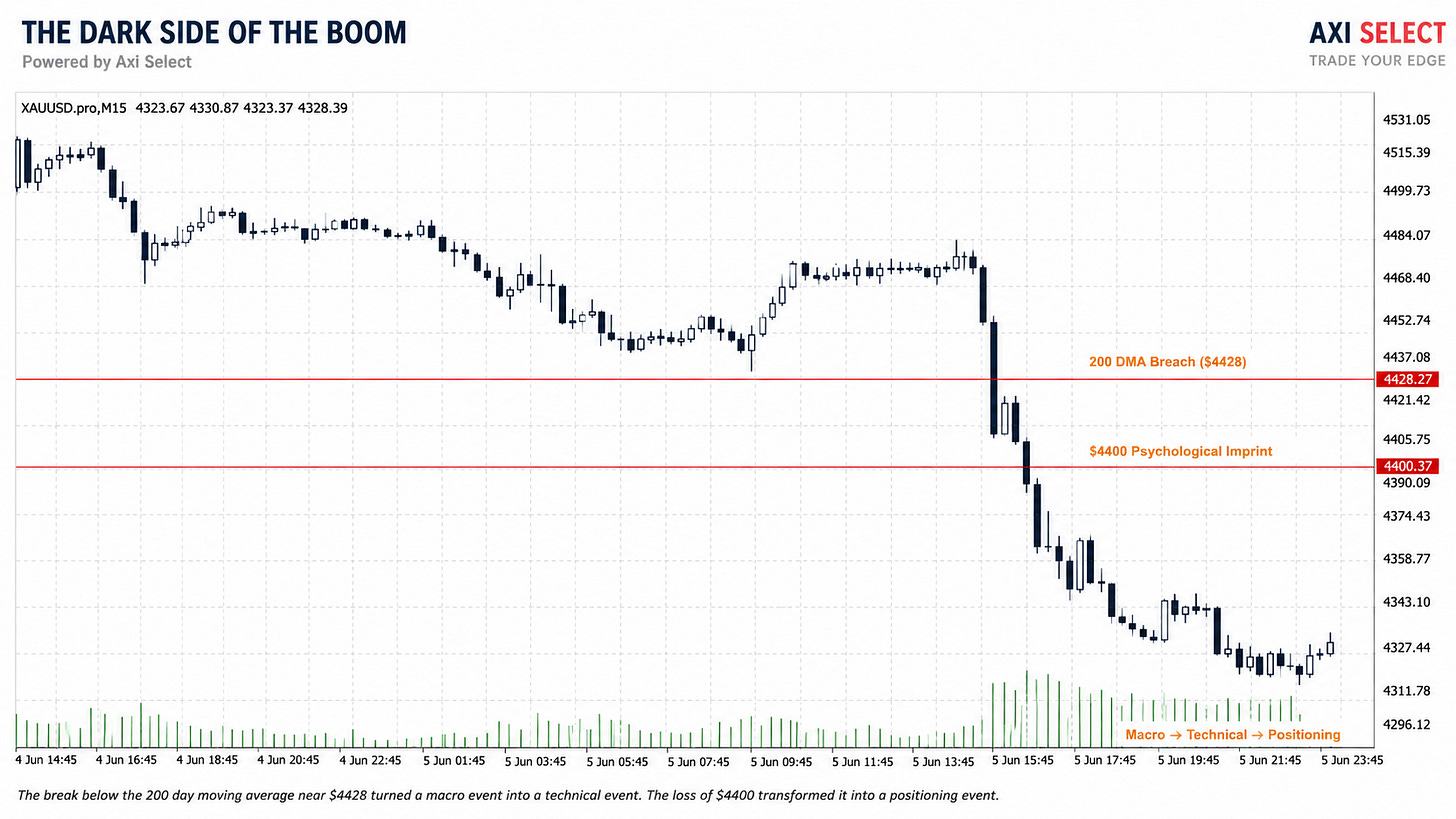
Cross asset signals, however, continue to diverge in ways that should not be ignored. The dollar has remained largely inert, while the yen has been caught in a violent tug of war as the Bank of Japan steps in with repeated interventions only to see the currency whip back in the opposite direction, a humbling reminder of how difficult it is to lean against global capital flows when the underlying drivers remain intact. Commodities are sending their own mixed messages. Oil has pulled back toward the 102 level on headlines suggesting renewed negotiations, reinforcing the binary nature of the geopolitical setup where ceasefire equals relief and escalation equals shock. Gold, the traditional messenger of macro stress, has struggled to find a consistent voice, swinging sharply intraday and failing to hold gains despite data that screams stagflation, with manufacturing surveys pointing to rising prices alongside weakening employment. The metal’s volatility has picked up, realized vol pushing into the mid 30s, but its signal has yet to translate into a broader market response.
That disconnect is perhaps the most telling feature of this tape. The latest manufacturing data came in soft, with clear stagflationary undertones, prices rising at the fastest pace since 2022 while employment indicators deteriorate, yet equities barely flinched. It is as if the market has decided that macro no longer matters, that liquidity, positioning, and narrative can override fundamentals indefinitely. History suggests otherwise. Markets can ignore macro signals for extended periods, but they rarely escape them entirely.
Looking ahead, the calendar is beginning to thin. Earnings season is largely behind us, with only about 10 percent of the index left to report, removing a key pillar of support that has helped justify elevated valuations. In its place comes a renewed reliance on buybacks, with roughly 65 percent of companies now exiting blackout windows and returning to the market as buyers of their own stock. But even here the foundation is less solid than it appears, as many of the largest buyers are simultaneously ramping up capital expenditure and, in some cases, operating with constrained free cash flow, raising questions about how sustainable that bid will be over time.
So the market presses higher, a narrow leadership cohort pulling the index to fresh highs while breadth deteriorates, macro signals flash warning signs, and geopolitical risks remain unresolved beneath a thin veneer of optimism. It is a powerful rally, no question, but also a fragile one, built on a foundation that requires everything to go right at the same time. The longer that tension persists, the more the tape begins to feel like a coiled spring, not yet ready to snap, but storing energy with every incremental push higher.


Comments
Log in or sign up to join the conversation.