

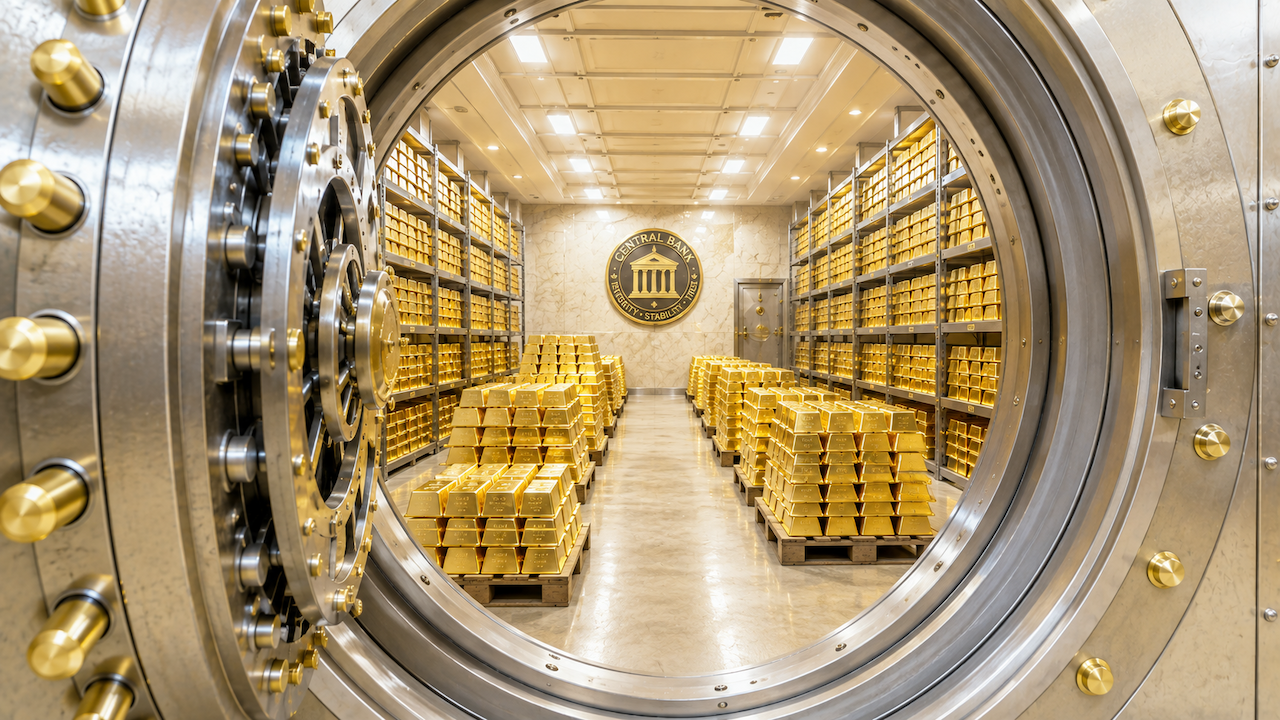
The central bank gold spree continued unabated in August, with global gold reserves increasing by a net 39 tonnes.
Year to date, central banks globally have reportedly added approximately 170 tonnes of gold.
The Gold Buyers
The People’s Bank of China ranked as the top gold buyer in August, increasing its official reserves by another 20 tonnes. That followed on the heels of a 20-tonne reported purchase in July.
It was the 22nd straight month of reported gold buying, raising official Chinese reserves to 2,387 tonnes. That makes up about 9 percent of the country’s official total reserves.
Year-to-date, the People’s Bank of China has reported 80 additional tonnes added to its gold holdings.
Notice the emphasis on “reported” and "official."
China is among the central banks likely holding significantly more gold than publicly disclosed. As Jan Nieuwenhuijs reported, the People's Bank of China is secretly buying large amounts of gold off the books. According to data parsed by the renowned Money Metals researcher, the Chinese central bank currently sits on more than 5,000 tonnes of monetary gold in Beijing – more than TWICE what Chinese officials publicly admit.
The mainstream is finally taking notice. Goldman Sachs picked up on China’s undisclosed purchases earlier this summer, and BMO Capital analysts estimated that Chinese gold reserves could surpass the U.S.’s within five years.
Poland still ranks as the top gold buyer so far this year, after adding another 8 tonnes to its holdings in August. So far in 2026, the National Bank of Poland has increased its gold reserves by 98 tonnes. It now holds 648 tonnes of the yellow metal, making up roughly 28 percent of its total reserves.
After selling one tonne of gold in July, Uzbekistan pivoted back to buying in August, adding 8 tonnes to its reserves. So far this year, the Uzbek central bank has increased its gold holdings by a net 50 tonnes.
The Uzbek central bank holds about 90 percent of its reserves in gold.
It is not unusual for central banks that buy from domestic sources, such as Uzbekistan and Kazakhstan, to pivot back and forth between buying and selling.
Speaking of Kazakhstan, its central bank reported a 7-tonne increase in its gold reserves in August. It has expanded its gold holdings by just under 39 tonnes this year.
The Czech Republic has been one of the most consistent gold buyers over the last few years. The trend continued in August with yet another 2-tonne purchase.
The Czechs have adopted a slow, steady approach, buying gold for 42 straight months. The country added 20 tonnes to its reserves last year and now holds 86 tonnes of gold. Czech officials say they plan to increase gold reserves to 100 tonnes by 2028.
Turkey flipped back to buying in August after three straight months of sales. The Turkish central bank reported a 3-tonne increase to its gold reserves. Before the August purchase, the Central Bank of the Republic of Turkey had divested 85 tonnes of gold as it coped with a weak currency and rising oil price pressure.
Turkey sold a large amount of gold earlier this year to backstop the lira.
Bolivia and Ghana both reported 1-tonne increases to their gold holdings.
The Gold Sellers
Russia was the only notable seller in August, shrinking its gold reserves by another 6 tonnes. Russia has sold 56 tonnes of gold year-to-date, leaving its official gold reserves at 2,271 tonnes.
Russia is tapping its gold reserves to cope with economic sanctions and a wartime economy.
Jordan also sold gold in August, decreasing its reserves by 3 tonnes. This followed a 1-tonne sale in July.
The Big Picture
Looking at the trends, central bank gold buying moderated in 2025 but remained far above the recent historical average. Official net full-year buying came in at 863.3 tonnes. That was down 21 percent year-on-year, charting the lowest level since 2021.
However, although central bank gold purchases declined last year, they remained well above the 2010-2021 annual average of 473 tonnes.
Last year was the fourth-largest expansion of central bank gold reserves on record. The all-time high was set in 2022 (1,136 tonnes). It was the highest level of net purchases on record, dating to 1950, including since the suspension of dollar convertibility into gold in 1971.
The surging gold price likely factored into slowing central bank gold accumulation. As the World Gold Council put it, the higher price prompted “a more cautious approach.”
“This highlights that central banks are not insensitive to price dynamics, even as their long-term strategic interest in gold remains firmly intact.”
In the latest World Gold Council survey, central bankers overwhelmingly said they expect global gold reserves will continue growing over the next 12 months. They seem to be putting their money where their mouths are. With prices moderating, it appears that several central banks are taking advantage of the recent correction to accumulate gold more quickly.
The World Gold Council said central bank gold activity “suggests that central bank activity continues to reflect longer-term reserve objectives, while monthly fluctuations are more likely to capture differences in implementation, market conditions and country-specific liquidity requirements.”



Comments
Log in or sign up to join the conversation.