


Blockchain.com is reportedly seeking about $500M in a US initial public offering (IPO) later in 2026 at a valuation of $4Bn to $6Bn, according to people familiar with the matter cited by Bloomberg.
That target sits well below the roughly $14Bn valuation the crypto services company commanded at its 2022 peak, and one person said Blockchain.com would consider a smaller raise if market conditions require it.
The reported plan is not yet a filed prospectus, a priced deal, or a scheduled roadshow. According to Bloomberg sources, it signals to prospective investors that the company intends to list this year. The offering would ultimately answer whether institutional investors are willing to buy equity in a crypto infrastructure business again.
This follows two years of sector-wide valuation resets, rather than a question of whether investors want more exposure to a single token. The reported plan therefore tests whether this year’s crypto-market thaw can translate into investor interest in a public offering.
What is the Reported Blockchain IPO Plan?
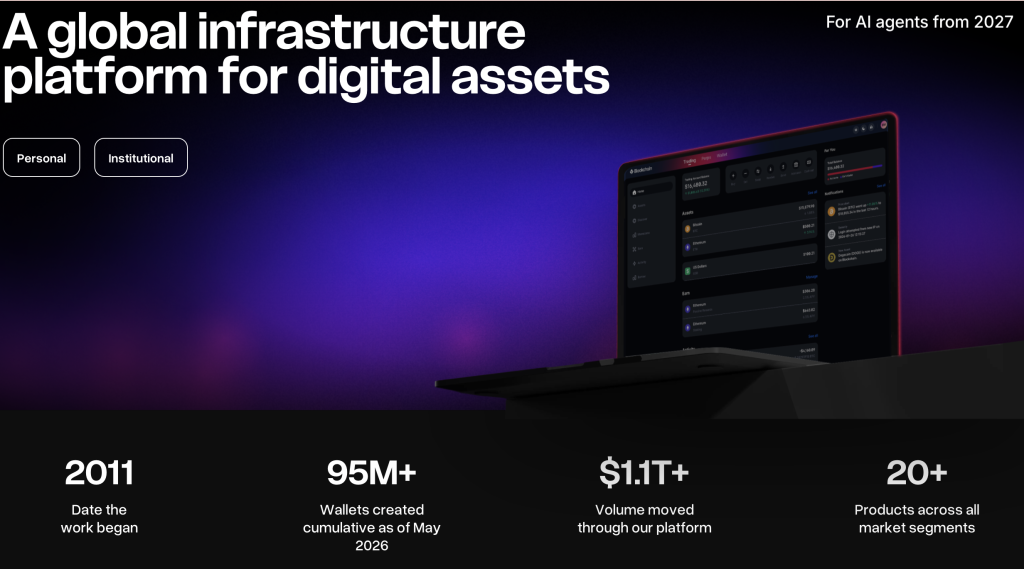
Blockchain.com Group Holdings Inc., described by Bloomberg as one of the oldest crypto services companies, says it wants to complete a US listing this year.
People familiar with the matter, who asked not to be identified because the information is not yet public, said the company is targeting proceeds of about $500M at a $4Bn-$6Bn valuation, with a smaller raise considered if needed.
Public reporting has not identified a ticker, underwriters, a roadshow date, or a final valuation. Secondary coverage, including from crypto trade press, indicates the company may have filed confidential offering materials with the US SEC earlier in 2026.
However, this has not been confirmed through a public registration statement, and the offering remains unpriced and without a formal date.
The Valuation Reset and the Institutional Test
The proposed $4Bn-$6Bn range would mark a substantial reduction from the roughly $14Bn valuation Blockchain.com reportedly reached during its 2022 private-funding peak.
A later financing round in 2023 valued the company well below that figure, though the exact number varies across reports, and comparisons between private funding rounds and a public offering are complicated by differences in share classes and how preferred equity gets priced relative to common stock sold to public-market investors.
The range does confirm a willingness to price the deal for demand rather than nostalgia. Claims circulating in secondary coverage that Blockchain.com has been profitable on an adjusted basis for three consecutive years have not been verified through a public filing, and investors will want that substantiated in registration documents before extending confidence to either end of the pricing range.
What Could Move Investor Demand for the Proposed Blockchain IPO
Several observable signals will separate a genuine institutional re-entry into digital-asset equities from a cautiously priced test balloon. Where the deal ultimately settles within the $4Bn-$6Bn band, whether the $500M target gets upsized or trimmed.
How any implied revenue multiple compares with fintech and exchange peers will matter more than the headline valuation figure alone. CoinShares chose a different route in 2026, reaching Nasdaq through a $1.2Bn SPAC merger rather than a traditional IPO, a reminder that public-market access for crypto firms now comes through more than one structure.
First-day trading and the composition of the order book, long-only institutional accounts versus crypto-native funds, would offer a cleaner read on demand than the pricing range by itself.
A listing that clears near the top of the range with broad institutional participation would likely encourage other private crypto companies weighing public markets; a reduced raise or a valuation forced toward the bottom would suggest public markets are reopening only at materially more conservative terms.



Comments
Log in or sign up to join the conversation.