


In Coinbase crypto news today, the firm was registered as a US derivatives clearing organization by the Commodity Futures Trading Commission (CFTC), effective Monday, September 28, 2026, with authorization covering fully collateralized futures, options on futures, and swaps.
The order explicitly excludes leveraged products, which means Coinbase now controls the clearing layer of its regulated derivatives business without yet controlling all of it. The registration slots directly into an existing structure. Coinbase Derivatives LLC operates as the exchange, listing U.S.-regulated futures on Bitcoin and Ethereum alongside commodity and equity-index contracts, plus long-dated perpetual-style crypto futures.
Coinbase Financial Markets Inc. serves as the futures broker. Coinbase Clearing LLC now adds the third leg, sitting between buyers and sellers to manage settlement and counterparty risk, including what happens if one side defaults. Coinbase General Counsel Molly Abraham characterized the approval as completing the company’s end-to-end derivatives infrastructure.
It has been framed as a step toward bringing more regulated products to market with USDC collateral and continuous settlement rather than the batch-based cycles typical of legacy clearinghouses. That framing matters because the CFTC’s approach to crypto derivatives rulemaking has moved toward accommodating digital-asset-native infrastructure rather than forcing it into traditional margining frameworks.
What Does the CFTC Authorization Mean for Coinbase Crypto Operations?
The CFTC’s public registry lists Coinbase Clearing under Derivatives Clearing Organization entry 64361, with remarks noting that the entity may clear fully collateralized futures, options on futures, and swaps.
Fully collateralized, in CFTC parlance, means the clearinghouse holds enough funds at all times to cover the maximum possible loss on a position, the opposite of a margined structure where traders post a fraction of notional exposure and borrow against the rest.
That distinction is the entire story of what this approval does and doesn’t do. It authorizes Coinbase to clear a defined category of collateralized products directly, but it does not extend to leveraged derivatives, which remain outside the order’s scope.
Coinbase’s existing margined business and any conventionally leveraged contracts will continue to route through outside clearing arrangements for now.
Coinbase Continues to Shift from an Exchange to a Full Stack Platform
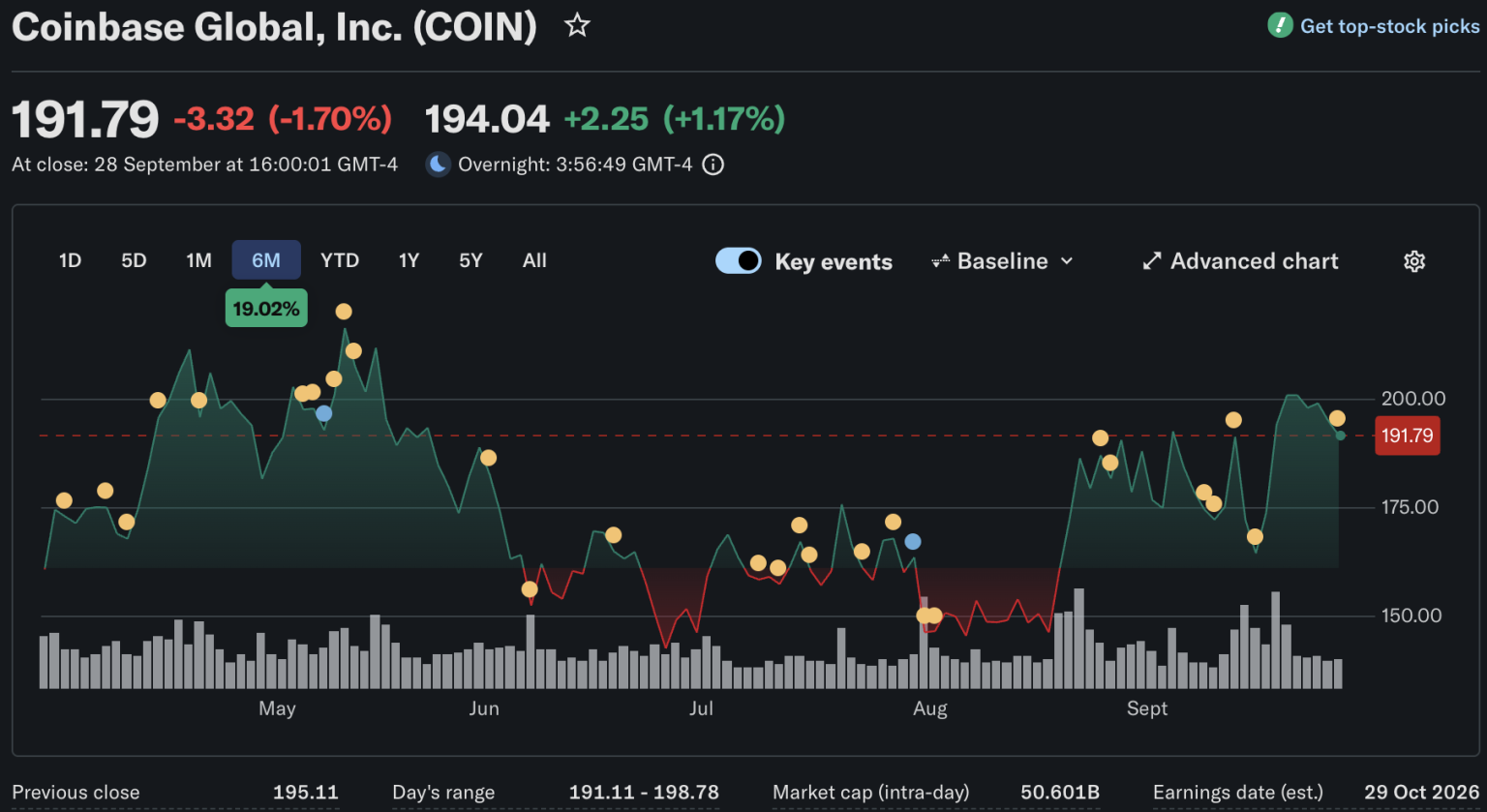
The practical effect is that Coinbase now holds exchange, broker, and clearinghouse licenses under one roof for a specific slice of its derivatives lineup, a materially different position than relying on third parties for every function.
It also reinforces Coinbase’s shift from a crypto trading venue to a vertically integrated financial-market infrastructure provider, a trajectory that runs parallel to its recent push into perpetual futures products, where the same fully collateralized-versus-leveraged distinction determines which entity clears the trade.
Coinbase is not alone in pursuing this structure. Kraken parent Payward completed its acquisition of Bitnomial in May, gaining a CFTC-regulated exchange, clearinghouse, and futures brokerage of its own, according to the primary reporting on the Coinbase order.
The two moves suggest that owning the clearing layer, rather than renting it, is becoming a competitive baseline among U.S.-regulated crypto derivatives platforms, not a one-off differentiator.
The approval does not eliminate Coinbase’s reliance on outside clearing partners across its broader derivatives suite. Third-party arrangements remain in place for products outside the current authorization.



Comments
Log in or sign up to join the conversation.