


Bitcoin (BTC.X) dropped to about $82,900 on September 28, 2026, down -1.8% in 24 hours, after trading near $84,400 over the weekend.
The decline followed President Trump’s rejection of Iran’s proposal to reopen the Strait of Hormuz if the US lifted its naval blockade and sanctions.
Despite this, Bitcoin remained resilient, up around +1.5% over the past week, coinciding with increased US spot Bitcoin ETF demand. Brent crude closed the previous week at around $104 a barrel, linking Middle East tensions to crypto sentiment.
How Does Bitcoin ETF Demand Shape the Ongoing Pullback?
The broader market move was uneven rather than uniformly sharp. Ethereum fell 1.9% to around $2,646 and is down about 0.9% on the week, while XRP dropped 2.2% to $1.48.
Solana slipped -1.2% to roughly $119 but remained up +6.7% over seven days, and total crypto market capitalization stood at about $2.9 trillion, down -2% on the day, per CoinGecko.
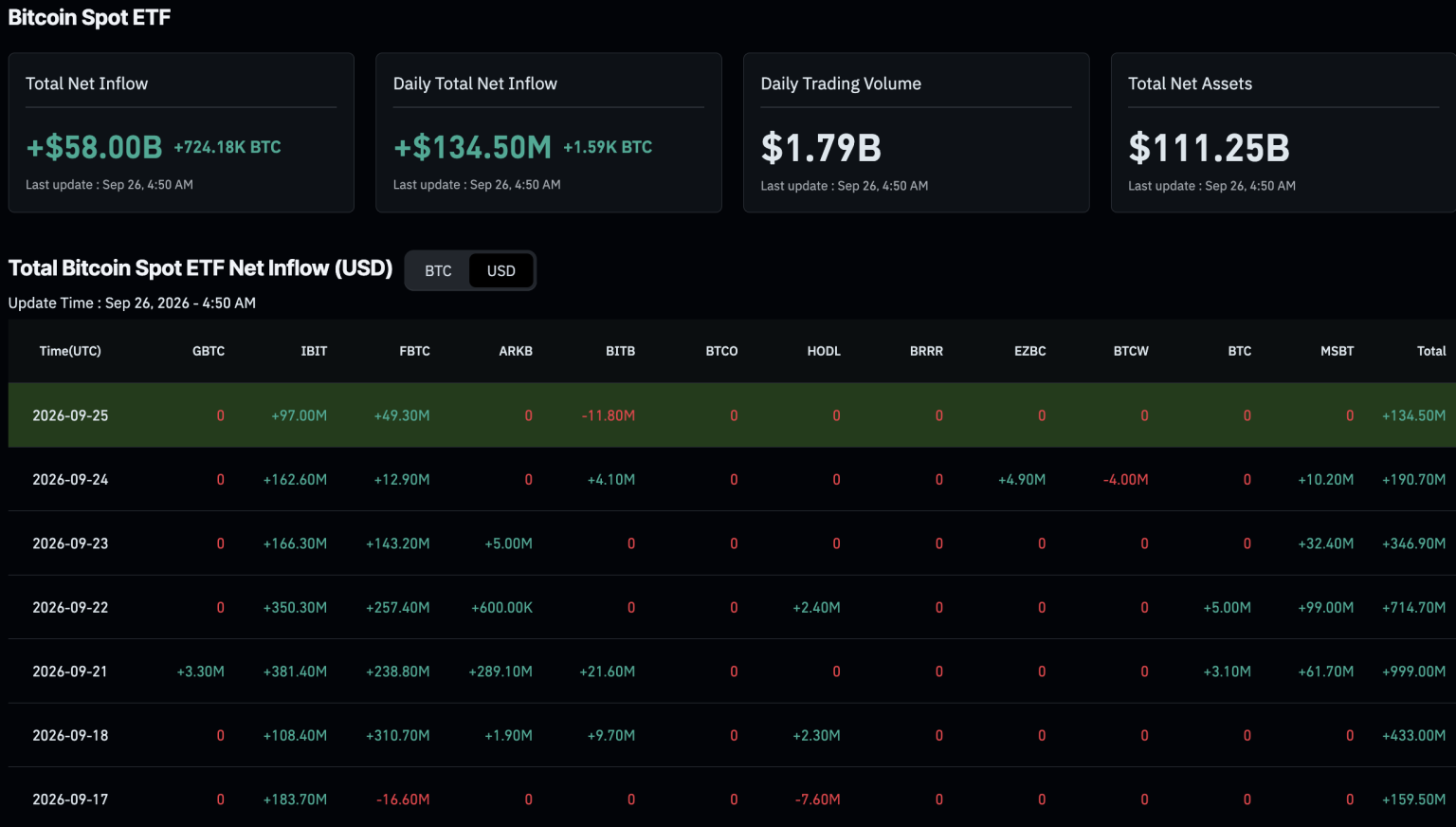
Behind the relatively orderly retreat sits a notable flow signal: US spot Bitcoin ETFs took in about $2.2Bn over the first four sessions of the prior week, according to Bitbo’s flow data, led by a single-day intake of $1.42Bn on September 21.
BlackRock’s IBIT accounted for roughly $1.05Bn of that four-day total, arriving directly after three consecutive days of outflows the week before.
That reversal in ETF positioning near a key psychological price level may have given the market a cushion of buy-side demand heading into the weekend’s geopolitical headlines, though the flow data alone does not prove that ETF demand limited Monday’s decline.
Geopolitical Risk and the Bitget Exchange Breach Compound the Picture
Trump’s rejection leaves open whether US-Iran talks restart this week as he has suggested, or whether military action resumes before or after the midterms, a binary that traders are pricing into both oil and risk assets simultaneously.
Layered onto that uncertainty was last week’s breach at Bitget, which the exchange has since revised to an estimated $387.5 M loss. Bitget began reopening withdrawals in phases on Monday, starting with Bitcoin, with Ethereum, USDT, and other assets scheduled to follow through October 2.
The same ETF inflows that helped absorb Trump’s Iran rejection also appear to have coincided with the market’s ability to shrug off the Bitget news without a deeper selloff, though again the relationship is correlative rather than demonstrated.
Taken together, the episode illustrates how a single week can stack a sovereign-risk shock on top of a centralized-exchange incident without producing a disorderly break in Bitcoin’s price.
What Traders are Watching Next
The immediate variables are whether US-Iran talks resume as Trump indicated and whether Brent crude holds above $100 a barrel. A durable diplomatic opening would ease pressure on inflation expectations broadly, while confirmation that strikes will resume, whether before or after the midterms, would test how far Monday’s selling extends into the rest of the week.
Bitcoin’s 1.9% seven-day gain and Solana’s 6.7% weekly advance are snapshots as of Monday’s trading session rather than confirmation of a durable trend, and both remain sensitive to the next headline out of Doha, Tehran, or Washington.
For now, the interplay between ETF flow data and geopolitical risk remains the dominant lens through which the market is pricing Bitcoin’s next move.



Comments
Log in or sign up to join the conversation.