


Bitcoin (BTC.X) staged a modest recovery on Saturday, October 10, but remained on track for a weekly decline as rising oil prices, higher U.S. Treasury yields, and renewed cryptocurrency security concerns continued to weigh on market sentiment.
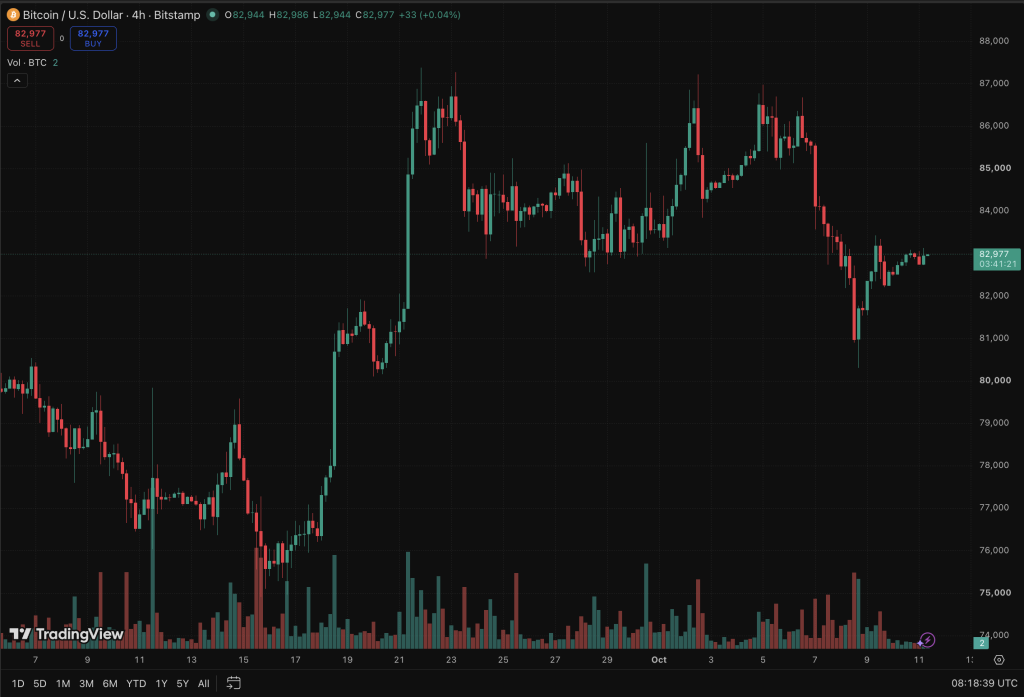
Bitcoin, the world’s largest cryptocurrency by market capitalization, was trading at $83,025.40 at 14:23 ET (18:23 GMT), up 0.7% over the previous 24 hours. The digital asset traded between $82,537.70 and $83,164.10 during the session, recovering some ground after a difficult week.
Despite Saturday’s gains, Bitcoin remained well below the $87,000 level reached the previous Sunday. The retreat left BTC down about 3% over seven days, underscoring the market’s challenges as investors contend with macroeconomic uncertainty and reduced institutional demand.
Persistent outflows from U.S. spot Bitcoin ETFs added pressure, while concerns about cryptocurrency wallet security and potential implications of AI-related vulnerabilities added uncertainty.
Bitcoin Faces Macroeconomic Headwinds
Broader financial market conditions are significantly influencing Bitcoin’s short-term direction. Rising energy prices may fuel inflation, while higher Treasury yields could make traditional investments more appealing than cryptocurrencies.
Traders increasingly worry that U.S. interest rates may stay high longer than expected, potentially restricting liquidity for speculative assets like Bitcoin. Security issues have also resurfaced, with reports of theft linked to Ledger hardware wallets and concerns about AI-related vulnerabilities affecting digital asset safety.
This comes as the market approaches the anniversary of the October 10 flash crash, highlighting its vulnerability to sudden price movements.
Recent CoinDesk analysis found that Bitcoin had 10 trading days in 2026 when prices shifted dramatically, even as overall volatility fell from 84% in 2018 to 46%. This suggests that lower volatility does not eliminate the risk of significant short-term price fluctuations.
Bitcoin Liquidity Improves Despite Weaker Trading Volumes
Market liquidity indicators offer a mixed picture of Bitcoin’s current position. Bitcoin order-book depth sat within 1% of its market price reached $11.7M on October 7.
That was about 75% higher than the level recorded on the day of the flash crash, suggesting the market had regained some capacity to absorb large orders without significant price dislocations.
Trading activity has also remained subdued. Weekly spot cryptocurrency trading volume was nearly two-thirds below the $801 billion recorded during the flash-crash week.
Improved Bitcoin order-book depth and weaker overall trading volumes suggest liquidity recovery has not necessarily translated into broader investor participation.
US Inflation Data Could Influence Bitcoin’s Next Move
Investors are bracing for the U.S. consumer price index (CPI) and producer price index (PPI) reports next week, as these inflation readings could influence the Federal Reserve’s policy decisions.
If inflation remains high, interest rates may stay elevated, which could challenge Bitcoin. Market expectations suggest that the Fed will keep rates unchanged at the October 27–28 meeting, with a possible 25-basis-point increase in December.
For crypto traders, the upcoming data may show whether Bitcoin’s recent weakness is a temporary dip or the start of a deeper downturn. Softer inflation could ease financial concerns, while unexpected price hikes may heighten caution in risk assets.
Strategy’s STRC Shares Approach $100
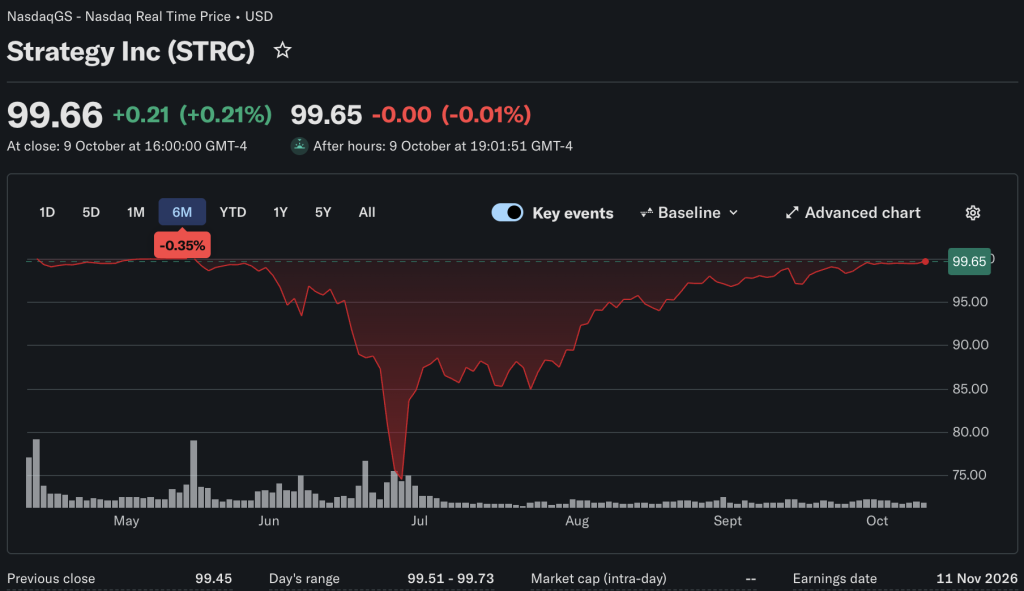
Despite broader market uncertainty, Strategy’s Nasdaq-listed preferred shares, STRC, moved higher, reaching $99.71, their highest since June.
With a 12% annualized dividend backed by the company’s dollar reserves, a rise above $100 could let Strategy issue more preferred shares to buy Bitcoin, depending on its financing plans.
As one of the largest corporate Bitcoin holders, Strategy’s ability to raise funds can influence institutional demand for Bitcoin. Nonetheless, STRC’s performance does not directly reflect Bitcoin’s market recovery, as it is influenced by its own dynamics.



Comments
Log in or sign up to join the conversation.