


Bitcoin (BTC.X) fell below $83,000 as oil topped $102 and Treasury yields hit 5.31%, while liquidations and macro risk intensified market pressure.
Brent crude rose 2% to above $102 a barrel as Bitcoin fell -2% to just under $82,800 in Thursday morning Asian trading, a cross-asset move that put macro risk back at the center of the crypto selloff.
The 10-year U.S. Treasury yield added two basis points to 5.31%, while Bitcoin’s break below $83,000 reopened a downside scenario identified by FxPro.
Oil advanced after the White House asked the Pentagon for strike options involving Iran; the report does not confirm that military action was authorized or undertaken. A storm that disrupted some U.S. oil output and reported Houthi attacks on two Saudi Arabian airports also added pressure to energy markets.
The immediate question is whether Bitcoin’s break reflects a broader repricing of risk, forced deleveraging after a large liquidation day, or both. Available market data shows those pressures arriving together, but it does not establish one as the sole cause of the decline.
Bitcoin Breaks the Level FxPro Was Watching
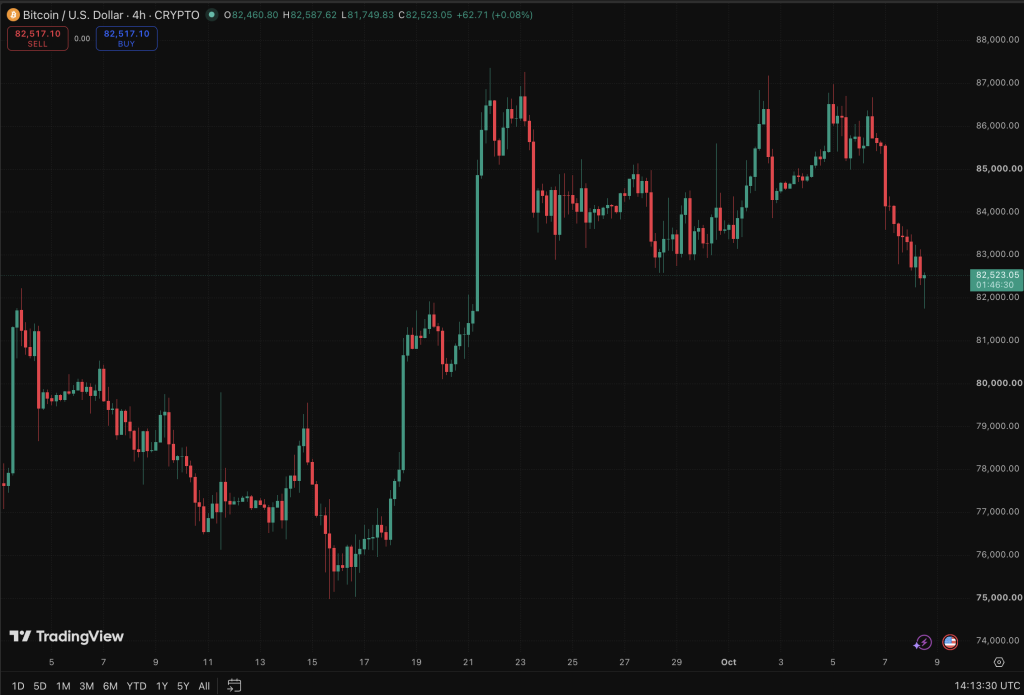
The move below $83,000 matters because FxPro had identified that level as a recent low whose loss would confirm that sellers had taken control. The firm said Bitcoin could reach $80,000 “fairly quickly” if the break accelerated, making that level a downside scenario rather than a confirmed forecast.
That distinction matters: a breached support level can sharpen attention on the next downside area without guaranteeing price will travel there. The primary report prices Bitcoin just under $82,800 during Asian hours but does not make the $80,000 scenario inevitable.
Losses spread across major tokens, suggesting the move wasn’t confined to Bitcoin. XRP fell nearly -4% to about $1.42, DOGE (doge-x) declined -3% to just under $0.09, and ETH lost -3% to roughly $2,570; HYPE and SOL each dropped more than -2%.
BNB (bnb-x) and TRX were the exceptions, each rising less than 1%, according to CoinDesk market data. The divergence shows pressure was broad but uneven, with most large-cap tokens lower and only two of those named by the report posting modest gains.
Oil, Yields, and the Leverage Overhang
About $550M in leveraged crypto positions were recently liquidated, mostly bets on rising prices. This liquidation exposed already-bullish positions as Bitcoin weakened. Such forced unwinds can amplify market moves, but they don’t necessarily indicate a fundamental shift in demand.
The rise in oil prices and Treasury yields also pressured risk appetite. The 10-year yield reached 5.31%, its highest since 2002, while Brent crude traded above $102. Higher energy costs and yields can diminish the appeal of non-yielding assets like Bitcoin, but they don’t alone explain its decline.
Equities fell similarly, with Wall Street benchmarks and Asian shares declining. Bitcoin’s recent losses coincided with rising oil and Treasury yields, suggesting a broader market trend rather than a direct cause-and-effect relationship. Rising Treasury yields’ impact on crypto is part of the larger macroeconomic context.
What Could Ease or Extend the Pressure?
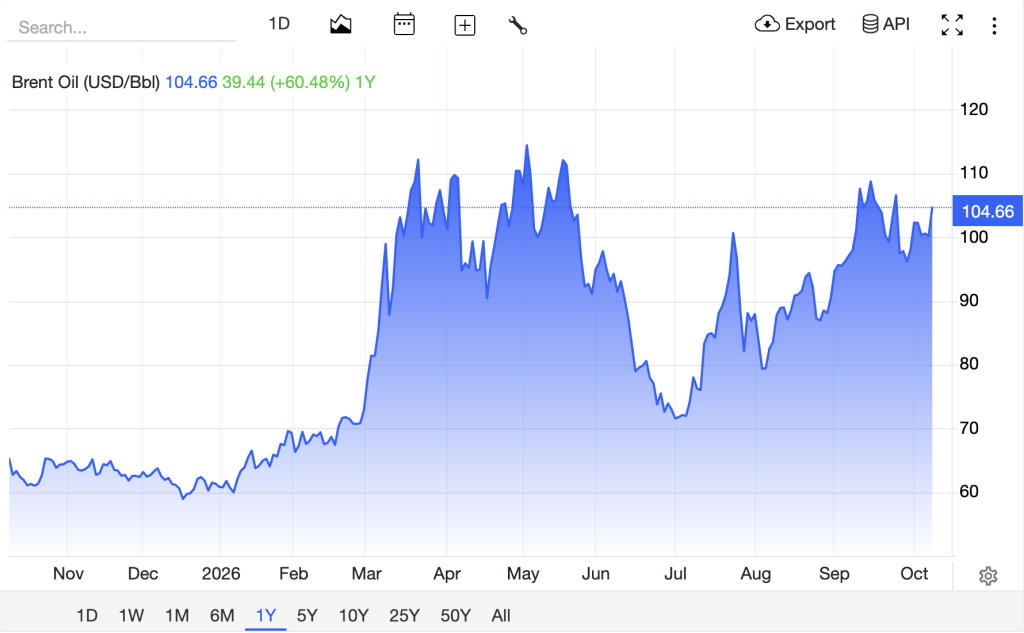
A retreat in Brent below $100, where it traded on Tuesday, would remove some of the immediate energy-market pressure described in the report. Whether that happens will depend in part on further developments around the reported Iran strike options, other threats to oil supply and the reaction in Treasury yields.
For crypto, the distinction between a temporary macro shock and a more persistent risk-off repricing may depend on whether oil and yields continue to climb together. If crude eases and yields stabilize, one source of pressure could fade; if both remain elevated, digital assets may continue to face competition from broader market de-risking.
The link between Brent prices, geopolitical risk, and Bitcoin is relevant because energy headlines can affect both inflation expectations and investor appetite for volatile assets. But the primary report does not show that geopolitical news alone explains the move, and the reported military planning should not be treated as confirmed action.
For now, $83,000 is a broken level that FxPro had flagged, while $80,000 remains the firm’s conditional downside scenario. Cross-asset pressure and recent bullish liquidations raise the possibility of further volatility, but neither the price level nor the liquidation figure alone determines the next move.


Comments
Log in or sign up to join the conversation.