

Central banks have made it abundantly clear that they will be in the business of providing liquidity to support the recovery from the deep recession created by the pandemic. Some commentaries refer to the current monetary stance as “loose”, especially since quantitative easing (QE) has been widely adopted. QE has been tied to the current strength in the equity markets and the surge in the issuance of public and private debt. Moreover, there are continual worries that this monetary expansion will ultimately generate inflation in the future. But just how loose is monetary policy?
A common misconception interprets low-interest rates as a sign of a loose monetary policy. However, the price of money is different from the quantity of money available. A loose monetary policy occurs when bank credit is growing rapidly and is available to all sectors of the economy. Regardless of the prevailing borrowing rates, banks can choose to rein in credit and that means monetary policy is tight, not loose.
Another misconception concerns the use of QE in which a central bank expands its balance sheet by buying debt in the open market. The effect of QE bond purchases is to lower interest rates along the yield curve. Central banks today are buying debt in an effort to keep rates low and thereby make it easier for governments to finance deficits. Yield curve control has nothing to do with " loose" monetary policy.
The availability of commercial bank credit is one of the best ways to measure whether monetary policy is tight or loose. And, in this respect credit is far from been loose. US commercial banks, initially, ramped up lending when the economy went into a lockdown and a vast array of businesses faced economic ruin. However, by early summer, credit growth simply stalled (Figure 1). While large corporations were able to sell their debt in the open market, the bulk of lenders must still rely upon commercial banks extending credit. US banks seem no longer to be interested in growing their commercial loans and remain ever so cautious about the future prospects of their clients.
(Click on image to enlarge)
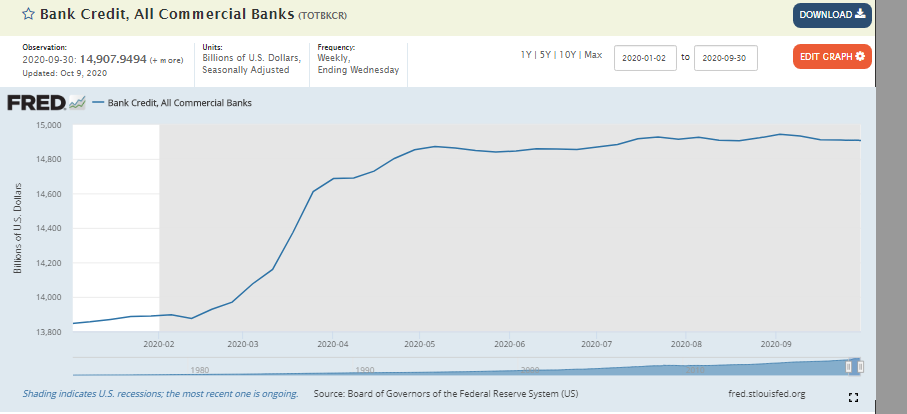
Figure 1 US Commercial Bank Lending
Canadian commercial banks seem even more reluctant to assist business customers (Figure 2). When the COVID-led lockdowns took effect the commercial banks did step up and expanded credit to the business sector. However, loan growth not only tapered off over the spring but has since contracted. Canadian banks have maintained their support of the consumer in extending new terms for mortgage refinancing. In addition, the consumer has been paying down personal lines of credit. Not so with the small and medium-sized business sector, the one sector that has been hardest hit by COVID restrictions and must continue to rely upon local bank managers to support their operations.
(Click on image to enlarge)
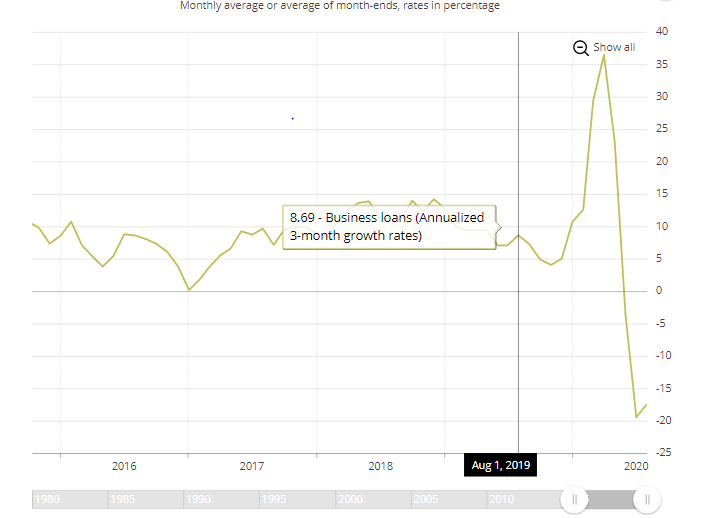
Figure 2 Canadian Commercial Banks Business Loans



Comments
Log in or sign up to join the conversation.