

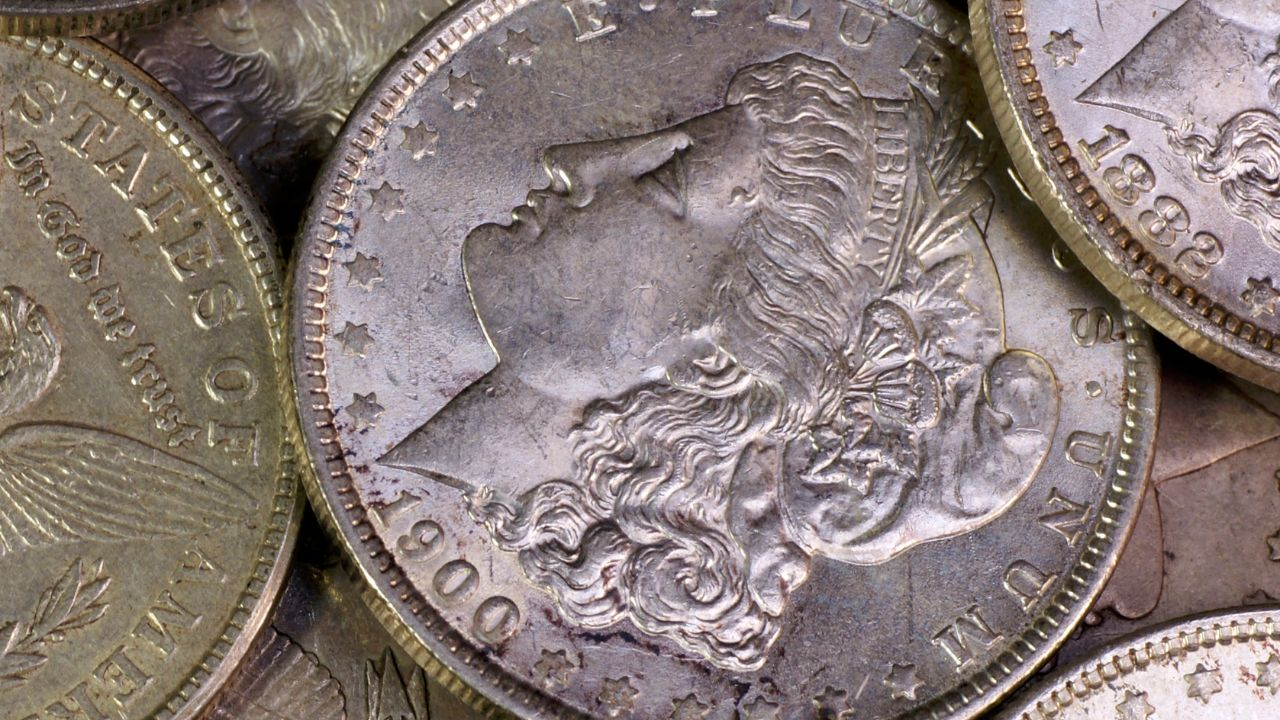
Are Morgan Silver Dollars a good investment? For most investors, no. While Morgan Silver Dollars have historic appeal and some collector value, common-date coins often carry high premiums, wide resale spreads, and less upside than standard silver bullion.
That does not mean Morgan Dollars have no value. Certain rare dates and high-grade examples can be valuable. But for buyers focused on silver investing, liquidity, and preserving purchasing power, Morgan Silver Dollars are usually better collectibles than investments.
However, more often than not, Morgan Silver Dollars are numismatic collector's items. They are not investment-grade silver bullion, which is often what silver investors purchase. These coins are not eligible for a precious metals IRA, and most of their value comes less from their silver content and more from their condition.
What that means for investors is that Morgan Silver Dollars often sell at high markups over their silver value. When investors go to sell their coins, they cannot always recover those premiums. More often than not, buyers are paying for a connection to history, not the metal. That can make common-date Morgans far less practical than standard bullion products or even pre-1965 90% silver coins.
The Short Answer: Collectors May Benefit, Investors Usually Do Not
If you are an experienced coin collector who understands dates, mint marks, grading, rarity, and dealer spreads, certain Morgan Silver Dollars may deserve a place in your collection.
If you are a typical precious metals buyer looking for liquidity, lower premiums, and straightforward pricing, Morgan Silver Dollars are usually the wrong place to start. Common examples often trade with wide buy-sell spreads, and those spreads can eat up a large chunk of your money before silver prices move at all.
So, why might a Morgan Silver Dollar be attractive to buyers? To understand this, we have to take a look at the history of the Morgan Silver Dollar.
What Are Morgan Silver Dollars (And What Is Their Appeal)?
The Morgan Silver Dollar was first minted in 1878, and it came at a remarkable time.
In 1878, the US was midway through the Wild West era. The country was expanding across the continent. It was a time of incredible growth, optimism, and adventure.
The Morgan Silver Dollar came to be held as a symbol of this exciting period. Many numismatic collectors love these coins for the tangible link they provide to American history.
The Biggest Problem: High Premiums Over Melt Value
Morgan Silver Dollars have an enduring legacy and retain popularity. So, why do they often make bad investments?
The problem comes from the premium on the coin.
A Morgan Silver Dollar contains about 0.7734 troy ounces, not a full ounce. However, many online sales pitches encourage buyers to compare the coin's price to a one-ounce silver product. This trick makes a steep premium look smaller than it actually is.
For investors, premium matters because it affects break-even.
The more you pay above a coin's intrinsic value, the more silver has to rise before you can even break even.
Example: Why a Morgan Dollar Premium Can Be Misleading
A Morgan Silver Dollar contains about 0.7734 troy ounce of silver, not a full ounce. At a silver price of $25 per ounce, the coin's melt value is about $19.34. If a dealer sells a common-date Morgan for $32, the premium is not a modest 28% over silver. It is actually about 65% above melt value.
Now assume that same dealer, or another buyer, would only pay $21 to $23 for the coin on resale. Even if silver prices stay flat, the investor could lose a meaningful percentage immediately because the original markup was so high. That is why common Morgan Silver Dollars often work better as collectibles than as low-premium silver investments.
Wide Buy-Sell Spreads Can Crush Returns
Let's say you find a Morgan Silver Dollar that is priced fairly by numismatic standards. Does that make the coin an efficient investment?
Not necessarily. Common-date Morgans can involve large spreads between what you pay and what a dealer will offer when you sell. The first draft noted that the spread on common Morgan Dollars can be around 30% or more, while standard bullion products often trade with much narrower spreads.
That means two things:
You may need a major rise in silver prices just to break even
You may discover that resale is far less favorable than the original sales pitch suggested
For someone buying silver primarily as a store of value, that is a serious drawback.
Most Morgan Silver Dollars Are Not Rare
This is where many investors get into trouble.
Some Morgan Dollars are absolutely scarce and desirable. Certain years and mint marks can make Morgan Dollars extremely valuable, especially if they're in good condition. As an example, the 1893-S Morgan Silver Dollar has sold for over $2 million dollars. This coin was graded at MS-65, placing it in gem uncirculated.
However, most Morgan Dollars are not especially rare, nor are they in good condition. In fact, you can find many Morgan Silver Dollars at ordinary precious metals exchanges. You can often find them for modest retail values in ordinary collectible ranges.
That is why the phrase “rare coin” can be misleading when applied to ordinary Morgan Dollars.
A coin can be old without being rare. It can be collectible without being a smart investment. Worse, it can carry a premium without offering a good upside for a buyer who does not fully understand the market.
Graded Morgan Dollars Add Another Layer of Risk
A huge part of numismatic coin prices comes from its grade/condition. A high grade coin can be worth a lot of money. So, why would graded dollars add risk to your purchase?
Most dealers sell Morgan Dollars in certified holders with grades from third-party grading services like the NGC. In theory, that grading helps standardize coin quality. In practice, it also adds complexity for inexperienced buyers.
Two coins that look similar to a newcomer may have very different values based on:
Date
Mint mark
Strike
Eye appeal
Certified grade
Grades can make a coin's price seem more authoritative than it may actually be. This does not mean buying graded Morgan Dollars is inherently a bad idea. The problem is that many investors are asked to pay a large premium for a graded coin, not understanding how hard it could be to recover that premium later.
When Morgan Silver Dollars Might Make Sense
Morgan Silver Dollars can make sense in a few limited situations. They may be a reasonable choice for knowledgeable collectors who understand key dates, mint marks, grading, and dealer pricing.
They may also appeal to buyers who care more about history than efficiency and are willing to pay a higher premium for the coin's age, design, and connection to the past.
In addition, truly scarce dates or exceptional high-grade examples can be very different from generic circulated Morgans, since their value depends more on collector demand than on silver content alone.
When Morgan Silver Dollars Are Usually a Bad Investment
Morgan Silver Dollars are usually a poor fit for buyers who want the lowest-premium silver possible, since standard bullion and pre-1965 90% silver coins are often more cost-effective.
They are also less attractive for investors who want easy resale, because wide buy-sell spreads can make it harder to recover the original purchase price. And if the case for buying depends heavily on sales language like “rare,” “private,” “non-reportable,” or “can't lose,” investors should treat that pitch with caution.
Morgan Silver Dollars vs Bullion: Which Is Better for Investors
Silver bullion is generally a better investment than Morgan Dollars.
Bullion products are typically priced much closer to melt value. They are easier to compare, easier to value, and easier to resell. Common Morgans are often worth little more than their melt value despite what rare-coin dealers may imply.
This table shows the practical differences between the two commodities:
Product Type | Main Value Driver | Premium Level | Resale Simplicity | Best For |
|---|---|---|---|---|
Common Morgan Silver Dollars | Silver content plus collectible premium | Often high | Moderate to difficult | Collectors, niche buyers |
Silver bullion coins and rounds | Metal value | Usually lower | Generally easier | Investors, stackers |
Pre-1965 90% silver coins | Metal value | Often competitive | Generally easier | Budget-minded silver buyers |
For a buyer focused on ounces, liquidity, and minimizing markups, standard bullion is the better asset for your portfolio.
What to Ask Before Buying Morgan Silver Dollars
Before you buy Morgan Dollars, ask these questions:
What Is the Actual Silver Content?
Do not compare the price to a full one-ounce coin unless the silver content is actually one ounce. A lower-premium silver product typically gives investors more efficient exposure to silver prices, since more of the purchase price goes toward metal value rather than collectible markup.
Is This Coin Genuinely Scarce, or Merely Old?
Age alone does not create rarity.
What Is the Dealer's Buyback Price Today?
The spread matters more than the sales story.
Is the Premium for Collector Value or Metal Value?
Know which market you are entering.
Am I Buying a Collectible or Making a Silver Investment?
Those are not the same decisions. You must know what you're looking for before you purchase a numismatic coin.
So, Are Morgan Silver Dollars a Good Investment?
For most investors, no.
Morgan Silver Dollars are usually better collectibles than investments. Common-date examples often carry high premiums, wide resale spreads, and too much room for dealer hype. That makes them a risky place for beginners to put serious money.
For experienced collectors who understand grading, rarity, and pricing, select Morgan Dollars can still have merit. However, that is a specialized market, not a simple silver investment strategy.
If your goal is to buy silver efficiently, reduce your downside, and preserve liquidity, standard bullion products are usually the smarter choice.
FAQ: Are Morgan Silver Dollars a Good Investment?
Are Morgan Silver Dollars worth more than their silver content?
Some are, especially better dates or higher-grade examples. But many common Morgans are worth only modestly more than melt, despite aggressive marketing.
Are Morgan Silver Dollars good for beginners?
Usually not. Beginners are often better served by simpler bullion products with clearer pricing and tighter spreads.
Are graded Morgan Dollars a better investment?
Not necessarily. Grading can add value, but it also adds complexity. Buyers who do not understand the market can still overpay.
What is a better alternative for silver investors?
For many investors, silver bullion coins, rounds, bars, or pre-1965 90% silver coins are more cost-effective choices.
What makes one Morgan Silver Dollar more valuable than another?
A Morgan Silver Dollar's value depends on its date, mint mark, rarity, condition, and whether it has been professionally graded. Coins with lower mintages, stronger collector demand, and higher grades usually command much higher premiums than common circulated examples.
Are common-date Morgan Dollars better than junk silver for investors?
For most investors, common-date Morgan Dollars are usually not better than junk silver because they often carry higher premiums and wider resale spreads. Junk silver is typically a more cost-effective way to gain silver exposure, especially for buyers focused on metal value rather than collectible appeal.

Comments
Log in or sign up to join the conversation.