Alphabet’s $200 Billion Execution Scare

Alphabet shed $200 billion in market value after Gemini AI delays sparked execution fears.

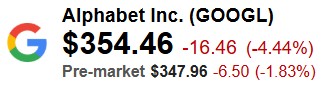
Before artificial intelligence dominated the market, investors treated software release dates as flexible targets. A delay usually meant engineers needed more time to improve the product. Today, major product roadmaps can trade like financial guidance. After Bloomberg reported that Alphabet’s Gemini 3.5 Pro model was months behind schedule, Alphabet shares ended Thursday down roughly 4.4%, erasing close to $200 billion in market value. The delay was not the only pressure on the stock, since technology shares were already selling off and European regulators issued new binding measures against Google the same day. Still, the speed of the reaction raises a structural question. Is Alphabet dealing with a temporary product bottleneck, or has its massive scale become a liability in a race against faster private labs?

Main Note

Pricing the Product Roadmap

Alphabet (GOOGL) Quote

Verdict: The artificial intelligence race is beginning to punish schedule slips almost as harshly as weak product results. Alphabet’s selloff suggests that investors view the Gemini delay as a real execution risk, especially because coding performance is central to developer adoption. However, the move occurred during a broader technology selloff and alongside new European regulation, so it does not prove that investors see permanent damage to Google Cloud.

What happened

Bloomberg reported that Alphabet’s Gemini 3.5 Pro model is months behind schedule after coding performance fell short of internal goals. Alphabet shares ended Thursday down roughly 4.4%, erasing close to $200 billion in market value. The delay added to the pressure, but it was not the only negative. Alphabet also faced new European Union requirements, while chip stocks and the broader technology sector were already selling off.

This happened on the same day the European Commission issued binding Digital Markets Act measures requiring Google to give qualifying rival artificial intelligence assistants access to 11 Android features beginning in July 2027 and to begin sharing anonymized search data with eligible search and artificial intelligence services in January 2027. Google said the measures could weaken privacy and security safeguards.

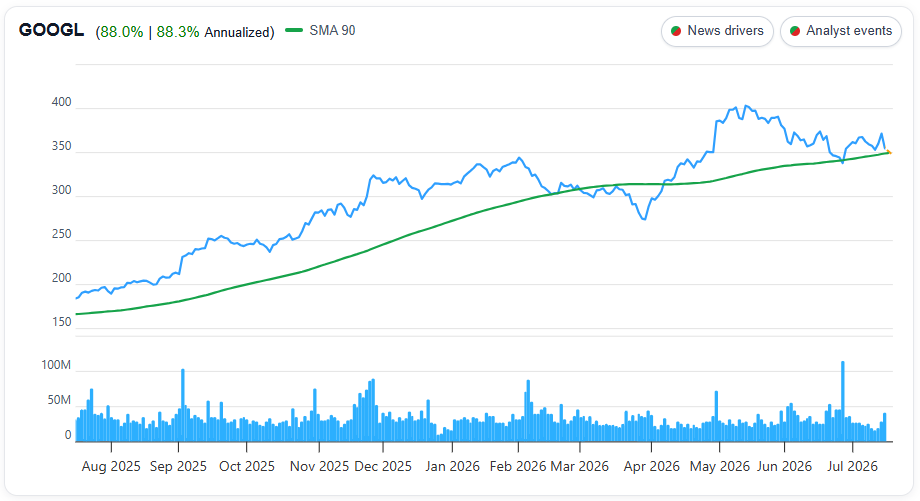
Alphabet (GOOGL) 1 Year Price Chart

Alphabet (GOOGL) 1 Year Price Chart

Why it matters

The business mechanism here is developer adoption, but the revenue path is not one for one. A weaker Gemini model can hurt Google’s model usage, pricing power and enterprise credibility. However, Google Cloud also offers third party models, including Anthropic’s Claude, through its Agent Platform, so a customer choosing a rival model does not automatically leave Google Cloud. The larger risk is that repeated delays weaken Google’s ability to make Gemini the default model while competitors set the developer standard.

What changed in the thesis

For years, investors assumed Google possessed insurmountable engineering supremacy. Now, the market is betting that resource scale does not automatically equal product speed. Alphabet spent over $91 billion on capital expenditures in 2025. Investors are questioning whether that staggering capital intensity will actually deliver a dominant product, or if the company is too bureaucratic to keep pace.

What the market may be missing

The delay may still be rational if Google is choosing product quality over schedule. Google says it is testing Gemini 3.5 Pro with partners and engaging with the United States government, but current reporting says coding performance fell short of internal goals. The available reporting does not show that safety compliance caused the delay. A later model that materially improves coding accuracy, cost and reliability could still win enterprise demand, but that case now requires evidence from independent benchmarks and customer adoption.

Valuation and expectations

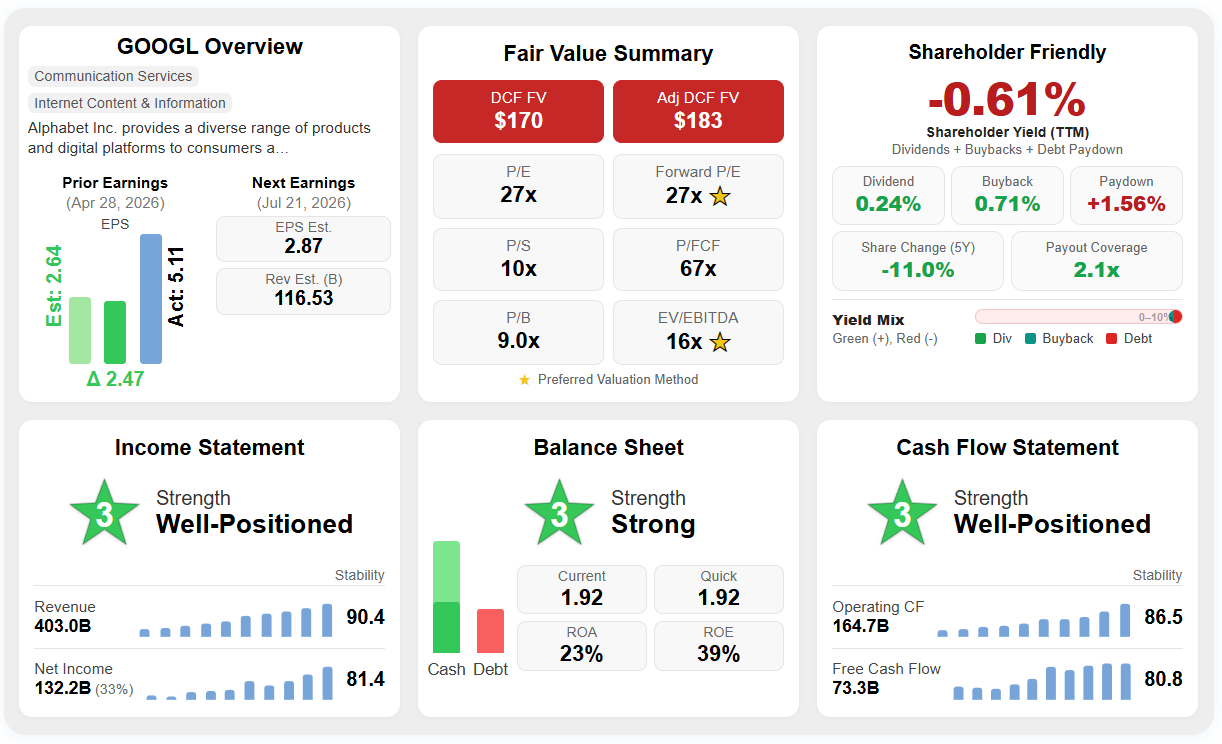
The swift stock drop shows how quickly the market can reduce the premium attached to Alphabet’s artificial intelligence execution. Free cash flow fell to roughly $10.1 billion in the first quarter of 2026 from roughly $19.0 billion a year earlier, but the decline came even as operating cash flow rose to $45.8 billion because capital expenditures more than doubled to $35.7 billion. The valuation risk is not that Alphabet suddenly became a legacy utility. It is that investors may pay a lower multiple if depreciation and infrastructure spending rise faster than durable growth in Cloud and Search.

Alphabet (GOOGL) Summary Page

Alphabet (GOOGL) Summary Page

Bottom line

Scale is no longer enough to support a premium valuation. Alphabet has to prove it can ship industry leading products on time, or investors will continue to reprice the stock based on the very real risk of lost market share.

Pre Market Pulse

  • United States forces expanded their bombing campaign for a sixth consecutive night, striking bridges, an airport and other targets in southern Iran. Iran said it responded with attacks on United States bases in Kuwait and Bahrain and a radar station in Oman, while Qatar reported intercepting an Iranian attack.

  • Iran has announced the closure of the Strait of Hormuz, while Washington has reimposed a blockade of Iranian ports. United States Marines boarded a tanker to enforce that blockade, and restricted shipping through the strait has helped keep Brent crude near $86 a barrel.

Why it matters this morning

Geopolitical escalation, higher oil prices and a broad technology selloff are already reducing investor risk appetite. That backdrop can amplify the reaction to company specific execution errors. It also means Alphabet’s 4.4% decline should not be treated as a clean market verdict on the Gemini delay alone.

Peer Read Through

Meta Platforms (META)

Meta is expanding its Louisiana data center to 5 gigawatts of compute capacity, with investment expected to exceed $50 billion. The project supports Meta’s own artificial intelligence infrastructure, increasing the pressure on Google to show that similarly heavy spending produces better products and attractive returns.

Netflix (NFLX)

The streaming service forecast third quarter revenue and earnings below estimates, and its shares were down roughly 9% before Friday’s open. The reaction reinforces the broader point that expensive growth stocks are being punished when forward guidance falls short, even when current results remain solid.

OpenAI and Anthropic

These private labs are rapidly pushing new models to market and capturing senior engineering talent, forcing public companies to accelerate their own timelines or face immediate market punishment.

Group takeaway

The margin for error across the technology sector has vanished. Whether a company is building artificial intelligence models, constructing data centers, or streaming video, investors are heavily penalizing any sign of slowing momentum or delayed execution.

What to Watch

  • Management commentary on the upcoming Alphabet earnings call regarding capital expenditure guidance for 2026 and 2027.

  • Any deceleration in Google Cloud revenue growth that might indicate developers are shifting spending to competitors.

  • Independent developer benchmark tests of Gemini 3.5 Pro once it finally reaches the market.

  • Formal legal appeals by Alphabet against the European Union Digital Markets Act specification measures.

Bottom line

The narrative will not improve until Alphabet delivers a finished product that matches or exceeds competitor benchmarks. Until then, every dollar of capital spending will face intense investor scrutiny.


STOCKS IN THIS ARTICLE

Comments