

TM Editors' note: This article discusses a penny stock and/or microcap. Such stocks are easily manipulated; do your own careful due diligence.
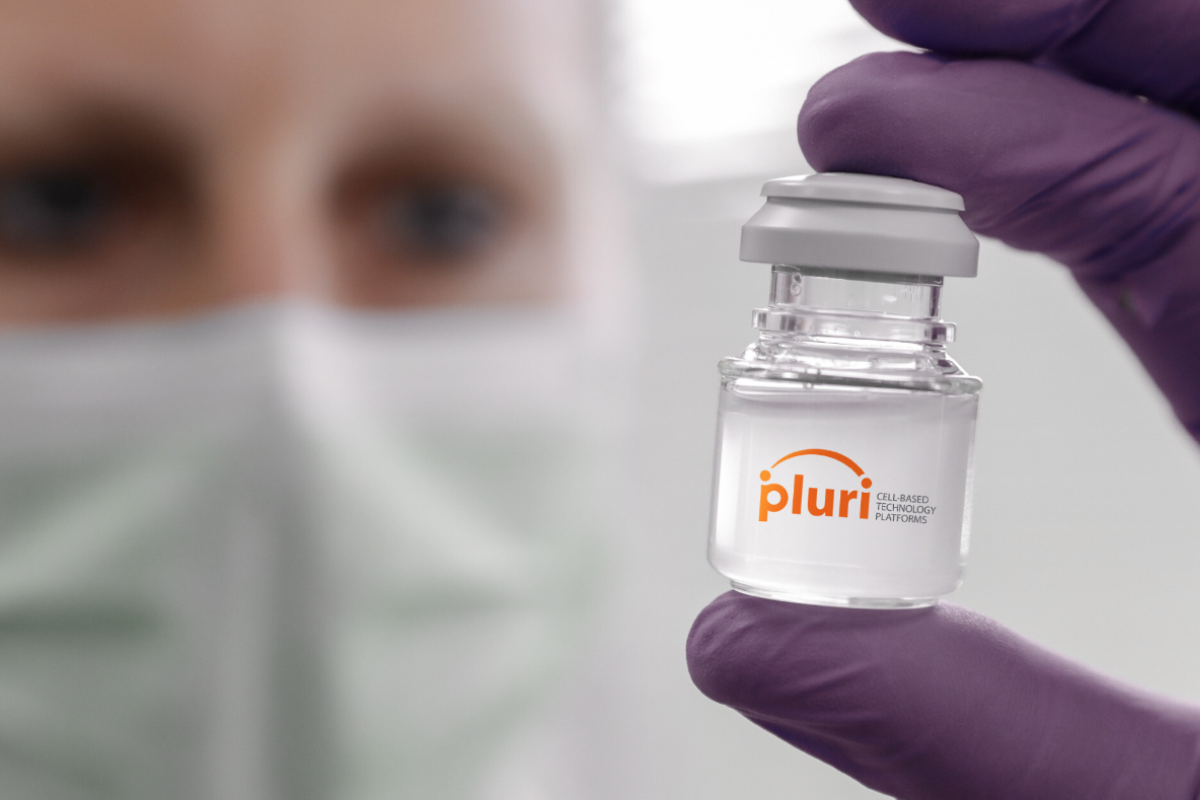
Pluri brings established cell therapy tech & GMP manufacturing to the emerging longevity and regenerative-aesthetics market.
Stem cells and Exosomes have traction in skin, hair, and regenerative applications, but no exosomes are FDA approved & existing products vary widely.
Gaps in defining the Stem Cells and exosome quality favor quality providers with consistent manufacturing, traceability & scientific backup.
Florida is the hotbed of regenerative medicine and idea setting to launch high-quality biologic products conforming to new regulations.
Microcap valuation offers upside if Pluri can convert its platform into revenue through product differentiation.
Pluri Inc. (Nasdaq: PLUR) is trying to tackle the one disease everyone is born with but regulatory bodies like the FDA and EMA do not even acknowledge it as a disease. Since aging is not considered a disease, therapies that slow or even reverse the aging process cannot get pharmaceutical approval for longevity. The most visible part of the aging process is tied to appearance. The company is now beginning to translate nearly two decades of regenerative medicine, clinical development and cell-manufacturing expertise into new commercial opportunities, including a line of exosome-based products targeting the growing longevity and regenerative aesthetics market. This could represent an important commercialization inflection point for Pluri.
With a market capitalization of less than $20 million, the company trades at a significant discount to many regenerative medicine peers, despite having an established technology platform, clinical experience and scalable manufacturing capabilities. A number of regenerative medicine companies have experienced substantial valuation re-ratings as they moved from development toward commercialization, and Pluri may be approaching a similar inflection point.
Out Patient Options Favored Over Surgery
A greater number of aging adults are looking for maintenance options instead of surgery. They are open to fillers, neurotoxins, skin, and hair treatments. They will also consider lasers,
ultrasound, microneedling, and chemical peels in order to preserve their appearance. Patients are increasingly exploring cell-based therapies and regenerative treatments for orthopedic and other medical conditions, with the goal of restoring function, reducing pain, and potentially postponing the need for invasive surgical interventions.
As a result the regenerative medicine and aesthetics business is booming. Many of these treatment options undergo FDA rigor but the next generation offerings like PRP, exosomes, and injectables have created a Wild West situation in the aesthetics marketplace. PLUR with its manufacturing prowess is trying to tame the market with products that doctors and patients can trust.
An Emerging Market with a need for Quality - Creates Opportunity
The exosome market is developing rapidly, particularly in aesthetics and regenerative applications, but clinical validation, manufacturing standards and regulatory frameworks have not evolved at the same pace. In the United States, there are currently no FDA-approved exosome products, creating a market in which product quality, consistency and scientific credibility can vary significantly. In this “Wild West” of exosome products entering the market the companies will differentiate their products by the manufacturing process, grading, testing, and measurement of their exosomes. For PLUR, this is their competitive advantage.
The Florida Opportunity
When it comes to the administration of stem cell therapies in the United States, regulation comes from the FDA approval pathway. Florida’s 2025 Stem Cell Therapy Act has carved out an opportunity for MD’s and DO’s to provide qualifying non-FDA approved therapies in orthopedics, wound care, and pain management with the proviso that it's within the physician's scope of practice. In addition, the cells used in the treatment need to meet the sourcing, processing, quality, viability, and informed consent requirements of the FDA. This means the cell products (including exosomes) need to come from FDA-registered facilities with the proper accreditation and adherence to current Good Manufacturing Practice (cGMP) standards. This includes post thaw viability and batch testing and well as prominent disclosures that the therapy is not FDA Approved. FDA oversight is in full force and effect which means there can be no claims of efficacy without clinical data.
What this legislation did was create an environment for the commercialization of products for regenerative medicine companies that could document the source of the manufacturing, traceability, cell quality, and ethical sourcing. Pluri, Inc. encapsulates the essence of this legislation because their manufacturing process takes place in an FDA approved facility and has all the traceability and testing requirements ensuring the production of cGMP product.
Skating to Where the Demographics Are
Florida has 3.93 million seniors and is ranked as the 4th highest in percentage terms. These demographics have created significant patient and physician demand in the state along with a large self-pay healthcare market and a substantial medical tourism industry. Pluri's advantage is that it can potentially enter this developing market with a level of scientific evidence, clinical experience and manufacturing infrastructure that is unusual in the current commercial regenerative-medicine landscape.
Cell Therapy Cluster
A cluster of regenerative medicine businesses is gaining a foothold in Florida. The opportunity has moved beyond early stage clinics and experimental products into the mainstream with a couple of public companies with tissue-processing, manufacturing, quality-control, and reimbursement.
Axogen, Inc. (Nasdaq: AXGN), headquartered in Alachua, Florida, is a strong example of the state’s growing regenerative-medicine ecosystem. The company commercializes AVANCE®, an FDA-approved acellular nerve allograft for peripheral-nerve repair; its cell therapy product platform and commercial progress are examined in more detail later in this article.
BioStem Technologies, Inc. (Nasdaq: BSEM), based in Pompano Beach, is another example of Florida’s regenerative-medicine infrastructure dealing in cell therapy. The company manufactures placental-derived tissue allografts for wound care and surgical applications at an FDA-registered, American Association of Tissue Banks-accredited facility. After net revenue reached $69.7 million in 2024, reimbursement uncertainty and competition pressured its legacy physician-office wound-care business, contributing to a decline to $47.5 million in 2025. BioStem responded by acquiring BioTissue Holdings’ surgical and wound-care assets in January 2026, expanding its hospital and surgical presence and reducing its dependence on the physician-office channel.
The Fuss Over Exosomes
Those not overly concerned with their appearance probably haven’t heard what an exosome is or what it does, but these tiny biological sacks are all the rage in the aesthetics market. All cells, plants and animals contain exosomes. These are signaling packets that contain part of the identity of the cell they came from on their spherical surface along with a sampling of the cell's cytoplasm inside of the shell. Their basic role is communication. Exosomes can carry molecular messages between cells, including proteins, lipids, messenger RNA and microRNA.
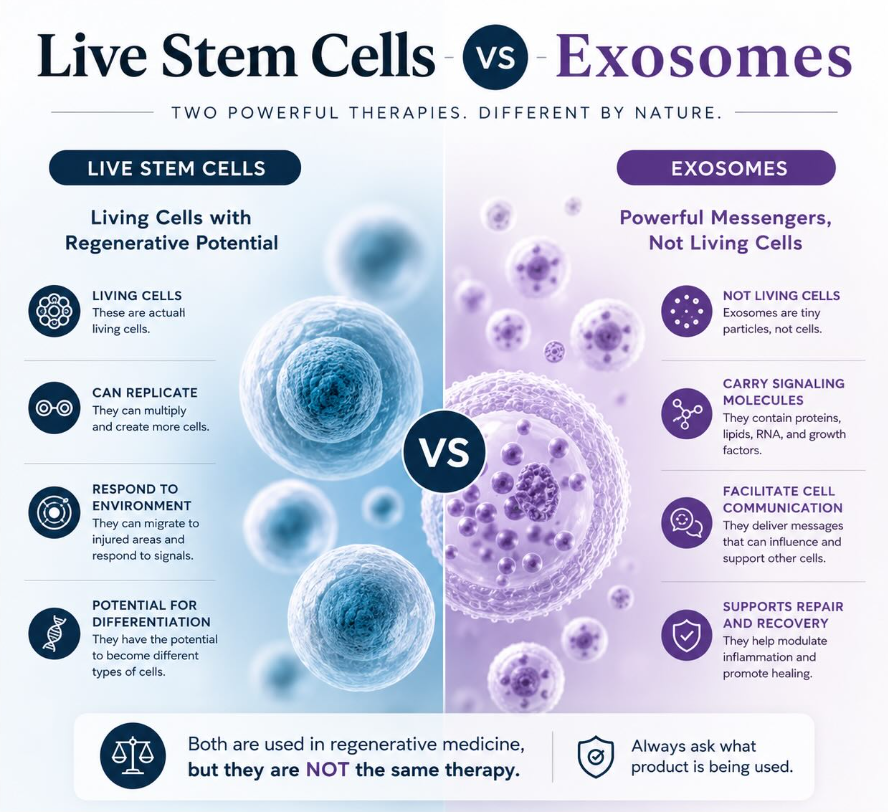
A simple way to think about exosomes is as tiny delivery vehicles in the body. These biological sacks contain many of the cellular building blocks found in the cytoplasm of the host cell, but are devoid of a nucleus so they don’t travel like stem cells and become new tissue. Instead, they migrate to a source of injury, stress, or aging and elicit the healing response in the existing stressed or damaged tissue. Research shows that much of the benefit observed in cell therapy actually comes from the exosomes that are released by the cell versus the cells themselves. Exosomes from cells involved in healing may travel to damaged cells and deliver signals and materials that support repair. This idea is widely used in dermatology and makes up a large part of the exosome market.
Low Hanging Fruit of the Aesthetics Market
That creates an intriguing commercial and scientific opportunity. Traditional cell therapy requires living cells to be produced, stored, transported and administered under tightly controlled conditions. Exosome-based products may eventually offer a more standardized and scalable way to access some of the signaling activity associated with regenerative cells. Potential applications range from skin and hair restoration to wound healing, orthopedic recovery, inflammation, neurology, cardiovascular disease and drug delivery. Regenerative aesthetics may be the nearer-term opportunity because consumers are already spending heavily on products and procedures intended to improve appearance, recovery and skin quality.
The critical issue is product quality. It is not enough for a company to say that a product contains exosomes. Physicians and investors should ask where the source cells came from, how they were grown, what the exosomes contain, how the material was purified, whether batches are consistent and whether the product remains biologically active after storage and transport. There are currently no FDA-approved exosome therapies in the United States, making manufacturing discipline, traceability and responsible product claims especially important.
That is where PLUR may have an advantage. The company is not entering the category as a marketing-driven aesthetics company; it brings years of placental-cell research, three-dimensional cell-expansion technology, allogeneic cell-development experience and GMP manufacturing infrastructure. If Pluri can demonstrate that its process produces a consistent, traceable and biologically active exosome product, it could differentiate itself in a market where quality and scientific credibility vary widely. The ultimate winners in exosomes may not be the companies making the boldest promises, but those that can deliver credible science, dependable manufacturing and physician confidence at scale.
Regenerative Medicine Players
Mesoblast (Nasdaq: MESO) is a pioneer in Mesenchymal stem cells and holds the title as the first FDA approved Allogeneic Mesenchymal Stem Cell therapy. Royoncil has commercial momentum with $115 mil in revenue in the latest reporting period. It was first approved in steroid-refractory acute graft-versus-host disease (SR-aGVHD) in pediatric patients aged 2 months and older. They are expanding the indication to adults with GVHD and Heart Failure. The company is still losing $50 mil annually with an aggressive R&D spend, but has a $2.2 Bl market cap suggesting that the market believes their R&D is viable.
Vericel (Nasdaq: VCEL) is a regenerative medicine company with a lot of firsts starting in 1987. They were the first cell therapy, the first orthopedic therapy for cartilage lesions, and the first restorative treatment for orthopedic injuries. Their primary product replaces damaged knee cartilage by using a biopsy of the patient's cartilage to make a specialized cartilage producing cell called a chondrite. Once cultured over 3-4 weeks the chondrites are grafted back into the knee. These MACI procedures are paired with orthopedic surgeons. For burn patients with full thickness burns over 30% of their body a postage sized stamp of skin is taken to grow replacement skin for the patient. Their third product, NexoBrid, gets rid of the dead tissue in a burn wound that prevents healing. Vericel is in the business of providing individualized solutions to patients as opposed to an off the shelf therapy. They are a profitable company with growing revenue that topped out at $275 million in 2025 and have a $2.1B market cap.
Axogen (Nasdaq: AXGN) makes products that help surgeons repair damaged nerves outside the brain and spinal cord called the peripheral. Its main product, AVANCE® Nerve Graft, is a ready-to-use piece of donated human nerve. Axogen cleans the donated tissue to remove living cells, leaving behind a nerve-shaped framework. This lowers the chance that the patient’s body will reject it. Think of it like a small tunnel or guide that helps a nerve grow back across a gap. During surgery, the doctor cuts away the damaged part of the nerve and measures the empty space. The doctor then thaws an AVANCE graft that fits the gap and carefully stitches it between the two healthy nerve ends. This surgery helps people feel touch, pain, and temperature. Axogen’s products may be used in hand injuries, reconstruction surgeries, breast surgery, mouth and jaw procedures, and other operations where a nerve has been cut or badly damaged. From this specialized niche in regenerative medicine the company generated $225 million in revenue in 2025 and has a market cap of $2.6 B.
Sana Biotechnology (Nasdaq: SANA) is developing cell and gene therapies designed to work without forcing patients to take lifelong immune-suppressing drugs. Its main focus is type 1 diabetes, where it is testing modified insulin-making pancreatic islet cells that are designed to hide from the immune system. The goal is for these implanted cells to survive, make insulin, and help control blood sugar without being destroyed by the patient’s immune system. Sana is also developing a way to turn a patient’s own T cells into cancer-fighting CAR-T cells directly inside the body, rather than removing the cells, altering them in a lab, and giving them back. While the company has no revenue and is not near commercialization they do have a $1.1 B market cap which demonstrates the value of a scalable cell technology capable of treating a disease.
Capricor Therapeutics (Nasdaq: CAPR) is developing a cell therapy called deramiocel for Duchenne muscular dystrophy (DMD), a genetic disease that causes progressive weakness in skeletal and heart muscle. Deramiocel is made from donated heart-derived cells called cardiosphere-derived cells, or CDCs. Rather than permanently replacing damaged muscle, the cells are believed to release exosomes and growth factors that reduce inflammation and scarring and encourage the body’s muscle tissue to survive and repair itself. The treatment is designed to protect both arm and heart function, which are major concerns as DMD progresses. Capricor has a Biologics License Application (BLA) on file with the FDA and has a PDUFA decision set for November 22, 2026. What is so interesting is that if this cell therapy is approved it would represent a validation of exosomes as a therapeutic agent. They combined an allogeneic cell-therapy program with an exosome platform. The market cap of CAPR over the past year has ranged from $400M to $1.4B.
NurExone Biologic (TSX Venture: NRX; OTCQB: NRXBF) is an early-stage regenerative-medicine company developing exosome-based treatments for spinal-cord and nerve injuries. Its main program, ExoPTEN, uses exosomes to carry a small RNA drug designed to lower PTEN, a protein that can limit nerve growth after injury. By reducing PTEN activity, NurExone hopes to help damaged nerve cells survive, regrow, and restore some lost function after an acute spinal-cord injury. ExoPTEN is designed to be given through the nose, which could offer a less invasive option than surgery or injections into the spine. The therapy has produced preclinical animal data but has not yet entered human trials, and NurExone expects to begin a Phase 1/2a study in 2026. NurExone is a highly speculative bet on whether its exosome delivery platform can move from animal studies into safe and effective human treatments. The market cap is $36 million.
Lineage Cell Therapeutics (NYSE American: LCTX) is a clinical-stage biotech company developing “off-the-shelf” cell therapies to replace damaged or lost cells in serious diseases. Its leading drug candidate, OpRegen (RG6501), is a retinal pigment epithelium cell therapy for geographic atrophy caused by dry age-related macular degeneration. This is an advanced eye disease that can result in permanent vision loss. OpRegen is in a Phase 2a clinical trial and has received FDA Fast Track and Regenerative Medicine Advanced Therapy designations. Roche/Genentech holds worldwide rights to the program under a licensing agreement worth up to $670 million. This includes $50 million upfront, up to $620 million in development, regulatory, and commercial milestones, and tiered double-digit royalties. The partnership highlights major pharmaceutical interest in clinically advanced cell therapies with scalable manufacturing. While the company hasn't generated any revenue its market capitalization stands at $275 million.
Why Puri May be Different
What sets Pluri apart is the management teams focus on credibility and consistency in the manufacturing of biologic products. They are not just another company entering the exosome or longevity market but a serious biologics company that believes credibility matters.
Pluri brings decades of cell biology experience, extensive human clinical data, proprietary three-dimensional cell-expansion technology, an off-the-shelf allogeneic approach and established GMP manufacturing capabilities. Their foundation is in cell therapy and they are being opportunistic using their highly characterized exosome products to go after the growing aesthetic market. Other competitors in the space are simply trying to fill the demand of the longevity clinics where the mentality is a higher particle count yields better outcomes.
Pluri hopes to break this paradigm, because they characterize their exosomes to ensure sterility and toxicology and go after clinically validated claims enhancing the perceptive quality of their exosome products versus a high exosomal particle count.
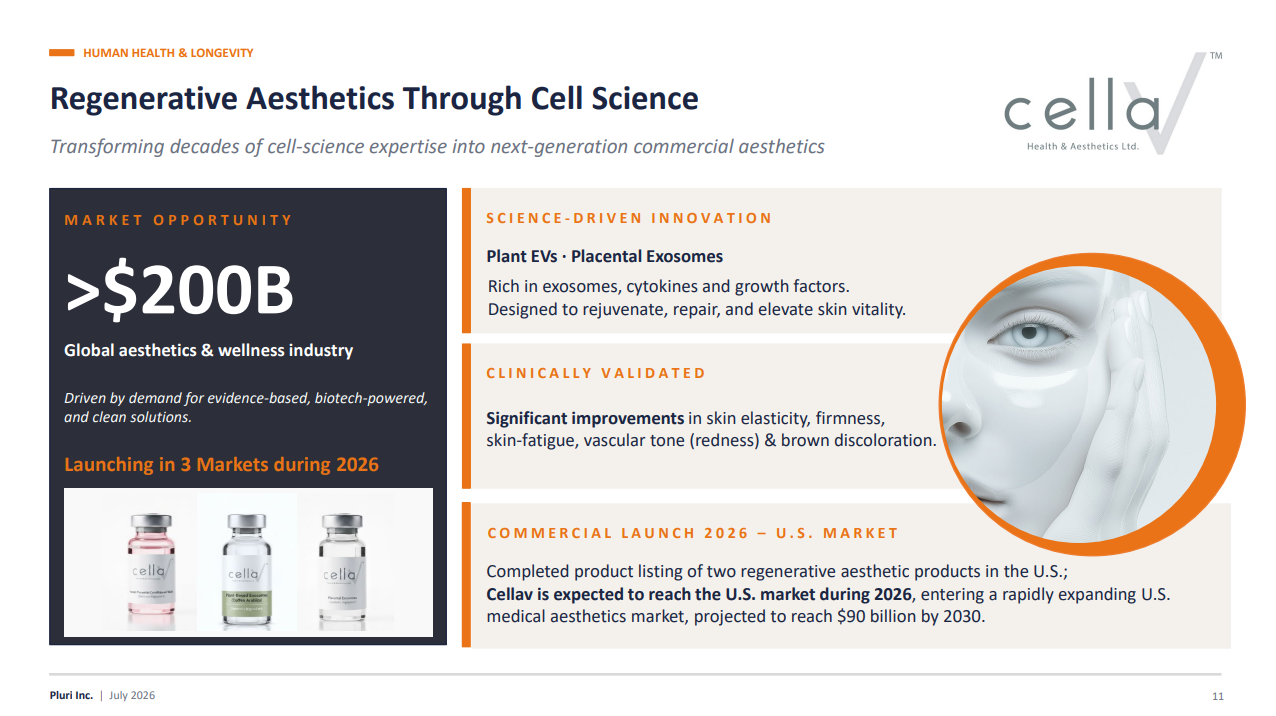
Through its Cellav Health and Aesthetics subsidiary, the company is positioning regenerative-aesthetic products around supportable skin and appearance-related endpoints like elasticity, firmness, hydration, visible skin quality, pigmentation-related measures, and recovery-oriented applications. This positioning goes hand in hand with batch, sterility, and ingredient testing. In June, Pluri said that Cellav completed U.S. cosmetic product listings for Regenativo+ and Placento+, and cited clinical testing of relevant ingredients showing statistically significant improvements in several skin-quality measures.
Distinguishing exosomes from the competition is becoming a gating issue. Consumers and physicians clearly want products associated with healthier-looking skin, hair, tissue recovery, and regenerative aesthetics. But the marketplace has been flooded with products described as exosomes, extracellular vesicles, secretome, stem-cell conditioned media, placental derivatives, and biologic injectables. Many products on the market have unsubstantiated claims. .
Attractive to Big Pharma
Pluri’s combination of regenerative medicine products, manufacturing prowess, and clinical research are interesting value propositions to large pharmaceutical companies looking for mature assets able to benefit from commercialization. An example of this budding interest comes from Novo Nordisk's CEO Mike Doustdar. He spoke recently about the extraordinary consumer interest in peptides in the U.S., while separately saying that Novo remains actively interested in acquiring complementary assets, large or small.
The Bottom Line
Pluri’s longevity opportunity is not to sell “age reversal.” It is to apply the quality, traceability, testing discipline, and claims restraint of a cell-therapy company to a regenerative-aesthetics market. While the market demand is booming for exosome products there are no real product standards, clinical results that match the claims, or consistent regulatory standards. Therein lies the opportunity in this “Wild West” atmosphere. PLUR is attempting to address the exosome market by competing on issues that matter like source control, reproducibility, testing, documentation, and scientific accountability. Whether Pluri can turn those strengths into durable revenue remains unproven.
With a market capitalization below $20 million, even modest commercial traction from Cellav, or validation through a strategic partnership, distribution agreement, CDMO contract, or stronger clinical data could lead to a value inflection point. The current valuation is dramatically lower than larger regenerative-medicine peers such as Mesoblast, Vericel, Axogen, Sana Biotechnology, and Lineage Cell Therapeutics. This valuation gap creates potential asymmetry upside if Pluri’s 3D cell-expansion platform, clinical-manufacturing pedigree, and Cellav launch translate into product revenue. Their positioning in the market makes them prime candidates for strategic partnerships, or higher-value biologics-manufacturing opportunities.


Comments
Log in or sign up to join the conversation.