

Alibaba (BABA) is the top player in the e-commerce industry in China thanks to its two main portals: Taobao focused on C2C transactions and Tmall for B2C operations. The company is also a leading player in digital payments with Alipay, and it has a sizeable presence in cloud computing and digital entertainment, among many other segments where the company operates.
The company is growing at an impressive speed. Total revenue during the quarter ended in March increased 61% year over year, and Alibaba's multiple growth engines are firing on all cylinders.
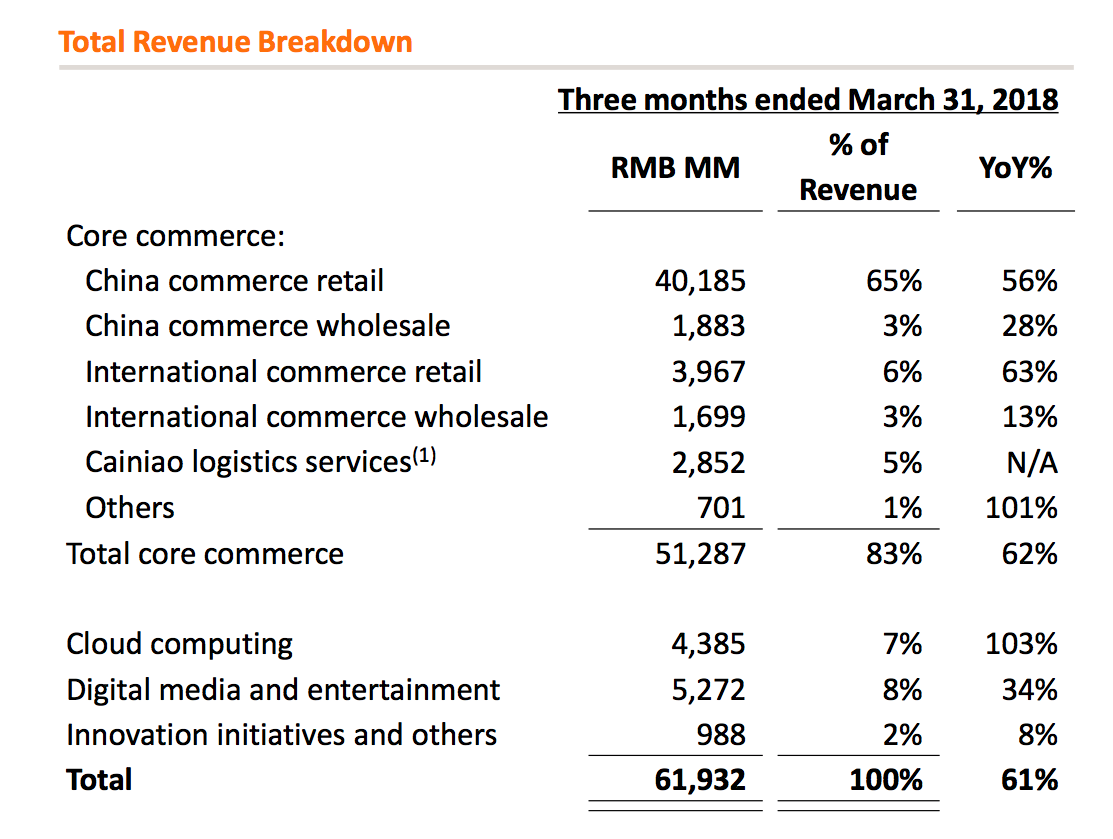
Source: Alibaba
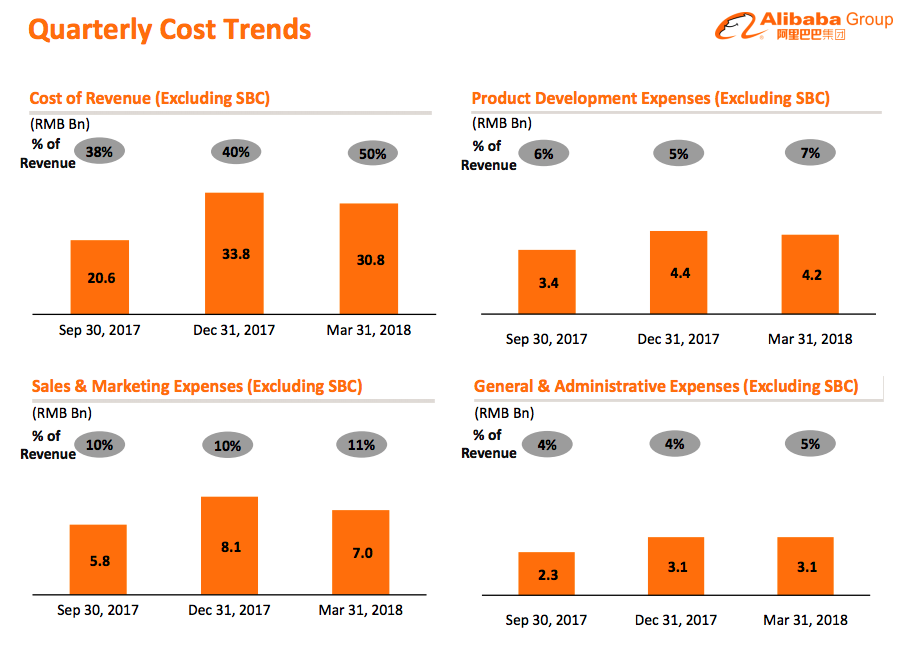
Alibaba is delivering solid profitability in its main operations, with core commerce EBITDA margin reaching 43% of revenue during the quarter. On the other hand, the company is aggressively investing in all kinds of growth projects, and this is driving cost increases. Margin pressure is generating some concerns among investors, and it's hard to tell what kind of profitability Alibaba will deliver over the coming quarters.
Another risk factor to watch is the commercial tensions between the U.S. and China. There is no reason to believe that new trade agreements between the two countries will have a negative impact on Alibaba's business, but investor sentiment towards the stock could deteriorate if political tensions regarding international trade escalate any further.
Wall Street analysts are currently expecting Alibaba to make $6.54 in earnings per share during 2019. Under this assumption, the stock is trading at a forward price to earnings ratio around 30 times earnings expectations. Alibaba is obviously priced for growth, but valuation is not excessive at all for a company that is expected to increase revenue by more than 60%.
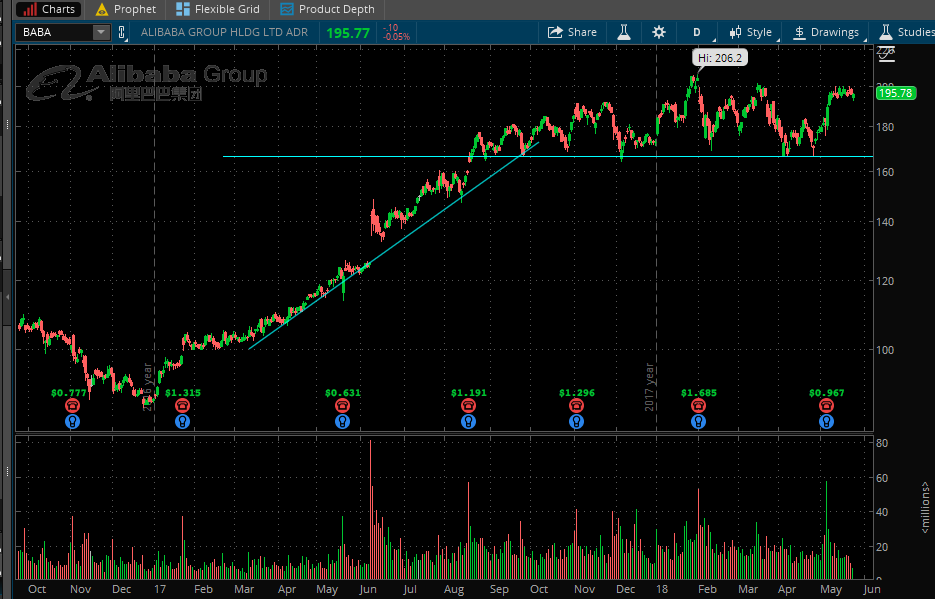
In terms of price action, the stock is up by an impressive 57% year to date, but the trend has been mostly sideways since August of last year. The area around $165 per share is a critical support level for Alibaba, and the stock seems to be trying to break above an important resistance level in $200 per share.
Options Trade Idea 1: Bull Call Spread
A bull call spread is a an aggressive bullish bet on Alibaba. This is the way to go for investors who believe that the most likely scenario is that Alibaba stock will break through resistance at $200 per share and continue moving forward over the coming days.
Based on current prices, the call contract with an expiration date in June 29 and a strike price of $195 is selling for $7.3, and the contract with the same expiration date and a strike price of $212.5 is available for $1.6. This means that buying the contract with the $195 strike price and selling the one with a strike price of $212.5 would cost approximately $570 per contract.
The maximum possible loss in the strategy is limited to $570, and investors can gain as much as $1,180 if Alibaba stock rises to $212.5 or more by the time of expiration. In percentage terms, this scenario would represent a potential gain of 207.02%.
On the other hand, this strategy will lose money unless Alibaba is above $200.7 per share at the time of expiration, so investors implementing this trade need to have plenty of confidence on the stock and it's ability to move higher over the coming days.
Options Trade Idea 2: Covered Call
For investors looking to hold on to Alibaba stock and also make some income from that position, a covered call could be a convenient alternative.
The call option with a strike price of $220 and an expiration date in August 17 is currently selling for around $3.6 in premium. This means that buying 100 shares of Alibaba and selling the call option against those shares would generate a raw return of 1.84% in 86 days. On an annual basis, this yield equals 7.81%.
The strategy is giving up all the gains in case Alibaba moves over $220 before August 17. On the other hand, a covered call would beat a simple long position in Alibaba stock if the price does not rice steeply in the coming days.
Options Trade Idea 3: Selling Puts
A put option on Alibaba stock with an expiration date on July 20 and a strike price of $185 is currently priced at around $3.7. Selling this contract allows an investor to generate an annual return of nearly 11.9%. Based on historical volatility, the probability of the put contract expiring worthless is 68.3%.
If Alibaba stock moves below 185 by the time of expiration, an investor has two possibilities. You can close the position and probably take a loss on it, or you can allow the option to be executed, so you buy 100 shares of Alibaba at $185 per unit.
This strategy can make a lot of sense for those who are looking to buy Alibaba on a price correction. As opposed to staying in cash and waiting for the price to come down, which may never happen, you can sell put contracts on the stock. This way you make some income while you wait, and all you have to do is committing to buying the stock at a discounted price, which was the whole idea to begin with.
Capitalize on the power of data and technology to take the guesswork out of your investment decisions. Statistical research has proven that stocks and ETFs showing certain quantitative attributes tend to outperform the market over the long term. A subscription to The Data Driven Investor provides you access to profitable screeners and live portfolios based on these effective and time-proven return drivers. Forget about opinions and speculation, investing decisions based on cold hard quantitative data can provide you superior returns with lower risk.



Comments
Log in or sign up to join the conversation.