

With all the noise circulation in the investment community centering on "peak everything," finding a saliant construct this morning is more challenging than usual.
There was a big move higher in US equities from the open despite front-end rates ripping higher and long-end playing catch-up triggered by the RBA joining the G-10 Central Bank inflation fighters.
There has also been a focus on the retail activity with tax day out of the way – trading has been quiet, but the recent outflows have paused.
Sentiment remains very bearish, but light positioning means there are few stocks in the storefront for sale.
The onslaught of earnings over the next 1.5 weeks brings some of the conversations back to the short term. Still, many overhangs remain, and not sure corporate results in themselves will be enough to alter the current debates meaningfully.
One thing that stands out is the weakness in the energy sector. While it has done extraordinarily little to provide relief to fixed-income markets, it has boosted equities. Indeed, this makes sense, given the enormous inflation presence that higher oil prices have on everyone's day-to-day lives. WTI is currently down around 5%, while Nat Gas futures are lower by 9%, erasing this week's moves.
Indeed, there is a lot of focus on oil's move lower with incremental talking points on Libya and China lockdowns, but not a lot has changed, and the risk premium is still high.
But before we start boarding that rally wagon White House Press Secretary Jen Psaki said the US could put further sanctions on Russia later this week.
Following the increased intensity of fighting in the Donbas region, this does not come entirely as a surprise. We already saw some increased sanctions against more individuals with Russian ties from Canada (including Central Bank of Russia Governor Nabiullina, so it could just be an expansion of the list. There is some increasing hostile rhetoric coming from Germany today, with Chancellor Scholz saying Putin bears responsibility for "war crimes." I would expect more to be announced from Allies through the week.
The markets' eyes will be on Russia's May 9 Victory Day holiday. Many are expecting a significant surge in the conflict around this time - there's increasing pressure on Russia to turn the tide in the war around this important holiday.

Image Source: Unsplash
OIL
Oil is lower, joining the growing list of assets and an expectant crowd eyeing the procession to recession.
On Tuesday, the International Monetary Fund slashed its forecast for global economic growth by an entire percentage point, citing Russia's war in Ukraine, and warned that inflation was now a "clear and present danger" for many countries. And that was the catalyst for the oil market correction to lower.
In the absence of inventory buffers, there are only two things that can send oil lower, recession and or demand destruction. More folks were more willing to check one or both of those boxes overnight on the back of the IMF economic warning shot and China's protracted lockdown.
In addition, ten y US yields surged overnight, meaning financial conditions are getting tighter every day as the Fed tries to put the screws on inflation. So, commodities used as an inflation hedge also toppled in a domino effect overnight, oil being one of those. It is not unusual to see industrial commodity price inflation only peak, close to the apex in the Fed rate hiking cycle.
However, given public opinion, the EU is increasingly likely to adopt a phased-in ban on Russian oil. This thought alone should be a sufficient bullish catalyst to keep oil bid on dips. I am not sure how this phased-in ban will work, but there was chatter on the street based on tanker tracking data that the US was exporting oil from the SPR release to help out the EU. A conjecture here, but if the EU oil embargo is based on the US shale picking up the slack via Whitehouse incentives, the much-discussed EU Russia oil embargo will not cut as deeply as thought.
But at the current state of the underinvested community, it will be challenging for US oil to backfill the EU deficit created by a total Russian embargo, and oil prices could soar.
GOLD
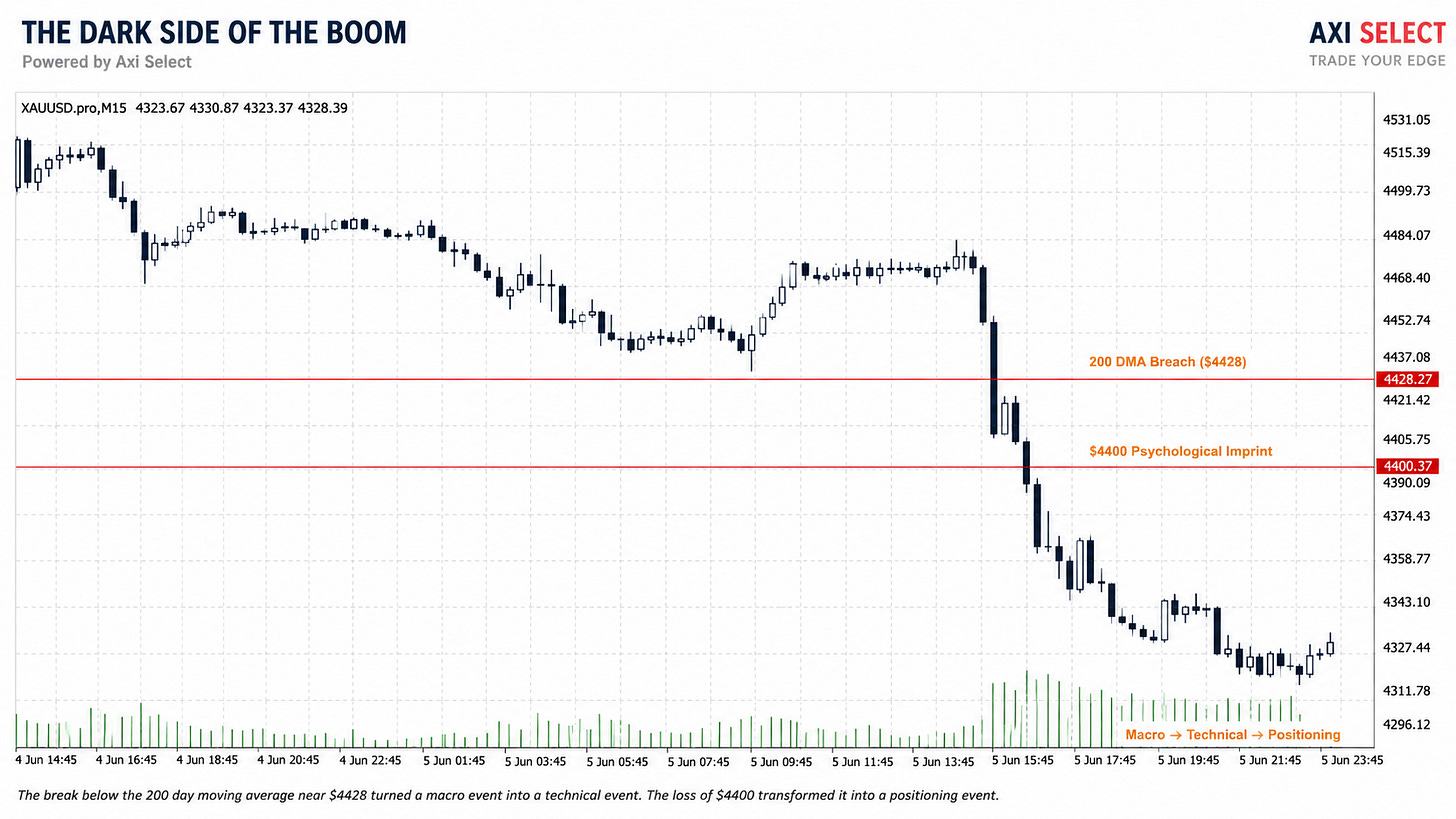
Gold collapsed overnight due to higher global bond yields.
The biggest hit for gold is via the US rates channel, with the 2y climbing to almost 2.59%, and the critical gold correlated US 10y trades +7.8bp at 2.93%. The 10y has not printed above 3.00% since November 2018.
In light of the US bond selloff, 10yr real treasury yields are now positive using TIPS,
Another surge in US rates is spooking gold investors as the market has not reached peak Fed hawkishness. The hawkish RBA minutes set the tone for fixed in the market yesterday, where bonds were for sale across the board.
Gold is also lower through the inflation channel as oil prices negatively turned overnight.
Given no change in the overall Ukraine situation, this could be a healthy selloff that could attract wealth management types and those who initially missed the boat could now sit on the bid.
FOREX
JPY
A relentless bid has run USDJPY up 1.5% to 128.90, the highest since Q3 2002. According to Bloomberg, the pair's 13-day winning streak is the longest in 50 years.
USDJPY touched a high of 128.98 and opened today's Asia session close to that level. Tokyo's demand for USD propelled the pair higher, despite further verbal intervention from the Japanese Finance Minister. The market is eyeing the psychologically important 130.00 level as the first place where verbal intervention has the possibility of turning into physical intervention.
A move through 130 would need Japanese investors' blessing to restore their appetite for FX "carry trades" and ignore increasingly stretched FX valuations signs. There is no sign of this happening yet, with locals remaining better sellers of foreign bonds and stocks in weekly and monthly MoF data. That means downward pressure on the currency comes from foreign speculative yen sales and exclusively surging energy import bills.
With oil prices easing, would it be a stretch to assume there should be less topside demand today? Keep an eye on the fix.
AUD
To me, The RBA minutes read as a reluctant hiker. Higher bond yields are dragging the AUD higher with inflation risks front of mind. I would anticipate superannuation funds to sell AUDUSD today for re-balancing hedges, given the US equity and AUD weakness at the end of last week.


Comments
Log in or sign up to join the conversation.