

Unsplash
Warsh Puts A September Hike in Play, And The Charts Point to 5% On The Ten-Year
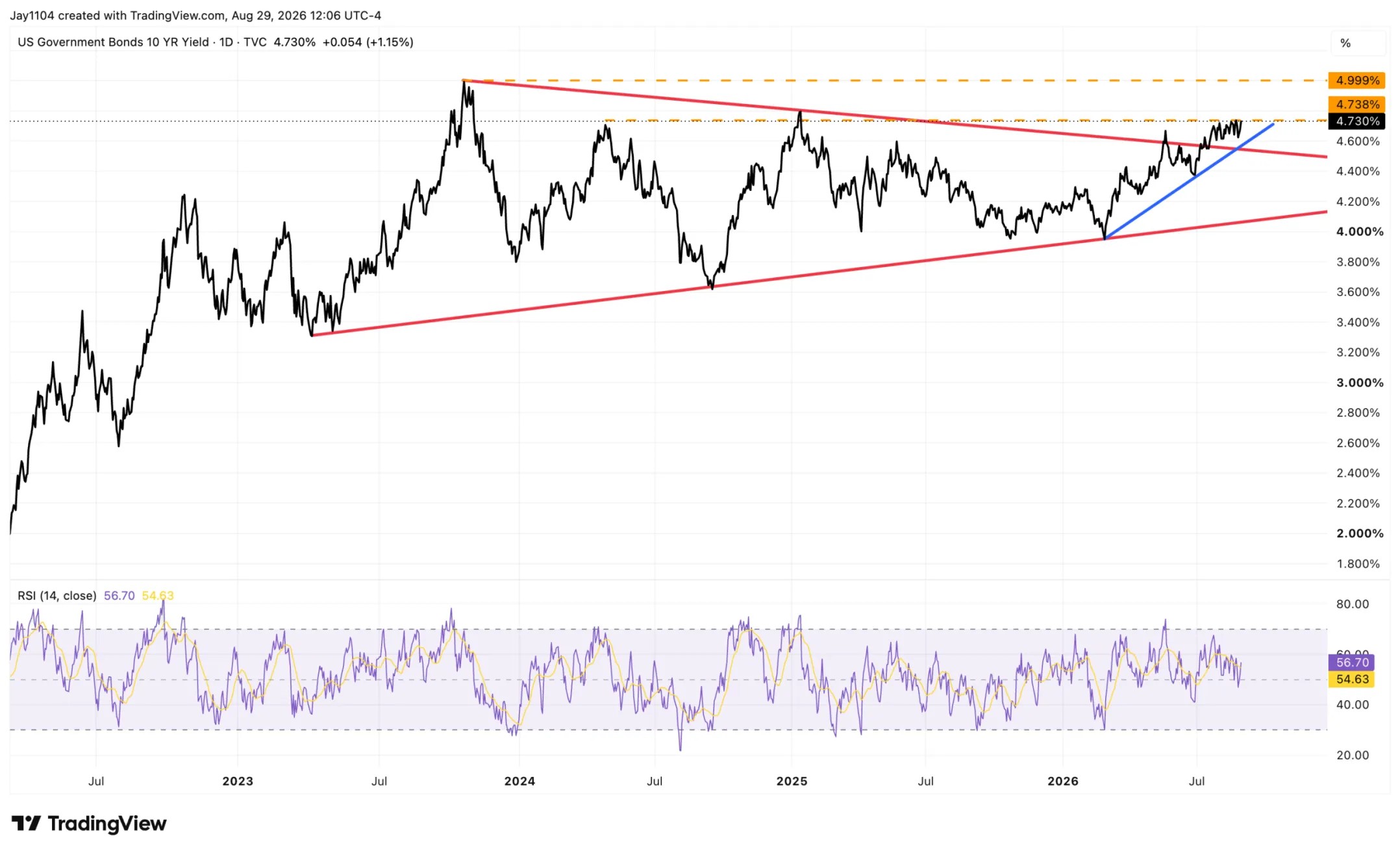
This is going to be a fairly important week for markets, given the amount of economic data coming and where rates closed. On Friday, the two-year moved up by almost 13 basis points and the ten-year by nearly six, following Fed chair Warsh’s Jackson Hole speech, which I read as hawkish. The metrics he pointed to were financial conditions, full employment, and inflation. If we’re talking about a full-employment economy with inflation too high and financial conditions not restrictive, then financial conditions need to tighten, and the only way you do that is by hiking rates.
The ten-year finished at 4.74%, a very important level. There’s really nothing after that, maybe a little resistance at 4.80%, and otherwise a clean shot up to around 5%. The ten-year broke a major long-term downtrend back in July, and on a weekly basis it looks like a major bull pennant or symmetrical triangle, continuation patterns that would suggest a pretty significant move higher.
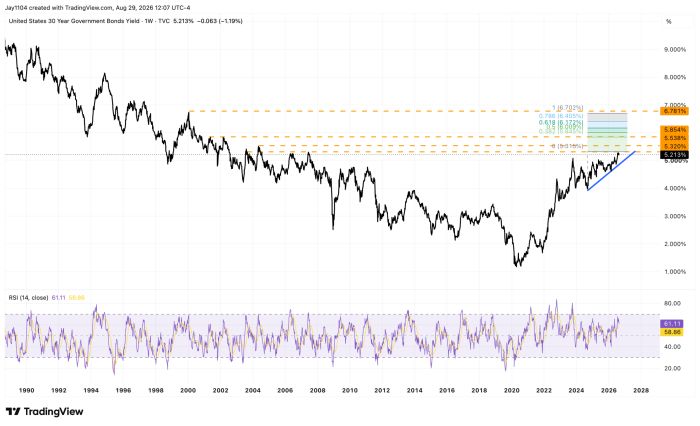
The thirty-year is a very similar picture: an ascending triangle pressing on the 5.30% level after clearing 5.20%, and after that you’re talking about 5.5%, perhaps as high as 5.9%.
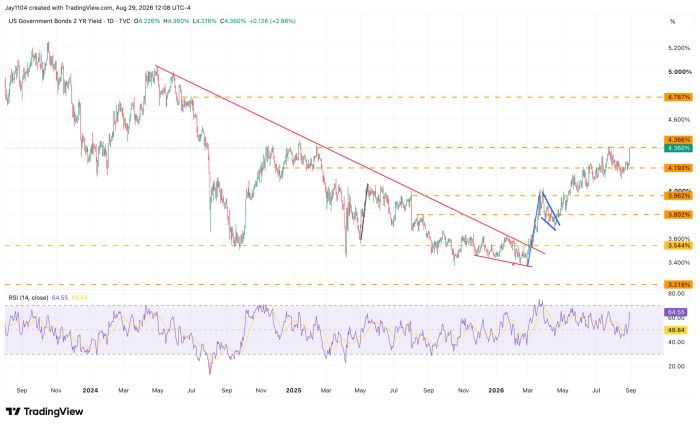
The two-year has also broken through its downtrend and has room to rise from 4.4% toward maybe 4.75 to 5%. This is strictly the technicals. Three-month rates moved up this week as well, which is the market’s way of pricing in rate hikes, and the TLT has broken down out of a descending triangle and looks fairly bearish.
The Market Chronicles · Video Member
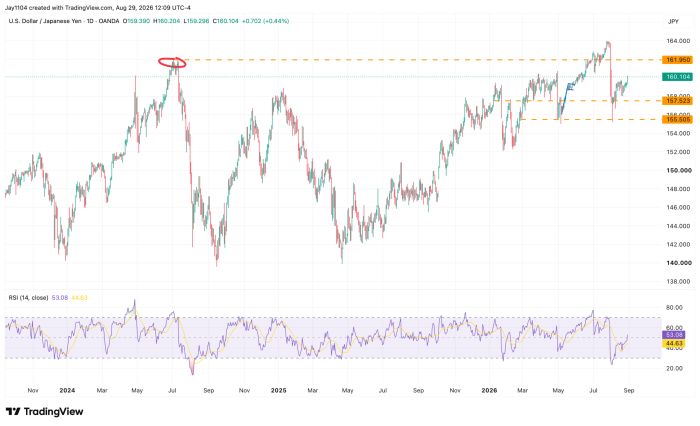
All of this has positive implications for the dollar, which made a strong move on Friday. The yen weakened back above the 160 level, the highest it has been since this round of intervention, and a breakout there could set up a return to around 162. The euro is breaking down below 1.16, potentially setting up a return to the 1.145 area, while the pound and the Canadian dollar are weakening in a similar fashion.
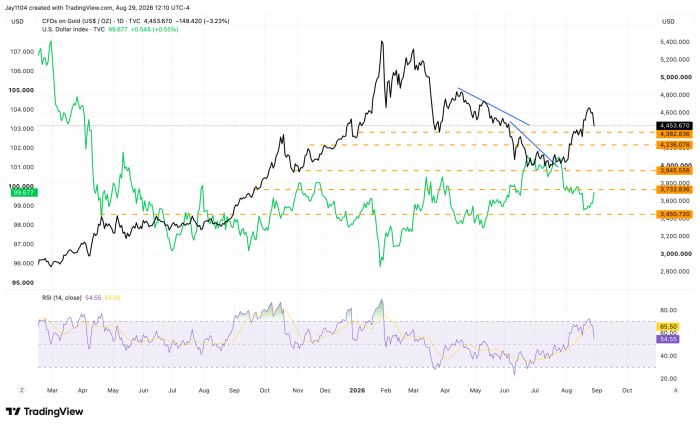
Gold is at risk here because it has turned into nothing more than an inverse dollar trade, and silver is a similar mirror image, so if rates and the dollar make a major move this week, the metals are exposed. The curve flattened on Friday because the two-year moved so quickly, and I think the front of the curve probably lifts faster at first, since the market has to adjust for a potential September hike, with the back end doing the rest once the front settles in.
On the Treasury buybacks, I think there’s a real misunderstanding. The Treasury is looking to buy back off-the-run securities (older ten-, twenty-, and thirty-year issues that rarely trade), and buying back a 25-year-old bond won’t affect the rates on our screens, which come from recently issued bonds.
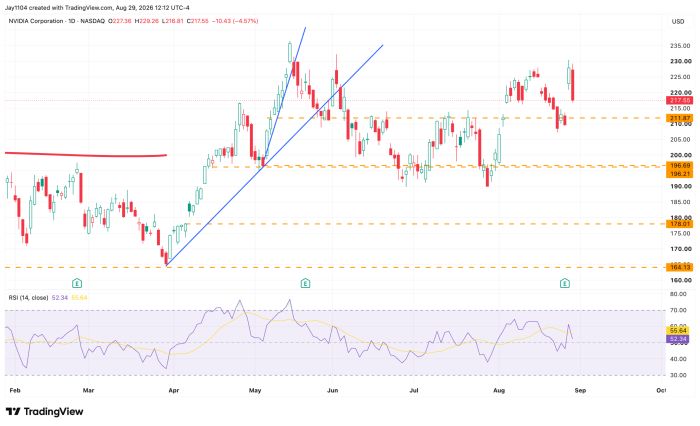
Meanwhile, the semis continued to weaken even with NVIDIA (NVDA)’s results. The Korean won keeps strengthening materially, and the Bank of Korea hiked rates again this past week, which has been and I think will continue to be a negative for the semiconductor trade. Our NVIDIA preview noted the options setup suggested the stock could decline after reporting, even if not in the first 24 hours. The stock rallied on the guidance and cleared $220 in the premarket, but failed at $230, triggering Friday’s sell-off. I wouldn’t be surprised to see NVIDIA continue lower on Monday, filling the gap around the $202 to $209 area and potentially testing $190 at some point, because there’s still a lot of positive delta built up in the stock and gamma will be greatly reduced this week, so there should be more volatility. That’s the unwind, I think, that continues over the next couple of days.


Comments
Log in or sign up to join the conversation.