
Enda Trading Blog | Top 10 Bank Stocks to Invest in | TalkMarkets
Trader
Contributor's Links: BuyStocks.ai TradingPlatforms.ai
Enda is the founder of BuyStocks.ai. He began his career trading while also working on a Google artificial intelligence project in Dublin, Ireland. Extending his passion by completing trading courses, Enda left his full-time I.T. job to pursue trading and content creation in July 2022. Enda ...more

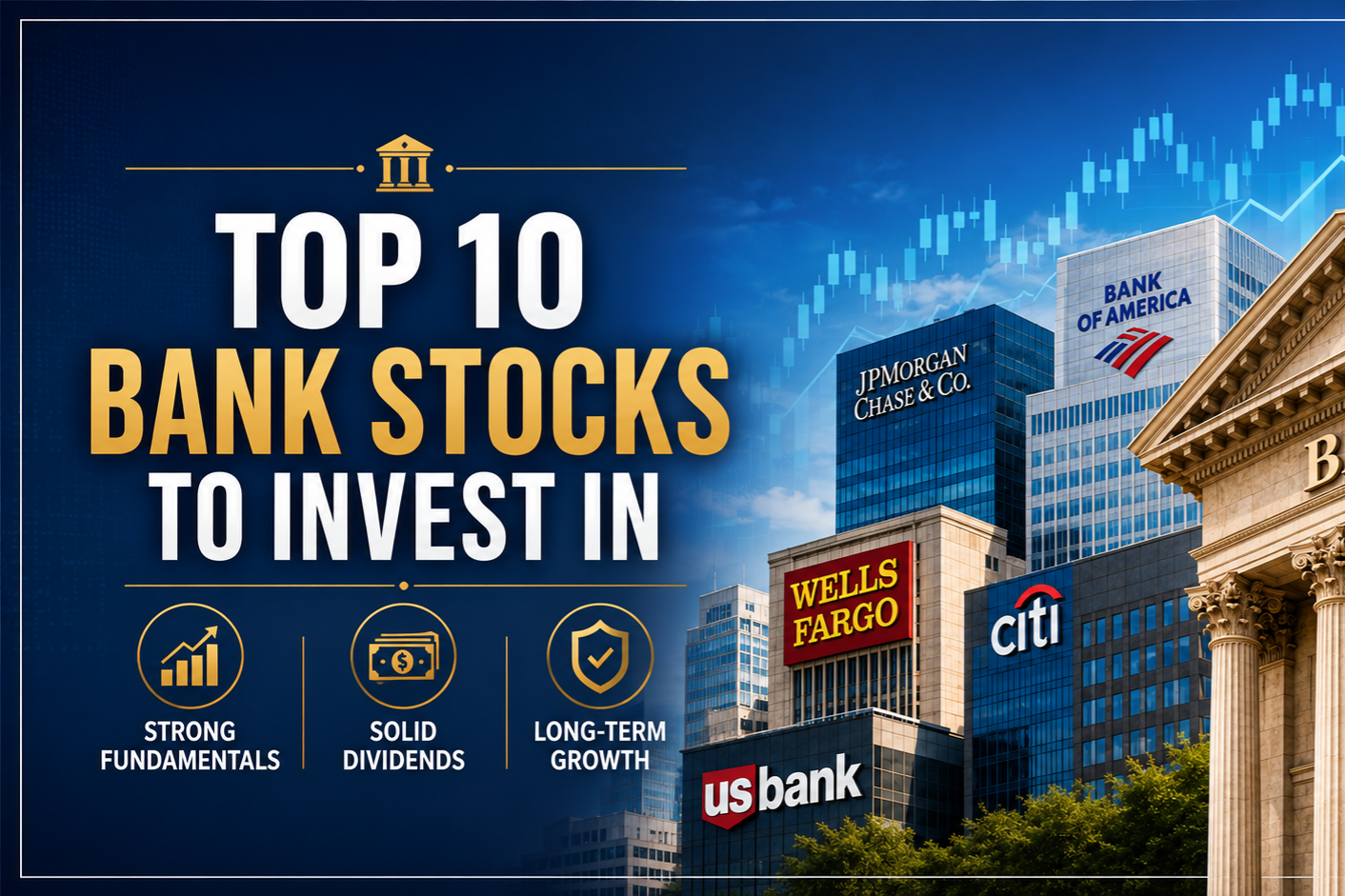
Top 10 Bank Stocks to Invest in

Date: Friday, February 7, 2025 8:21 PM EST

Top 10 Bank Stocks to Invest in

Financial stocks enjoyed a stellar run in late 2024, bolstered by lower short-term interest rates, an expanding economy, and strong third-quarter earnings across many segments of the financial sector. Further momentum came after the U.S. presidential election, with Wall Street anticipating a bank-friendly environment under the returning Trump administration.

Over the past 12 months, financial shares have surged 31%, easily outpacing the S&P 500’s 25% gain and trailing only the communications services and information technology sectors. Looking ahead, analysts project that financial companies will deliver 7% to 9% earnings growth in 2025 compared with 2024—still healthy, especially considering that financials currently trade at a larger-than-usual discount to the broader market.

Below are 10 top-ranked opportunities in the financial sector, reflecting a blend of traditional banks, specialized financial services firms, and insurers. This list draws solely on the information provided below and is ordered according to the specific ranking requested.

1. BlackRock (BLK)

Why It Made the List
BlackRock stands out as the world’s largest asset manager, boasting popular exchange-traded funds (ETFs) and a massive $11.5 trillion in assets under management at the end of its third quarter. With robust inflows from both retail and institutional investors, BlackRock’s scale and technology are propelling its growth.

Key Drivers

  • Expanding ETF Dominance: BlackRock’s iShares ETFs remain a core choice among investors seeking low-cost, broad-market exposure.
  • Aladdin Platform: Its proprietary risk-analysis and portfolio-management software, used globally by many financial firms, brings a diversified, tech-driven revenue stream and distinguishes BlackRock from traditional “plain vanilla” asset managers.
  • Private Market Acquisitions: BlackRock has been bolstering its foothold in private credit and alternative assets through acquisitions like HPS Investment Partners and Global Infrastructure Partners.

Valuation Snapshot
Despite its size and reach, BlackRock trades at a price-earnings (P/E) ratio of around 21—only modestly higher than the typical asset management P/E of about 18. That suggests room for upside if markets remain supportive and if the global shift to managed solutions continues.


2. Goldman Sachs (GS)

Why It Made the List
Goldman Sachs is a premier investment bank, delivering impressive third-quarter 2024 results with double-digit revenue growth across nearly all business segments. Debt underwriting soared by 46%, and investment banking fees rose by 20%.

Key Drivers

  • Capital Markets Rebound: Lower interest rates could revive IPOs and mergers and acquisitions, which are core revenue drivers for Goldman.
  • Regulatory Tailwinds: Some analysts anticipate that the Trump administration may ease regulations that affected deal closings, adding to Goldman’s pipeline of opportunities.
  • Top-Tier Franchise: A recognized leader in investment banking, trading, and wealth management, Goldman has diversified revenue streams that adapt well to shifting market cycles.

Valuation Snapshot
Trading at about 13 times forward earnings (in line with typical investment banking peers), Goldman Sachs is poised for further growth if capital markets stay active in 2025. Analysts see strong near-term earnings momentum, forecasting 18% annualized earnings growth over the next three years.


3. Citigroup (C)

Why It Made the List
Citigroup delivered a spectacular 39% surge over the past year—part of a broader financial sector rally. Yet shares remain among the cheapest of the biggest U.S. banks, trading below its tangible book value.

Key Drivers

  • Potential Regulatory Relief: Large banks (particularly global systemically important banks, or G-SIBs) could see eased capital requirements under the renewed Trump administration. Citigroup could benefit most, given its capital levels and discount valuation.
  • Global Reach: Although the bank has been streamlining operations, Citi still has an extensive international footprint in corporate banking, credit cards, and treasury services, positioning it to capture cross-border growth.
  • Restructuring & Focus: Ongoing strategic moves, including exiting consumer banking in several countries, have sharpened Citi’s focus on higher-return businesses.

Valuation Snapshot
Despite its stock’s strong run, Citigroup trades around 10 to 11 times forward earnings—still at a discount to many peers. The bank’s ratio of stock price to tangible book value (assets minus liabilities and intangibles) underscores potentially significant upside if the regulatory environment and global economy remain favorable.


4. American Express (AXP)

Why It Made the List
Known for its credit and charge cards, American Express remains a consumer and business staple with a vast network of loyal customers. It is also one of Warren Buffett’s favorite long-term holdings.

Key Drivers

  • Brand Strength: Merchants and cardholders alike view AmEx as a premium offering, reflected in historically high customer retention.
  • Consumer Spending Tailwind: If the U.S. economy continues to expand, higher travel, entertainment, and discretionary spending would boost AmEx’s transaction volumes and fee income.
  • Cross-Border Recovery: As global travel rebounds, American Express’s share of international card spending tends to climb, lifting revenue growth.

Valuation Snapshot
AmEx’s stock has appreciated significantly—roughly 70% in the past 12 months. Nevertheless, with global consumer spending on the rise and a consistent track record of dividend growth, it remains an appealing choice for long-term investors.


5. W.R. Berkley (WRB)

Why It Made the List
A leader in property and casualty insurance, W.R. Berkley benefits from today’s “hard cycle”—a period when insurance rates increase sharply in response to higher claims and natural catastrophes.

Key Drivers

  • Premium Pricing Power: Thanks to the need for coverage against extreme weather events, cybersecurity threats, and large jury awards (“nuclear verdicts”), insurers are commanding higher rates.
  • Founder-Led Management: William R. Berkley, who leads the firm, has emphasized profitable growth and conservative underwriting, contributing to above-average revenue and earnings growth.
  • Valuation: Despite a 27% climb in share price over the past year, the stock trades at about 14 times forward earnings, well below peer valuations of about 27 times.

Valuation Snapshot
The comparatively modest P/E ratio suggests the market has yet to fully price in W.R. Berkley’s consistent earnings trajectory and strong underwriting discipline, making it a compelling property-casualty play for 2025.


6. PNC Financial Services (PNC)

Why It Made the List
PNC is often considered “the biggest regional bank,” with a footprint that spans fast-growing areas such as the Carolinas and Texas. It offers a balanced blend of scale and regional focus, allowing it to weather market fluctuations better than many of its peers.

Key Drivers

  • Net Interest Margin Strength: The yield curve is less inverted now, potentially boosting banks that borrow short and lend long. PNC’s well-structured balance sheet is positioned to capitalize on continued shifts in interest rates.
  • Prudent Management: CEO Bill Demchak is widely respected for managing risk, avoiding long-term bond pitfalls that led to issues for some other regional banks.
  • Strategic Loan Mix: PNC has actively reduced exposure to commercial office real estate (down 16% from a year ago), lowering risk within its portfolio.

Valuation Snapshot
After rallying 29% this past year, PNC’s shares trade around 13 times earnings—roughly in line with the average regional bank. While no longer a deep bargain, its stable operations and well-capitalized balance sheet suggest it remains a high-quality choice among regionals.


7. Nu Holdings (NU)

Why It Made the List
Nu Holdings is a digital banking phenomenon in Latin America, controlling a large share of fintech-driven growth in the region. Led by Brazil-based Nubank, it has rapidly expanded into credit cards, personal loans, and mobile banking platforms across multiple countries.

Key Drivers

  • Explosive Growth: With a young customer base across Brazil, Mexico, and Colombia, Nu’s user-friendly platform has gained tens of millions of clients and still has plenty of expansion runway.
  • Underbanked Markets: Significant portions of Latin America’s population lack traditional bank access, offering Nu a chance to be the “first bank” for many consumers.
  • Rapid Revenue & Profit Gains: Analysts forecast continued double-digit growth in both the top and bottom lines, positioning Nu for higher valuations over time.

Valuation Snapshot
Nu does not yet pay a dividend, focusing instead on fueling rapid expansion in underpenetrated markets. Though high growth often carries higher volatility, the company’s unique market position may yield outsized returns for patient investors.


8. Bank of America (BAC)

Why It Made the List
Bank of America is a pillar of the U.S. banking system and the second-largest bank in the country by assets. It benefits directly from a healthy economy, an uptick in consumer lending, and strong commercial and wealth management operations.

Key Drivers

  • Mortgage & Consumer Loans: As short-term interest rates glide downward, borrowing demand could rise, boosting net interest income.
  • Market-Leading Scale: BoA has a nationwide presence, global investment banking, and a thriving wealth management division, which buffer it in various economic cycles.
  • Potential Capital Requirement Easing: Like Citigroup and other G-SIBs, Bank of America may enjoy a more flexible regulatory approach in the coming year.

Valuation Snapshot
BAC shares trade at around 12 to 13 times forward earnings—a discount to many smaller regionals, yet a premium to super-discounted peers such as Citigroup. That reflects the bank’s improved efficiency and consistent profitability since the 2008 financial crisis.


9. Wells Fargo (WFC)

Why It Made the List
Wells Fargo has rebounded strongly from past regulatory and reputational challenges, with shares up nearly 50% in the last 12 months. Management is focused on rebuilding the franchise and simplifying its businesses.

Key Drivers

  • Operational Turnaround: Cost cuts and improved risk management are starting to shine through in healthier profit margins and stronger credit metrics.
  • Consumer & Commercial Lending: With a broad U.S. footprint, Wells Fargo remains a go-to institution for mortgages, small business loans, and deposits.
  • Regulatory Momentum: Though the bank is still working through legacy constraints, any easing of asset caps or capital rules could further unlock earnings growth.

Valuation Snapshot
At about 12 to 13 times forward earnings, Wells Fargo is now priced close to peers. However, continued operational improvements and a brighter macro outlook could pave the way for further upside if the bank maintains momentum in 2025.


10. Visa (V)

Why It Made the List
Visa is the world’s largest payment network, sitting alongside Mastercard in a near-duopoly of global transaction processing. While strictly speaking not a “bank,” Visa is central to electronic finance and benefits whenever consumers and businesses move away from cash.

Key Drivers

  • Global Digital Payments Growth: Rising cross-border transactions and e-commerce align perfectly with Visa’s core business model.
  • High Operating Margins: Visa operates a capital-light, service-oriented business, enabling strong profitability and consistent free cash flow.
  • Recurring Revenue Streams: Each time a Visa card processes a payment, the company captures a fee, creating a perpetual revenue engine tied to consumer spending trends.

Valuation Snapshot
Visa’s shares have delivered robust returns for more than a decade, reflecting high earnings growth and dependable brand strength. The company trades at a premium valuation, but ongoing adoption of digital payments—especially in emerging markets—should keep its expansion trajectory intact.


The Big Picture

Economic & Sector Outlook

  • Interest Rates: Short-term rates have been drifting downward, and if the Federal Reserve lowers them further in 2025, banks can see a “steeper” yield curve—meaning they borrow cheaply on the short end while lending at higher rates on the long end.
  • Regulatory Environment: Wall Street is optimistic that the Trump administration’s policies will remain friendly to the banking industry, potentially easing certain capital requirements for G-SIBs and freeing up more profits.
  • Growth Forecast: Financial sector earnings are expected to climb by 7% to 9% in 2025, continuing the sector’s strong rebound from earlier disruptions. Despite their run-up, many financial stocks still trade at a discount to the broader market.

How to Play the Sector

  • Diversified ETF: For investors who prefer an index approach, broad funds such as the iShares U.S. Financials ETF (IYF) and the Financial Select Sector SPDR ETF (XLF) provide exposure to an array of banks, insurers, and asset managers.
  • Industry-Specific ETFs: Invesco KBW Property & Casualty Insurance ETF (KBWP) or iShares U.S. Regional Banks (IAT) let you target particular niches—such as property and casualty insurers or regional banks—that analysts believe have near-term catalysts.

Roundup

Financial stocks have multiple tailwinds heading into 2025: a supportive interest-rate backdrop, optimism over regulatory policy, and an economy that so far has skirted recession fears. With strong returns in 2024 and the potential for ongoing earnings expansion this year, many of these ten picks could continue delivering solid results for investors.

From the global heft of BlackRock and Goldman Sachs to the specialized insurance play of W.R. Berkley and the regional stability of PNC, there is a financial stock to fit most portfolios. Meanwhile, innovators such as Nu Holdings and payment giants like Visa broaden the investment case within an evolving digital era.

As always, keep your individual risk tolerance and long-term goals front of mind when deciding which financial stocks best match your strategy. These ten industry leaders underscore the sector’s diversity, resilience, and capacity for rewarding returns in 2025 and beyond.

🌟Learn more about Investing in Banking Stocks at:

Disclaimer: The information provided in this article is for educational purposes only and should not be considered financial or investment advice.  

Disclaimer: This and other personal blog posts are not reviewed, monitored or endorsed by TalkMarkets. The content is solely the view of the author and TalkMarkets is not responsible for the content of this post in any way. Our curated content which is handpicked by our editorial team may be viewed here.

Comments

Leave a comment to automatically be entered into our contest to win a free Echo Show.