

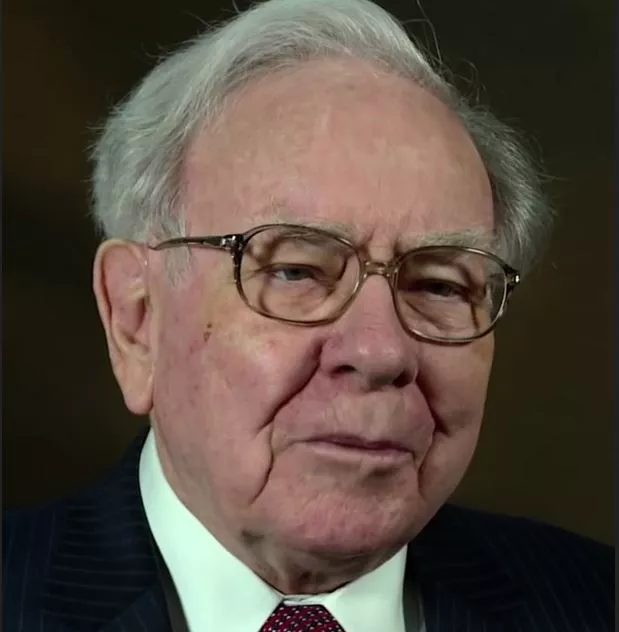
Image Source: Wikipedia
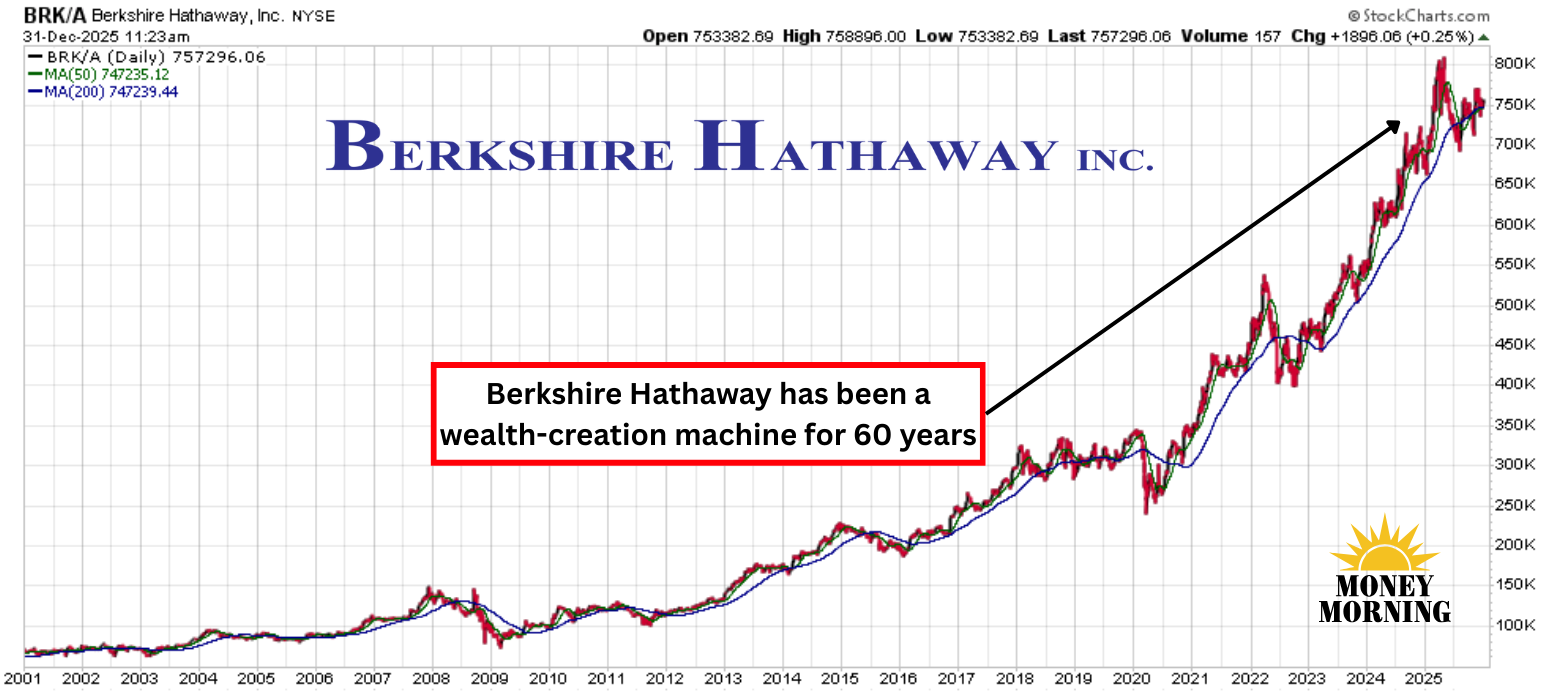
Over six decades at the helm of Berkshire Hathaway (BRK-A, BRK-B), Warren Buffett transformed a struggling textile company into a conglomerate worth hundreds of billions. From 1965 until his departure on Wednesday, Buffett delivered staggering returns exceeding 5 million percent for investors – a compounded annual growth rate nearing 20% that dwarfed the S&P 500's roughly 10% annual return over the same period. It turned modest investments into fortunes.
Along the way, the Oracle of Omaha shared timeless investing wisdom through shareholder letters, interviews and at annual shareholder meetings. In today's volatile markets, driven by meme stocks and rapid trading, his principles of patience and value remain more relevant than ever, guiding investors toward sustainable wealth.
(Click on image to enlarge)
Buffett's Enduring Investing Philosophy
At the core of Buffett's approach is buying wonderful companies at fair prices, rather than mediocre ones at bargain rates. Influenced by his mentor Benjamin Graham, he evolved to emphasize quality over mere cheapness. He seeks businesses with durable competitive advantages, or "moats," like strong brands or network effects, that protect profits long-term.
Central to this is his long-term buy-and-hold strategy. Buffett views stocks not as ticker symbols or slips of paper to trade impulsively, but as partial ownership in real businesses. When you buy a share, you're actually becoming a partner in that enterprise – sharing in its successes and shouldering the risks. This mindset shifts focus from one of short-term price fluctuations to the underlying company's health and growth potential.
The Punch Card Mentality
Buffett famously advises imagining your investment life as a punch card with only 20 slots. Each investment punches a hole, and once they're gone, there are no more opportunities. This scarcity encourages investor discipline: research deeply, wait for the right moments, and commit only to the very best ideas. It's an antidote to overtrading, which erodes returns through fees, taxes, and missed opportunities.
Tied to this is his mantra of buying with the intention of holding forever. Sell only if the original investment thesis fundamentally changes – say, due to management shifts or eroding moats – not because of market whims or temporary setbacks. This philosophy has built Berkshire Hathaway's portfolio of stalwarts like Coca-Cola (KO) and American Express (AXP).
These are two stocks that he has never sold a single share of since acquiring them, and today they are among the top five holdings in his portfolio, representing 9% and 18% of the total, respectively.
Bottom Line
Of course, Buffett hasn't always adhered strictly to his own rules. He's sold holdings along the way, including recently selling down his positions in Apple (AAPL) and Bank of America (BAC) stock, even as those companies' fundamentals remained robust. Apple once represented around half of the portfolio, but today accounts only 21%, suggesting diversification needs rather than not believing in the company anymore.
He also benefited from deals inaccessible to average investors, like his 2008 Goldman Sachs (GS) investment during the financial crisis, where he secured favorable terms for providing bailout capital. Buffett is also able to accumulate significant positions in companies without notifying the markets, so he can get the best pricing before other investors follow his trades.
Yet these exceptions don't undermine his core themes. In a world of hype and speculation, Buffett's wisdom – emphasizing quality, patience, and ownership – endures. Investors everywhere would do well to heed it long after his departure, building portfolios that withstand time rather than chasing fleeting gains.
More By This Author:
The Sleeper Strategy To 3X Your Portfolio In 10 Years With Dividend Kings
Are REITs A Smart Bet for Income Investors In 2026?
SpaceX Will Be The Hottest IPO In 2026. Should You Buy?


Comments
Log in or sign up to join the conversation.