


Image Source: Unsplash
Boeing (BA) has endured a brutal stretch of turbulence over the past five years, with a cascade of operational blunders eroding investor trust and slashing its stock price by 13%. The 787 Dreamliner's chronic production delays – stemming from fuselage defects and supply chain snarls – pushed deliveries back by years, costing billions and tarnishing the model's reputation.
Then came the harrowing January 2024 incident where a door plug violently ejected midflight from a 737 Max 9, exposing shoddy quality control and sparking FAA groundings. Compounding these woes, Boeing's key supplier, Spirit AeroSystems (SPR), has been a hotbed of defects, from misdrilled holes to faulty fuselages, further hampering output.
Yet, amid turbulence, BA shares have clawed back strongly, surging 14% year-to-date in 2025 and a whopping 56% from April lows, buoyed by rebounding deliveries and defense wins. Now, the $4.7 billion all-stock acquisition of Spirit – greenlit by the FTC with divestitures to Airbus – is set to close imminently, potentially as soon as today, according to an NYSE notice suspending SPR trading.
By internalizing Spirit's operations, Boeing aims to tighten quality oversight and stabilize its supply chain. But is BA stock a buy at this inflection point?
(Click on image to enlarge)
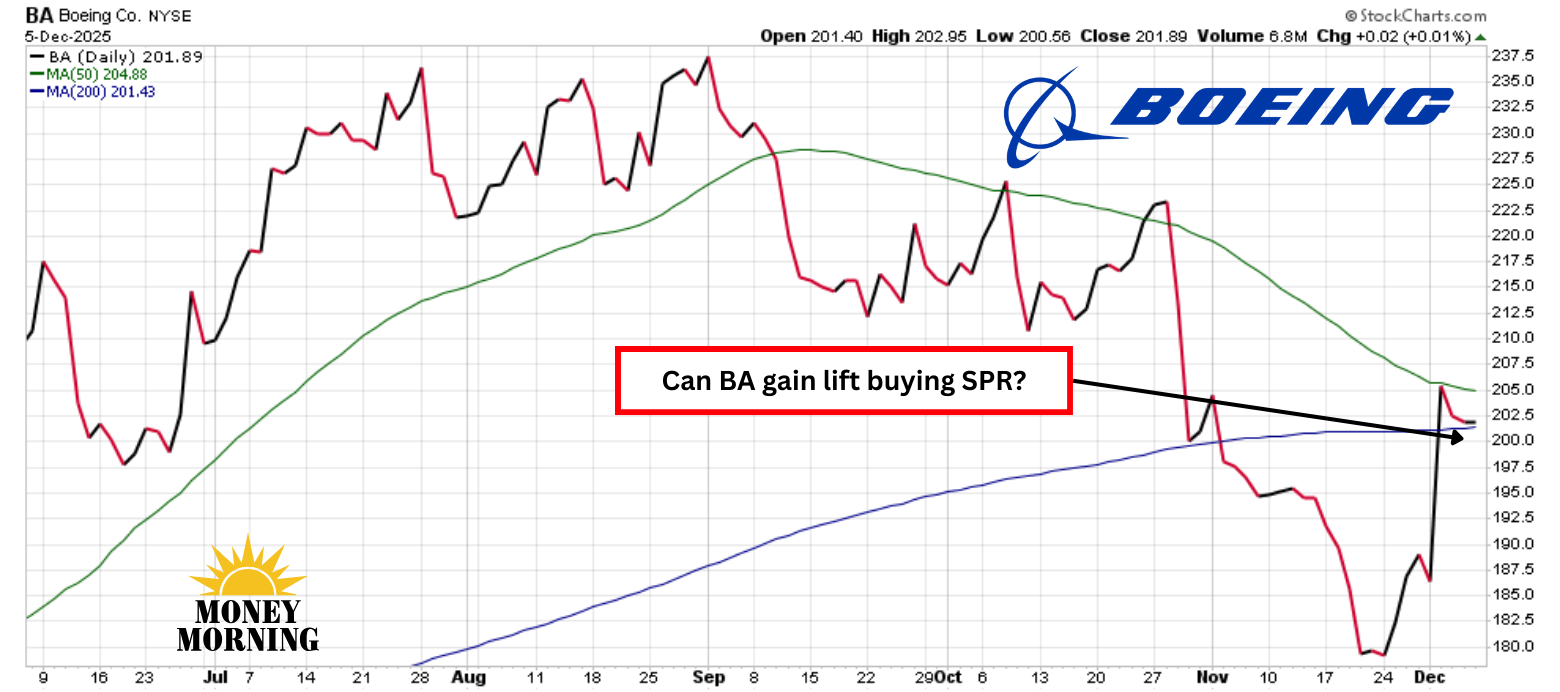
Boeing's Enduring Strength in a High-Flying Market
Boeing remains an aerospace colossus, commanding a duopoly with Airbus in commercial jets, where global travel demand shows no signs of abating. Backlogs exceed 5,000 planes, fueled by post-pandemic recovery and emerging-market expansion, promising revenue streams for years.
In defense, BA's portfolio – from F-15 fighters to satellite systems – anchors steady government contracts, insulating it from cyclical downturns. The Spirit deal, expected to close by year-end, could supercharge efficiencies, reducing defects and accelerating 737 Max production toward 50+ units monthly by 2026.
Boeing projects positive free cash flow returning next year, with shares trading at a forward P/E of 35x – elevated but arguably justified by 10% to 15% annual earnings growth potential. If execution clicks, BA could hit $250 by mid-2026, a 20% upside from current levels, as supply chain fixes unlock pent-up orders.
Vulnerabilities That Could Ground the Rally
Yet, Boeing problems are legion. A culture that seemingly prioritizes cost-cutting over safety has invited relentless scrutiny, with FAA audits ongoing and a $1.1 billion DOJ settlement this year for past 737 Max crashes. Labor unrest has delayed Dreamliner deliveries, inflating a $635 billion backlog while burning cash. Geopolitical risks could also hike costs 5% to 10%.
Integrating Spirit isn't risk-free either. Divestitures to Airbus might dilute synergies, and any quality slips could trigger new groundings, hurting shares. With debt at $44 billion, elevated interest rates amplify refinancing pressures, potentially capping multiples if recession bites.
Bottom Line
Tailwinds are pushing Boeing alone. Surging air travel, rising defense budgets, and the Spirit merger promise a "turnaround year," with Q3 revenue up 30% and deliveries jumping 38%. But Warren Buffett's timeless warning about investing in airlines – "the worst sort of business is one that grows rapidly, requires substantial capital to engender the growth, and then earns little or no money" –rings true here. Although not an airline, Boeing's capital-hungry model fits the bill, plagued by overruns and thin margins.
Over the past decade, BA's has total return of just 56%, dwarfed by the S&P 500's 291% gain. Yet it rarely beats the index, underscoring the problem: even if BA soars, passive market investing has proven safer. For risk-tolerant BA could be a buy, but for most, the broad market remains the steadier flight path.
More By This Author:
Netflix To Buy Warner Bros For $72 Billion. Time To Sell?
Opendoor Surges Again - Is This Time For Real?
From "Uptober" Hype To Winter Woes: Can Bitcoin End 2025 On A High Note?



Comments
Log in or sign up to join the conversation.