

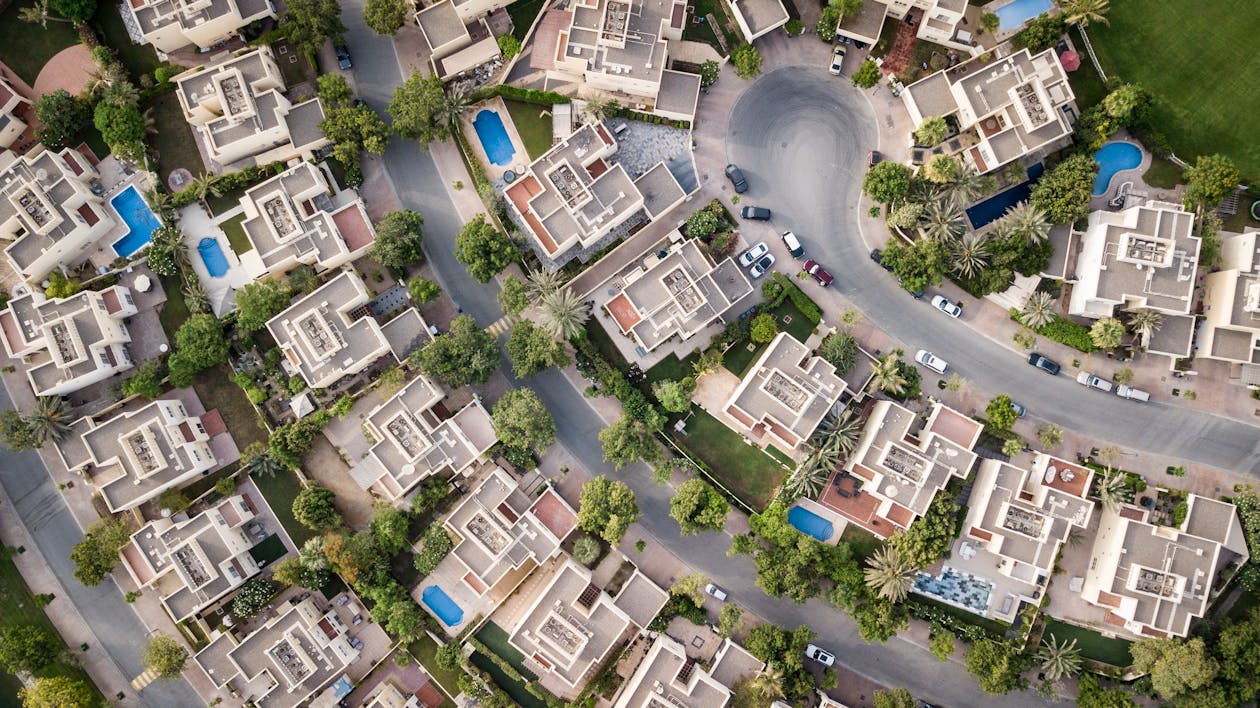
Image Source: Pexels
Many homeowners assume their insurance will protect them if disaster strikes. After all, nearly all U.S. homeowners carry some form of homeowners insurance. However, having a policy is not the same as having adequate protection. For a significant number of people, inflation and rising rebuilding costs have eroded the real value of their dwelling coverage. This means that if a serious loss occurs, their insurance may cover only a portion of the cost of rebuilding, leaving them responsible for the rest.
The cause of this problem is simple: while home values and construction costs have climbed sharply in recent years, many homeowners have not updated their dwelling coverage to match. In today’s risk environment, ignoring this gap is a major oversight in personal risk management.
Why Replacement Cost Matters More Than Market Value
When you buy homeowners insurance, the dwelling coverage limit should reflect what it would cost to rebuild your home, not what it might sell on the open market. Replacement costs include materials, labor, permits, and compliance with current building codes. These costs have increased well beyond general inflation in recent years.
Industry data shows that replacement costs for residential construction in the U.S. have risen significantly, with factors like higher material costs and labor shortages driving increases that outpace typical inflation measures. Total replacement costs reached $31 billion in 2025 and structural replacement costs have climbed nearly 30 percent over the past five years. (Insurance Information Institute)
Despite this surge in rebuilding costs, many homeowners either do not understand how their coverage works or fail to adjust their policy after purchase. This creates a widening gap between what they are insured for and what it would actually cost to rebuild their home after a loss.
The Scope of Underinsurance
Research underscores how widespread the underinsurance problem has become. Surveys and industry estimates indicate:
- Around 60 percent of homeowners are underinsured, meaning their dwelling coverage falls short of the actual replacement cost of their homes. (Simply Insurance®)
- A survey from a major insurance provider found that only about 30 percent of homeowners increased their coverage to match rising building costs, even though cumulative costs have risen more than 30 percent in recent years. (Insurance Business)
- Another survey reported that 18 percent of homeowners acknowledge they are underinsured, and 38 percent do not even know whether their policy is adequate. (Kin)
These statistics point to both a knowledge gap and a coverage gap. Many people do not know how to assess their replacement cost needs, while others simply assume their existing policy will automatically keep pace.
How Underinsurance Reduces Claim Payouts
The financial consequences of underinsurance can be substantial. Insurance companies use formulas and valuation ratios to determine payouts when a claim is made. One commonly used method applies a coverage ratio or “coinsurance clause.” If your dwelling coverage is significantly below the true cost to rebuild, your insurer may reduce the payout proportionally—even for partial losses.
For example, if it would cost $500,000 to rebuild your home but you are insured for only $350,000, the insurer may only pay a portion of your claim, based on your coverage ratio. The remaining costs would become your responsibility. Many homeowners do not realize this until a loss has already occurred.
In extreme cases, such as total losses from wildfire or hurricane damage, those shortfalls can reach into the tens or even hundreds of thousands of dollars. Legal actions in recent years have highlighted cases where homeowners were left underinsured by significant amounts after wildfires, leaving them unable to afford rebuilding without taking on large personal debts. (San Francisco Chronicle)
Practical Risk Management Steps for Homeowners
The good news is that underinsurance is preventable with proactive management. Homeowners should treat insurance as an active component of their financial plan, not a “set it and forget it” expense.
Here are steps that help ensure adequate dwelling coverage:
- Review your policy at least annually. Ask your agent how the replacement cost was calculated and whether it reflects current material and labor costs in your area.
- Use replacement cost estimates, not market value. Market value fluctuates with real estate trends, while replacement cost focuses on what it would actually cost to rebuild.
- Consider extended replacement cost coverage. Some policies offer extra coverage above the standard limit if rebuilding costs rise after a loss.
- Update coverage after renovations or additions. Home improvements increase replacement costs, and failing to adjust coverage can leave you underprotected.
- Ask about inflation guard options. These automatically adjust dwelling limits to account for inflation, though they may still lag behind actual cost increases.
By regularly assessing and updating coverage, homeowners can avoid the financial shock of underinsurance. This discipline is a core element of effective risk management for anyone who owns property.
Case Study: The Cost of Outdated Dwelling Coverage
In a financial plan I completed last year, Bob and Jane (names changed) purchased their home 25 years ago for $105,000 and insured it with $110,000 of dwelling coverage, which was appropriate at the time. Over the years, their homeowner’s policy renewed automatically, and the dwelling coverage amount was never revisited.
During that same period, their home appreciated significantly. Today, the market value is approximately $600,000, driven by inflation, rising construction costs, and housing market growth. However, a recent replacement cost analysis showed it would cost $480,000 to rebuild the home, excluding land value.
Despite this, Bob and Jane were still insured for just $110,000, or less than 25 percent of the true replacement cost. The recommended solution was to increase their dwelling coverage to 100 percent of replacement cost, or $480,000.
To understand the risk, consider a partial loss scenario. If a fire caused $120,000 damage, most homeowners policies would apply a coverage ratio due to underinsurance. With required coverage at 80 percent of $480,000, or $384,000, and actual coverage of $110,000, the insurer could reduce the payout proportionally. Instead of receiving the full $120,000, Bob and Jane might receive only $37,500, leaving them to cover more than $82,500 out of pocket.
In a total loss situation, the policy would cap the payout at $110,000, forcing Bob and Jane to fund an additional $370,000 to rebuild.
After reviewing these risks, Bob and Jane updated their policy to $480,000 of dwelling coverage and added inflation protection. While premiums increased, the change significantly reduced the financial risk to their household.
Key takeaway: Failing to update dwelling coverage over time can quietly create severe financial exposure. Regular insurance reviews are an essential part of effective risk management.
Conclusion
Inflation and rising construction costs have made homeowners insurance more complex and more important than ever. A home’s dwelling coverage must reflect the true cost to rebuild, not the price paid years earlier or the current market value. Without periodic reviews and adjustments, many homeowners will continue to find themselves underinsured—and could face significant financial hardship if disaster strikes.
Understanding these risks and acting to mitigate them protects not only your property but also your long-term financial well-being. Adequate insurance is not an expense; it is a foundational part of a sound risk management strategy to transfer risk.
More By This Author:
Energy Boom: Uranium, Nuclear, And The New Power Shift
The End Of Dollar Rule- Debt, Geopolitics, And Surveillance
S&P 500’s Next Act: Craig ‘Bullseye’ Johnson Calls For Caution In 2026


Comments
Log in or sign up to join the conversation.