

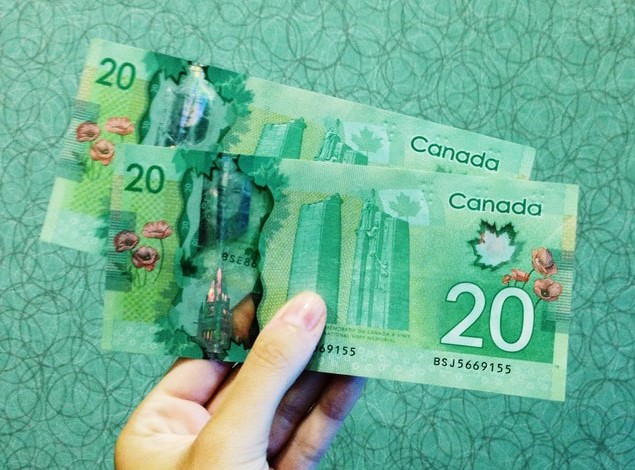
Photo by Michelle Spollen on Unsplash
The Canadian Dollar (CAD) climbed sharply on Friday, adding half a percent against the US Dollar (USD) after January labor market data showed the unemployment rate dropping to 6.5%, its lowest reading since September 2024. The Loonie found support despite headline employment falling by 25,000, as a sharp decline in labor force participation drove the jobless rate lower. USD/CAD pulled back toward 1.3634, trimming gains accumulated over recent weeks.
Labor market details were mixed. The unemployment rate fell three-tenths of a percentage point to 6.5%, but the improvement came primarily from 94,000 people exiting the labor force rather than from job creation. The participation rate dropped four-tenths to 65.0%, its lowest level since early 2025. Full-time work fell by 27,000, concentrated among core-aged women, while manufacturing shed 28,000 positions; a 1.5% decline that marks the sector's continued struggle with US tariff impacts.
Loonie rebounds on USD weakness
The Canadian Dollar's advance owed as much to broad US Dollar softness as to domestic data. The US Dollar Index (DXY) slipped toward 97.9 on Friday, weighed down by concerns over the US labor market and elevated AI valuations. Fresh US data showed job openings unexpectedly fell to 2020 lows, job cuts hit their highest January total since 2009, and initial jobless claims rose to 231K, well above the 212K forecast. The string of weaker labor data pushed markets to price in Federal Reserve (Fed) rate cuts beginning in June.
While the CAD benefited from the Greenback's pullback, Crude Oil prices offered limited tailwinds. West Texas Intermediate (WTI) barrel prices hovered near $62.50 on Friday, extending losses for the week as easing geopolitical tensions around Iran-US nuclear talks and demand concerns pressured the commodity. Oil markets are set to close their first weekly decline in six weeks, with Iran's confirmation of negotiations reducing near-term supply disruption risks.
BoC stays on hold through 2026
The Bank of Canada (BoC) held its policy rate at 2.25% late last month, signaling that it expects to keep rates unchanged through 2026 barring a shift in the outlook. Governor Tiff Macklem noted that while the economy shows resilience, uncertainty around the upcoming Canada-US-Mexico Agreement review keeps risks elevated. With inflation holding near the 2% target and excess labor market slack persisting, the BoC has indicated the current policy stance is appropriate to help the economy through structural transitions tied to US protectionism and slowing population growth.
Daily digest market movers: Mixed labor data drives CAD rebound
- USD/CAD fell 0.56% to 1.3634, trimming losses accumulated since late January.
- Unemployment rate dropped to 6.5%, lowest since September 2024, driven by falling participation.
- Manufacturing employment fell 28K, largely in Ontario, as tariff pressures bite deeper.
- DXY slipped to 97.9 as weaker US labor data reinforced bets on Fed rate cuts starting in June.
- WTI Crude Oil near $62.50, down for the week as Iran-US nuclear talks ease supply concerns.
- BoC holding policy rate at 2.25% through 2026, citing uncertainty around CUSMA review.
Canadian Dollar price forecast
USD/CAD retreated from sixteen-month highs near 1.37 after the January employment report, with the pair now trading at 1.3634. The move pushed price back below recent resistance and into a familiar consolidation zone. The 50-day Exponential Moving Average (EMA) near 1.38 and the 200-day EMA near 1.39 are both above current price action, signaling that the broader uptrend is testing key support levels.
Short-term support builds near 1.36
The recent pullback toward 1.36 brings USD/CAD into a zone that has acted as support multiple times over the past several months. A sustained break below 1.36 would expose the 1.35 handle, where buyers emerged during the Loonie's rally in late January. On the upside, resistance now sits near 1.37, with the 50-day EMA providing an additional barrier to any immediate recovery attempts.
Momentum indicators suggest the near-term bias has shifted
The Relative Strength Index (RSI) pulled back from overbought levels above 70 earlier this week and now hovers in the mid-50s, leaving room for further downside if selling pressure continues. Friday's sharp reversal candle suggests buyers may defend the 1.36 area, but confirmation is needed. A close below 1.3580 would signal that the recent correction has more room to run, while a recovery above 1.3720 would indicate that the broader bullish trend is reasserting itself.
More By This Author:
Crude Oil Slips As US-Iran Talk Tensions Ease, WTI Tests $63
Canadian Dollar Edges Lower Against Greenback As Risk-Off Flows Dominate
GBP/USD Churns Near 1.3700 Ahead Of BoE Rate Call


Comments
Log in or sign up to join the conversation.