

Image Source: Unsplash
The New Years is getting off to an exciting start as president trump says he’s locked and loaded if Iran steps out of line.Fox News reported that President Donald Trump warned early Friday that the U.S. would intervene if Iran started killing protesters.Writing on Truth Social, the president said if Iran shoots and “violently kills peaceful protesters, which is their custom, the United States of America will come to their rescue.”“We are locked and loaded and ready to go,” Trump said.
Iran is seeing protests pop up all over the country, not just in Tehran, and things are getting heated. Reports say at least seven people, including protesters and some from the Iranian security forces, have lost their lives in these clashes.
Over in western Iran, it’s wild with videos are making the rounds online showing fires burning in the streets at night and the sound of gunshots echoing through the darkness.
This wave of unrest is the biggest Iran has seen since back in 2022, when the tragic death of Mahsa Amini lit off nationwide protests. Now, officials claim it’s not quite at that level yet, but we’re seeing these demonstrations spread far and wide, and the crowd isn’t shy about taking aim at Iran’s religious rulers.
On the political front, Iran’s new reform-minded president, Masoud Pezeshkian, is talking about working with the protesters, but let’s be honest — his hands are tied with the way the economy’s sliding. The Iranian rial? It’s in free fall, with about 1.4 million rials needed just to snag a single U.S. dollar. No wonder folks are frustrated and losing faith in the government.
Meanwhile, the authorities are cracking down. State TV says they’ve arrested people accused of stirring the pot — some they call monarchists, others supposedly linked to groups in Europe. And get this: security forces say they’ve grabbed smuggled weapons during the chaos. But as usual, details are pretty thin.
This new year drama in OPEC oil producer comes as Russia politely asked the United States to stop following their oil tanker. Reuter reports thatRussia has asked the U.S. to stop its pursuit of an oil tanker that was heading to Venezuela and is now fleeing the U.S. Coast Guard in the Atlantic Ocean, the New York Times reported on Thursday, citing two people with knowledge of the matter. American forces have been pursuing the tanker, which maritime groups have identified as the Bella 1, for almost two weeks.
Yet, despite all these geopolitical concerns, the oil market seems unmoved. Oil prices are locked in this long-term trading range, and there’s a sense that the market is going to be well supplied no matter what happens. But there is also the sense that President Trump has the upper hand in all of these situations. It became very clear that after the United States attacked Iran’s nuclear facilities earlier in the year, the Iranian military could not stand up to another U.S. attack—they don’t have the military capability to do so.
Any concerns that Iran would lash out and try to shut the Strait of Hormuz seem to be unfounded, because if they were going to do that, they would have done so earlier in the year. Last June, when the U.S. attacked, they didn’t do so because they knew that if they did, it would be basically suicide. Even the Chinese, who were about their only friend in the world at that point, were also against shutting down the Strait of Hormuz. Bloomberg is reporting that at least three tankers carrying Russian crude are indicating Reliance Industries Ltd.’s plant on India’s west coast as their next destination, after the refiner restarted some purchases for domestic production.
The vessels are laden with nearly 2.2 million barrels of Urals and are expected to deliver their cargoes early this month, according to data analytics firm Kpler. A Reliance spokesman denied that the cargoes had been purchased by the company, adding that it didn’t have any committed shipments of Russian crude for delivery in January.
Still the market is very confident that President Trump can navigate these geopolitical waters without any major hit to oil production.
The International Energy Agency (IEA) still says that they see an oil glut they claim that global oil supply was reported to have outpaced demand by 3.2 million barrels per day (bpd) in November 2025. The experts at IEA keep churning out projections about an epic oversupply in 2026—remember those initial late-2025 estimates that hyped a record surplus of up to 4.09 million barrels per day? The story goes that the glut is mainly because of booming production from non-OPEC+ players like the U.S., Guyana, Brazil, and Canada, combined with sluggish demand growth—especially in China, supposedly thanks to a rush toward electric vehicles. ?
OPEC+ is scheduled to meet next week, but with major non-OPEC producers such as the U.S., Brazil, and Guyana increasing output, the group faces significant challenges. China’s efforts to build up strategic reserves could help absorb some of the surplus.
However, there are still risks to consider. If U.S. authorities begin intercepting Iranian tankers transporting approximately 1.6 million barrels per day, or if disruptions in the Black Sea affect Russia’s 780,000 barrels per day of crude exports, the market could see a quick rebound in prices. Additionally, with Iran relying on Russia for support and China purchasing discounted oil, any escalation in these areas could impact refined products like diesel.
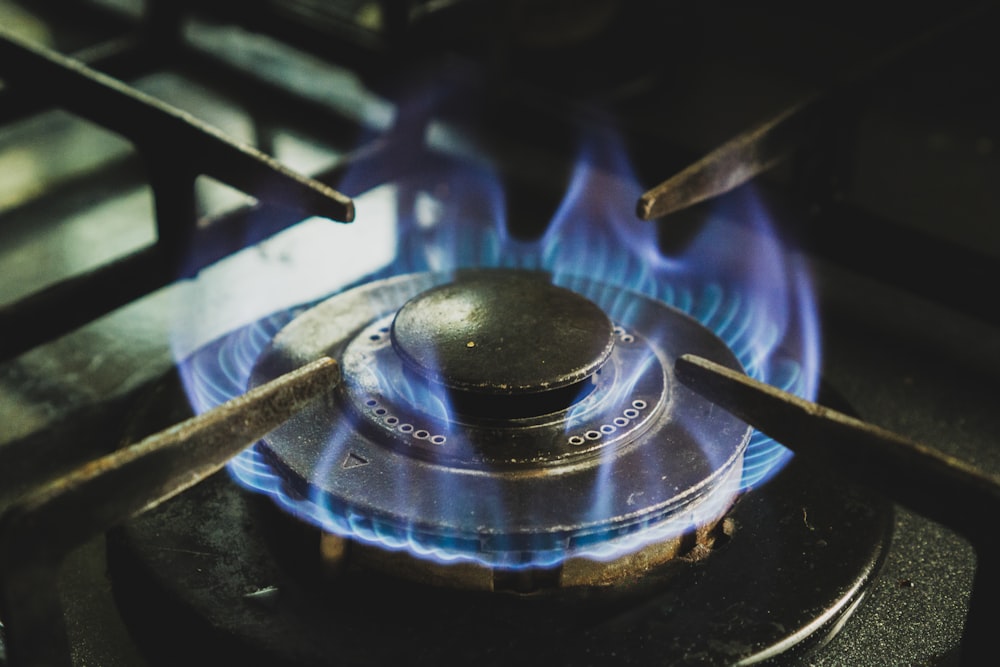
Natural gas prices took a dip overnight, and it’s mostly thanks to a mix of warmer weather on the horizon and traders hitting the sell button after a year-end rally. Forecasts from outlets like Fox Weather say that the“La Niña winter” is on pause for now—turns out, the first half of January is shaping up to be milder and wetter across the central and eastern U.S. That means we aren’t cranking up the heat quite as much, so demand is down for now.
On top of that, after prices bounced back about 10% in late December, traders started unloading their positions when the big arctic blast everyone was expecting for early January never showed up.
Plus, EIA storage data showed smaller withdrawals than expected, which pushed U.S. natural gas inventories into a surplus compared to the usual five-year average.
Looking out to 2026, the global market’s getting ready for a big boost in Liquefied Natural Gas (LNG) supply—capacity is set to jump 7%, which is the biggest annual increase since 2019. U.S. production is still strong, especially with all the gas coming from the Permian Basin, and with new pipelines expected to come online by the end of 2026, supply bottlenecks should ease up. Because of all this, major energy banks have trimmed their price forecasts for 2026 just a bit, with estimates now falling in the $3.43 to $4.01 per mmBtu range.
More By This Author:
2025 The Year Of Trump’s Energy Dominance - The Energy Report
Iranian Uprising - The Energy Report
Geopolitical Thaw And Weather Whipsaw - The Energy Report

Comments
Log in or sign up to join the conversation.