

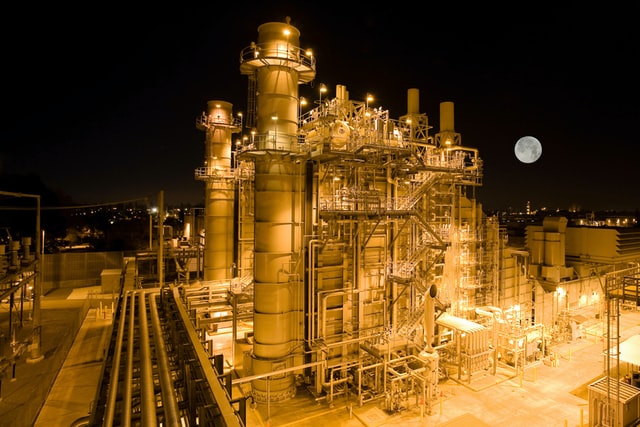
Photo by American Public Power Association on Unsplash
From the oil fields of Texas to the power-hungry data centers driving AI, the energy world is rapidly changing. While the U.S. shale boom is losing steam at home and finding new life abroad, veteran analyst Robert Rapier says the real surprise is utilities—long seen as slow and steady—now emerging as growth stocks thanks to surging digital demand.
With OPEC’s moves keeping oil prices in check and refiners quietly outperforming, investors are discovering new opportunities beyond traditional oil and gas. Meanwhile, the promise of small modular nuclear reactors and shifting global demand—especially from developing nations—are reshaping energy’s future. In this sweeping analysis, Rapier explains why today’s smartest energy plays may be the most unexpected.
AI’s Power Hunger: Utilities Become Growth Stocks
Perhaps the most surprising energy story? The rise of AI and data centers has turned some utilities into the market’s unlikely stars. Companies like Amazon, Microsoft, and Meta are building their own power plants to feed AI’s voracious appetite.
Why the boom? AI data centers are soaking up far more electricity than planners anticipated. “The biggest reason [for higher bills] is the AI data centers are soaking up demand that wasn’t foreseen a decade ago,” Rapier explains. He predicts that power prices will remain high for years, as supply struggles to keep up with demand.
Utilities with competitive (not fully regulated) power markets are best positioned. Rapier points to companies like NRG, Constellation, and Vistra—all top performers in the S&P 500 last year—whose profits have soared thanks to the AI-driven demand surge.
Small Nuclear Reactors: Hope and Hazard
With coal plants closing and renewables not yet able to fill the gap, many look to nuclear for the next leap forward in clean, reliable power. Rapier is cautiously optimistic about small modular reactors (SMRs), which can be built faster and more safely than traditional behemoths. “A lot of companies now... are trying to develop small nuclear,” he says. “Companies like Amazon are engaging and saying, hey, we’ll build some small modular reactors to try to power our data centers.”
But Rapier urges caution: “If you have a lot of players out there, there’s more of a risk that somebody’s going to screw up... all it’s going to take is one accident... and it’s going to do tremendous damage.” He cites the industry’s setbacks after Chernobyl and Fukushima as warnings not to cut corners, even in a rush to innovate.
The Shale Revolution: Plateauing in the US, Growing Abroad
The American shale boom reshaped global energy markets—but is it running out of steam? Rapier believes U.S. production could be leveling off, even as other countries eye their own shale riches.
Argentina’s Vaca Muerta formation stands out. With an estimated 16 billion barrels of technically recoverable oil and 308 trillion cubic feet of gas, it’s drawing investment from majors like Chevron and Shell.
China, meanwhile, holds the world’s largest technically recoverable shale gas reserves, but faces water scarcity challenges that complicate extraction. Rapier highlights the global stakes: “If China ever really unleashes the shale gas they have, that could really reshape the whole LNG flows of the entire region and reduce China's coal dependence.”
Countries from Saudi Arabia to Australia are exploring their own shale potential, though each faces its own regulatory, environmental, or economic hurdles. The key message: while the U.S. led the way, the next wave of shale growth could be global.
Oil Prices, Drilling Economics, and OPEC’s Influence
Despite headlines about oil’s volatility, prices have stayed stubbornly in the $60 range—low enough to discourage rampant drilling, but not so low as to cause panic. Rapier pegs the break-even point in the key Permian Basin at “probably closer to $50” per barrel for new wells, but warns that even $60 “won’t incentivize a lot of drilling.” Producers, he says, would prefer to see prices in the $70–$80 range for sustained activity.
While politicians may clamor for more drilling to lower prices, the reality is more complex. “They don’t drill because the President says ‘drill, baby, drill.’ They drill because they look at their economics,” Rapier says, emphasizing that company decisions are driven by shareholder returns, not political slogans.
What’s keeping oil prices rangebound? Rapier believes OPEC is a major factor. “OPEC is overproducing right now... That is the biggest reason we have oil sitting around $60.” He points out that OPEC previously tried to flood the market to squeeze out U.S. shale producers, but it backfired: “They crashed the oil market... but the shale producers tightened their belts. They came back stronger than ever.”
Energy Stocks Outperform the Commodity—Thanks to Refiners and Midstream
While oil prices have remained flat, energy stocks—especially refiners—have outperformed. “Refiners are doing so, so well. When oil prices are falling... their margins expand,” Rapier explains. In the third quarter, “all the refiners were up, you know, solid double digits.” Tanker operators and midstream pipeline companies have also benefited.
Rapier sees opportunity particularly in midstream companies, which transport and store oil and gas. Master Limited Partnerships and pipeline companies, Rapier believes, offer stable, tax-advantaged income—less volatile than producers or refiners, but still exposed to the upside of America’s energy infrastructure buildout.
The Global Demand Picture: Old Problems, New Players
Despite talk of “peak oil demand,” Rapier isn’t convinced the world is using less. While demand may be flat or declining in the West, developing countries are driving global growth. “What’s going to drive it globally is not countries like the United States consuming more oil. It’s billions of people consuming just a little bit more oil.”
And even rapid adoption of electric vehicles is unlikely to erase oil demand quickly. “Norway had triple-digit growth in electric vehicles for seven years... and yet, oil demand over the last 15 years is only down about 10%,” Rapier notes, cautioning that transitions take longer than pundits expect.
California’s Cautionary Tale: High Prices, High Stakes
California’s aggressive regulations, high taxes, and unique fuel standards have made it “a gasoline island,” says Rapier, driving prices far above the national average and pushing oil companies out of the state. He warns that even as California tries to go electric, it remains vulnerable to disruptions in imported oil—a national security issue for the U.S.
“If you think you can run the state on electric cars... you’re still going to need all that jet fuel at LAX. You’re still going to need diesel for heavy transport,” Rapier notes, arguing that the transition needs to be realistic and well-managed.
More By This Author:
Fed Eases, Tech Wobbles: The Week That Changed Market Leadership
Big Tech, Silver’s Moonshot, And 2026 Market Setups
Why Tech’s Comeback And A “Hawkish” Fed Could Change Everything



Comments
Log in or sign up to join the conversation.