

As we share below, courtesy of FinViz, natural gas prices have risen by over 50% since late October. Moreover, natural gas prices, approaching $5, are at three-year highs. The primary cause of the recent price surge is increased heating demand driven by colder-than-expected winter weather, which is resulting in greater-than-average inventory draws. Per the EIA, natural gas stocks are projected to tighten significantly heading into 2026, despite starting the season above five-year averages. Weather is the primary driver of fluctuations in natural gas demand and prices, but increasingly, the buildout of energy-intensive data centers and liquefied natural gas (LNG) facilities is setting a rising floor under natural gas prices.
While demand is amplified by the massive growth of power-intensive data centers, which investors well know, it’s also worth noting the sharp increase in demand from liquefied natural gas exports. According to the Energy Information Administration’s (EIA) November 2025 Short-Term Energy Outlook (STEO), LNG exports are projected to average 14.9 billion cubic feet per day (Bcf/d) in 2025, a 25% increase from 2024 levels. Furthermore, they expect it to increase further to 16.3 Bcf/d in 2026 (up 10% from 2025). While weather trends remain the predominant short-term driver of natural gas prices, LNG exports and increased data center usage will boost demand, likely keeping a slowly increasing floor under natural gas prices.

What To Watch Today
Earnings

Economy

Market Trading Update
Yesterday, we discussed the recent thrust in breadth and the implications for the year-end rally. Turning our focus today to the bond market, Topdown charts made an interesting comment recently.
“Adjusting for inflation and including interest reinvested, the popular long-term US treasuries ETF [TLT] is basically still in a bear market (having peaked in 2020). It’s also been dead money for those who bought and held 20 years ago. But as all good things come to an end; all bad things likewise come to an end too — so it raises a question: when will the bond bear market end?”
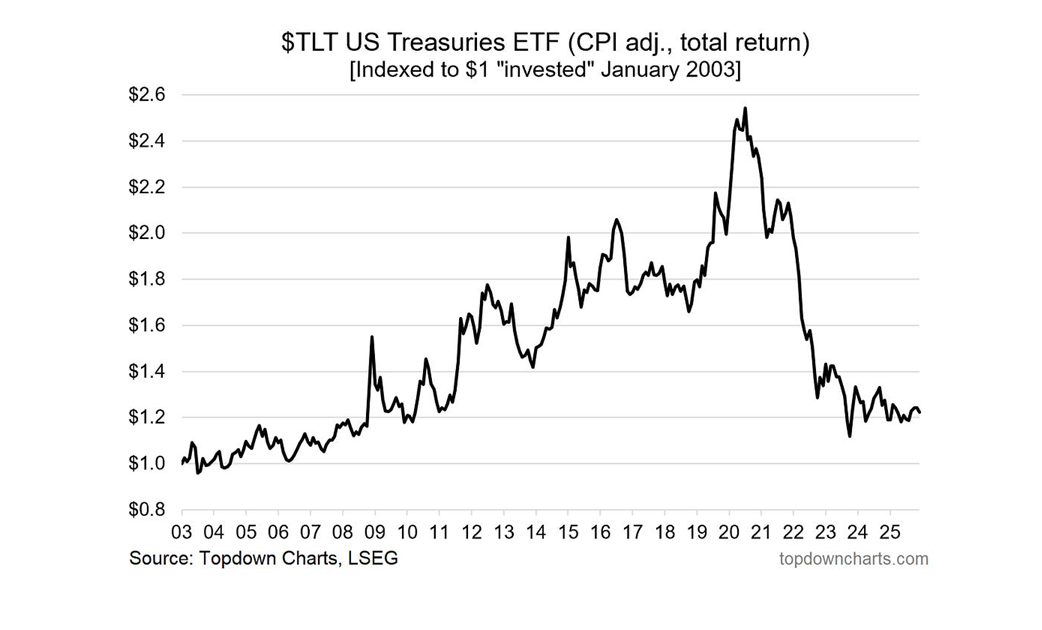
He is correct. All bull markets eventually come to an end, and so do bear markets. More importantly, bear markets tend to be much shorter affairs, historically, than bull markets. While there is currently many negative commentaries surrounding the bond markets from the debt, to deficits, bond vigilantes, and the demise of the dollar, bonds have actually been forming a very strong base starting to build.

At the same time, there is a record level of short interest on TLT. As Topdown Charts noted:
“While some of this may be linked with derivatives arbitrage, it is actually consistent with a lot of other sentiment data I’ve seen — and I would confidently say the consensus is still bearish on bonds.”
Of course, when bonds rally for any reason, those short positions will eventually be forced to cover, leading to a more vigorous rally in bonds than might otherwise be expected.
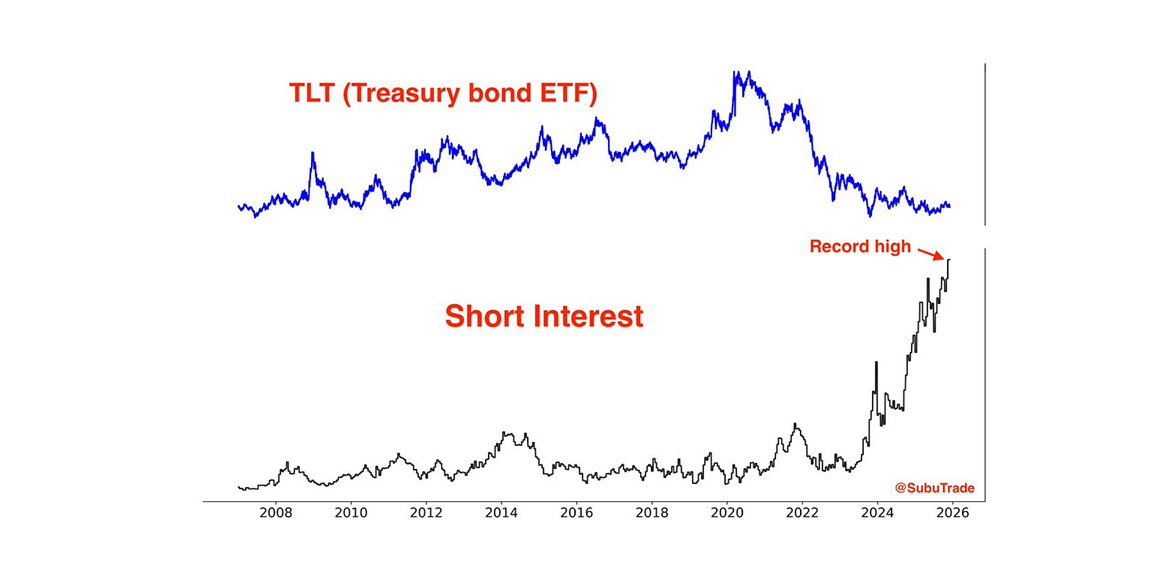
With investor allocations to bonds at very low levels, if a rally begins in bonds, the reversal of positioning will add fuel to the eventual buying as investors reallocate to bonds to capture higher yields and rising prices in a falling rate environment.

With Treasury bonds having reversed their previous overvaluation, and are now trading cheaply, the risk of a rally in bonds is outweighing the potential for a continuing bear market. While there are many current narratives as to why bonds will continue to trade poorly, such is always the case just before the bull rally takes hold.
From our perspective, the odds of a reversal of the current negativity surrounding bonds is likely higher than most think.
Just something to consider.
The ADP Report Warrants A Fed Cut
The monthly ADP jobs report released yesterday showed continued deterioration in the labor market. ADP reported the economy lost 37k jobs. The Wall Street consensus was for a 10k pickup. The graph below shows that the three-month average for ADP is now negative for the first time since the early days of the Pandemic. BLS jobs data is delayed due to the government shutdown.
Notably, the ADP monthly report shows that the Northeast region lost 100k jobs, and the small-business sector reduced its workforce by 120k. The second graphic below, courtesy of ZeroHedge, highlights other factors impacting the aggregate number of job losses.
The Fed Funds market is now pricing in a 90% chance the Fed cuts at next week’s meeting. Without BLS data and updated inflation data, the weakness seen in the ADP report and other private-sector reports will likely be enough to secure a majority in favor of cutting rates. The jobs data may also warrant a couple of FOMC members to vote for a 50bps rate cut. Currently, the Fed Funds futures market assigns a zero probability of a 50bps cut.


Fed Regime Change: Is Groupthink Ending?
Starting in the aftermath of the 2008 financial crisis, a profound change to the Fed’s liquidity-providing role in the capital markets was underway. We can sum up the Fed regime change with a popular quip: The Fed has shifted from lender of last resort to the lender of only resort!
In our articles QE Is Coming and its follow-up, How The Fed Deals Liquidity, we discuss why the Fed has become the primary provider of liquidity since 2008 and the tools it uses to maintain ample liquidity in the markets. While that Fed regime change has been incredibly impactful on the financial markets, there is a growing possibility of another meaningful regime change that could prove equally impactful.
This article, like the two linked above, is dry. Still, investors today must understand that monetary policy has become a primary driver of liquidity, which in turn significantly influences asset prices. Without a clear understanding of what the Fed is doing and how it functions, your investment ideas, no matter how solid, can be flawed.

Tweet of the Day

More By This Author:
Black Friday Sales ResultsHow To Reduce Taxes On Investment Gains: Advanced Strategies For High Net Worth Investors
Overheating Financial Markets Highlight Data Centers Handicap


Comments
Log in or sign up to join the conversation.