

WTI crude oil is up more than 70% year-to-date.
The conflict with Iran has pushed prices higher as tensions around the Strait of Hormuz disrupt key shipping routes for oil tankers and cargo vessels, raising concerns about global supply. What matters most in this chart, however, is how U.S. gasoline prices respond.
As the graph shows, gas prices tend to be less volatile than crude oil, but they still follow the same general direction. When oil prices rise, gasoline prices typically increase as well, often with a slight premium. When oil prices fall, however, gasoline prices usually decline more slowly and by a smaller amount.
Because gasoline is a major component of inflation measures and household spending, an extended period of elevated fuel prices could place additional pressure on consumers.
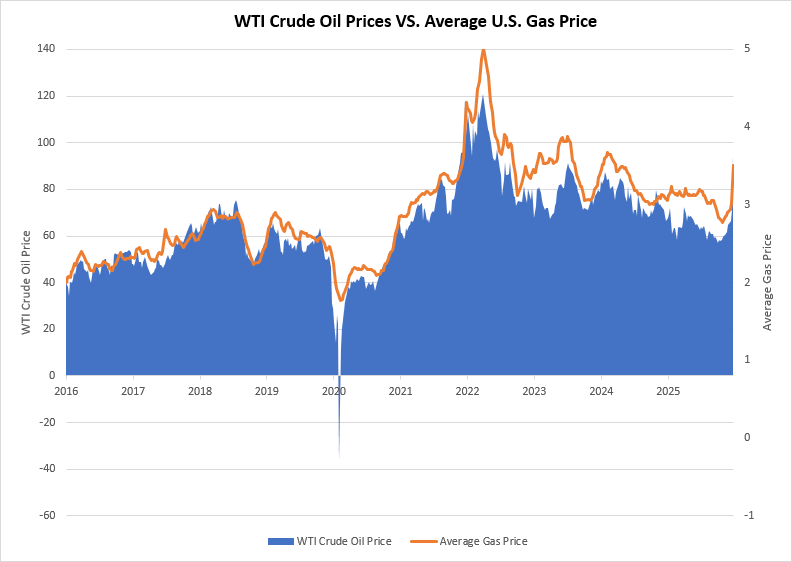
Source: U.S. Energy Information Administration, The Business Week Graphic
This graph was produced by Lucas Juery, CFA, CFPⓇ and is not intended to provide financial advice.


Comments
Log in or sign up to join the conversation.