

IBM shares posted their worst single-day drop in 39 years after the company pre-announced weaker-than-expected second-quarter results, wiping out roughly $69 billion in market value.
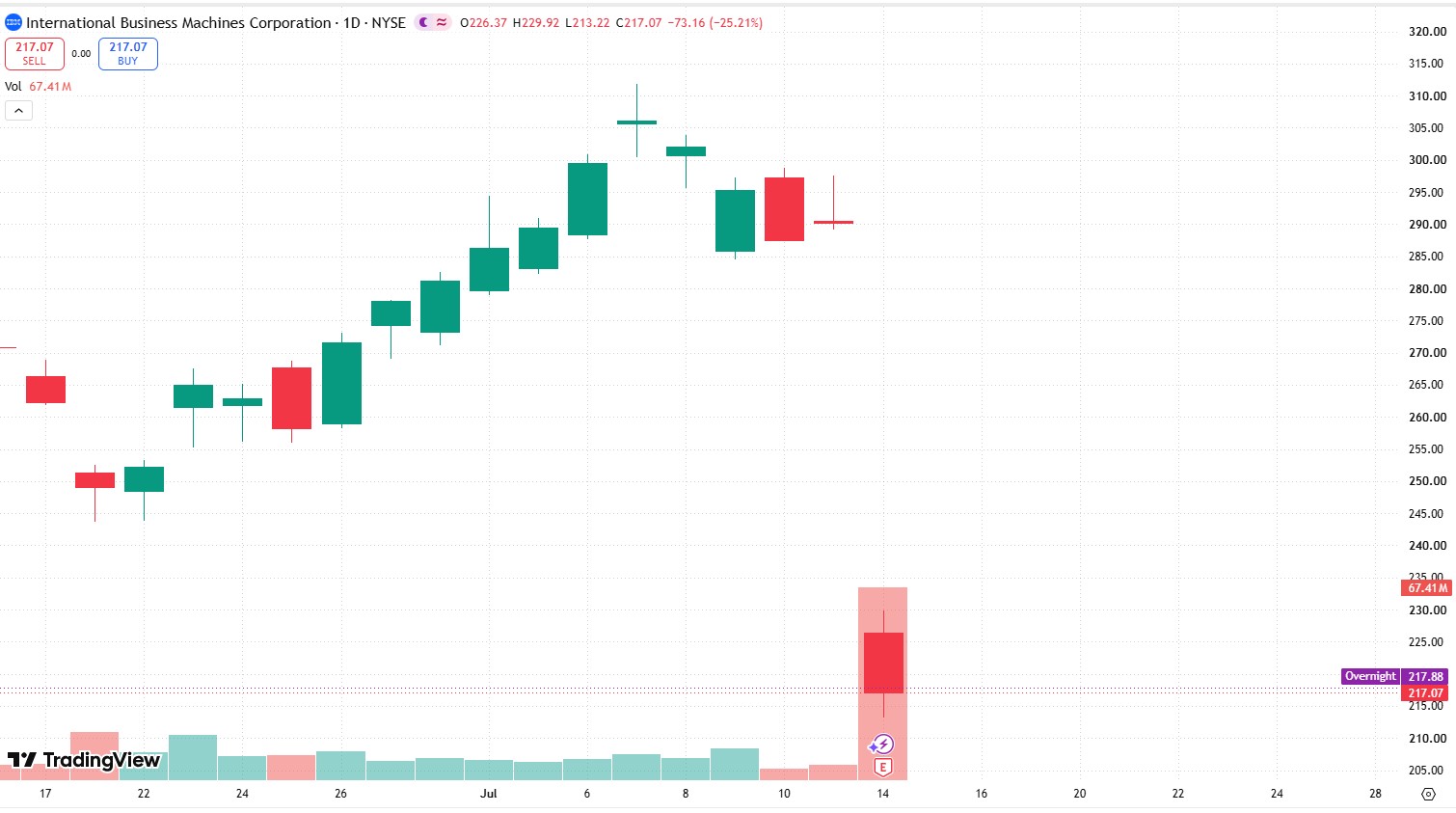
IBM stock fell about 25% on July 14 after the company released preliminary second-quarter figures that came in below Wall Street forecasts. Preliminary revenue was $17.2 billion and GAAP earnings were $2.27 per share, both short of expectations. The single-session decline erased around $69 billion in market value, the stock's steepest one-day fall in nearly four decades. (Sources: CNBC, Forbes, Financial Times)
What Happened?
IBM issued preliminary Q2 numbers ahead of its full report, and the figures missed on both revenue and earnings. Software revenue grew 5% year over year while infrastructure fell 7%, running roughly 600 basis points below at least one analyst's prior forecast. In plain terms, two of IBM's core business lines slowed more than the market had priced in. Morningstar
CEO Arvind Krishna said, customers had been stocking up on hardware ahead of expected price increases, a dynamic that can pull sales forward and leave a softer patch afterward. Krishna described the quarter by saying what played out was worse than the company had expected
Why Is This Happening?
Two threads are running through the analyst commentary. The first is company-specific: mainframe and traditional software demand looks softer, and the hardware pre-buying Krishna described may have masked underlying weakness. One read is that customer spending is shifting toward AI infrastructure and cybersecurity, pressuring IBM's more traditional software and mainframe revenue.
Shares of companies including Microsoft, Salesforce, ServiceNow and Intuit also declined as investors reassessed growth prospects across software firms.
The second thread is broader. On the same day, cybersecurity and AI-chip stocks rose while several software names fell, with IBM cited as the trigger, suggesting investors are questioning how enterprise AI budgets get allocated across the sector, not just at IBM.
What Does This Mean for Beginners?
A single-day drop of this size reflects a fast repricing of expectations, not necessarily a permanent change in the company's value. Preliminary results are exactly that: preliminary. The full report and management's forward guidance will matter more for the longer-term picture.
Beginners watching this often see the headline percentage and assume the story is settled, but analysts here clearly disagree with each other, which is itself information.
The warning raised concerns that the AI boom may be benefiting chipmakers and hardware suppliers more than enterprise software companies in the near term.
What to Watch Next
The full Q2 report and guidance are the next catalysts, along with any detail on how much of the infrastructure softness was pull-forward versus genuine demand loss. Traders are also monitoring whether the weakness stays contained to IBM or spreads across enterprise-software peers.
Key Levels Traders are Monitoring
Support: near the July 14 intraday low around $213
Resistance: the prior-session reference near $217,


Comments
Log in or sign up to join the conversation.