


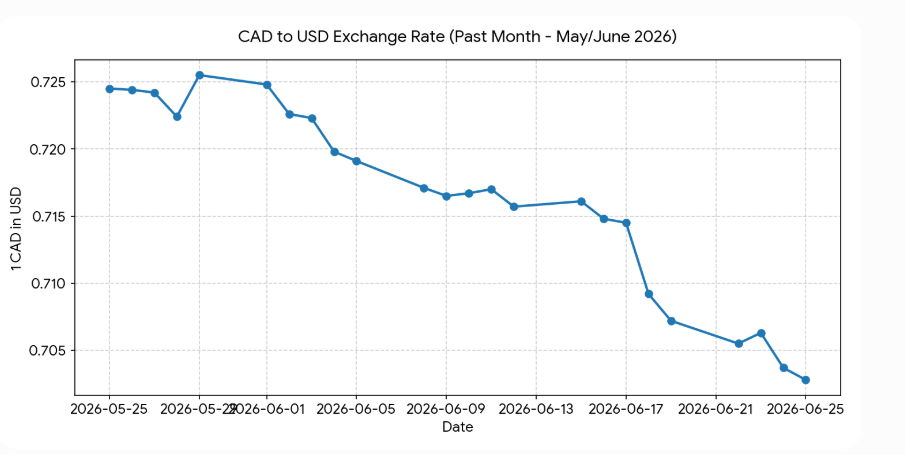
The decline in the Canadian dollar can be traced to a basic divergence between the US and Canadian central bank policies. At the macro level, currency movements are fundamentally driven by a combination of Interest rate differentials, global trade, energy policies and domestic growth. All three are contributing to the slow decline of the “ Loonie” over the past month and continue to affect its value.
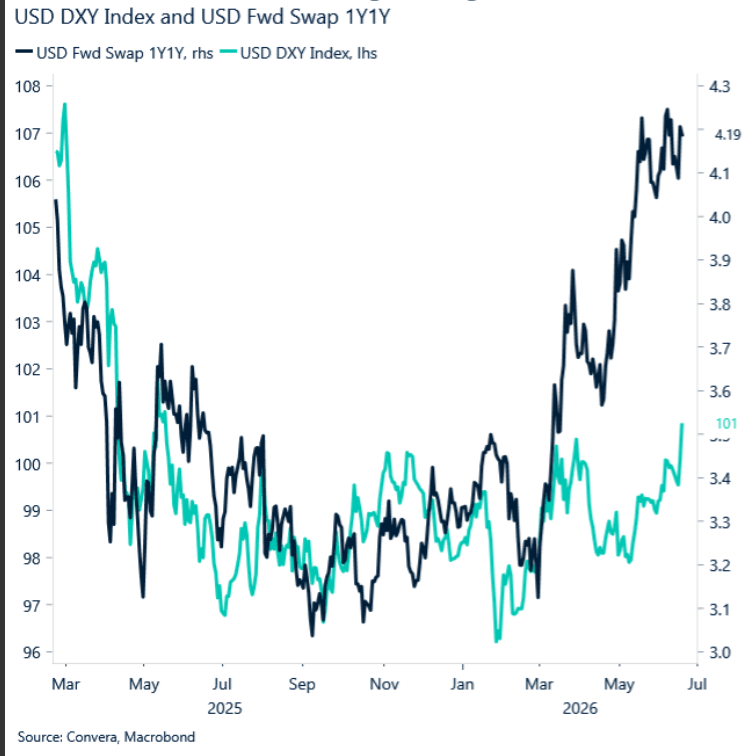
At the macroeconomic level, the US dollar index(DXY) has been on a steady upward trajectory, starting earlier this spring. As a compilation of 6 major currencies, the DXY broke out of a long sideways range and is now at the highest level since early 2025. The rally was sparked by a surprise increase in US nonfarm employment rolls in the spring, along with a resilent consumer sector. Inflation is now uppermost in the minds of the members of the Federal Reserve. The Fed has substituted earlier considerations of cuts in rates with a strong bias towards rate hikes, possibly starting in the fall. This forced markets to re-evaluate the Federal Reserve's rate path, driving expectations of higher-for-longer interest rates, ultimately strengthening the DXY.
While the Fed is turning more hawkish, the Bank of Canada (BoC) is much on the sidelines, taking a wait-and-see approach. The BoC recognizes that the domestic economy is struggling, barely expanding. The Canadian inflation rate of 3.2% is due largely to the sudden spike in oil prices and does not pose an immediate threat in the near term. The BoC is highly unlikely to match the Fed's aggressive stance towards inflation.
Capital is flowing out of Canadian assets and into higher-yielding US dollar investments, directly depressing the value of the loonie. Long rates are more than 100 basis points higher in the US.
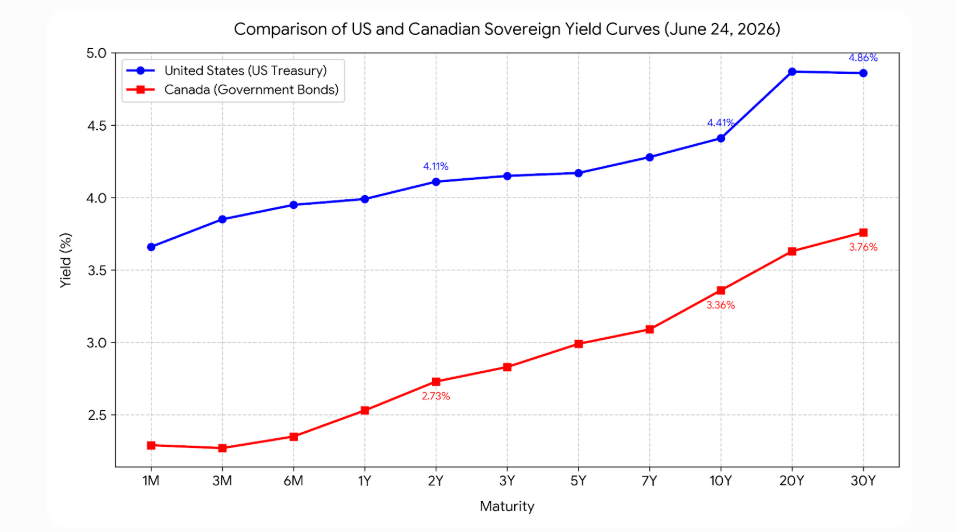
The Bank of Canada found a comfortable floor for its policy rate at 2.25%, while the Federal Reserve rate is 150 basis points higher. This gap represents a considerable headwind for the Canadian dollar.
Finally, US- Canada bilateral trade tensions are on the minds of currency traders. The loonie is also under pressure as the Canada-US-Mexico free trade agreement is about to enter a crucial stage in renegotiations. Although negotiations have yet to start in earnest, President Trump is already threatening to give notice to terminate. Canadian negotiators have not reacted to these threats and continue to maintain a low profile over the summer. Nonetheless, there are considerable risks associated with termination that affect both countries very
adversely. The currency markets need to factor in even the smallest probability of a negative outcome.



Comments
Log in or sign up to join the conversation.