Whenever people say, ‘Oh, well, the Treasury Secretary is taking a risk,’ well, it’s my dream. I have asymmetric information. I am the house now. So when we intervene with the Japanese yen, I have pretty good insight into what the Japanese, what the Bank of Japan is going to do, what Japanese policymakers are going to do. You can bet against me if you want.
Treasury Secretary Scott Bessent, during a talk at SMU School of Business on September 8th.
Things have been going pretty well for Scott “The House” Bessent after his intervention to buy the Yen at the end of July. The Yen is up almost 7% since he and the BOJ bought on July 31st. But his purchase of the Yen was intended to head off the sale of US Treasuries by the BOJ and while he may have forestalled the Japanese monetary authority, it didn’t stop others from selling.
“The House” also announced, a couple of weeks ago, that the Treasury would increase the size of buybacks of long dated, off the run Treasuries, another move intended to keep long term rates down. Last week came the full announcement, an upsizing of the auctions to $6 billion, a $4 billion increase from the previous auctions. That did not have the intended effect; bonds sold off immediately after the announcement. He raised expectations and the market raised the stakes. There were whispers all last week that the auctions would be upsized to $8 billion or even $10 billion. Oops.
There were plenty of reasons for bonds to sell off last week so I’m not implying that Bessent’s underwhelming announcement was the cause of all of it. But the fact is that Bessent’s move to buy back long term Treasuries by issuing more short term bills backfired on both ends. Both short and long term rates rose but Tbill rates rose more than 10 year rates – the total cost of the debt to the Treasury rose. And 10 year rates are up 32 basis points since he first announced the change; if he has asymetric information it won’t matter until the market figures out what it is.
I’ve been saying over and over that interest rates have been locked in a range for the last few years and that until that changes, investors need to just sit tight. That got a little harder last week as rates moved up across the board. I can say, at least for now, that rates are still in those ranges but it is looking more and more that rates will eventually break out to the upside. What changed last week? Actually, not as much as you might expect given the move in rates.
What happened last week is that the market priced in a rate hike at the Fed meeting this week. The odds aren’t 100% but at 87.5% the market is quite sure of itself. I’m not nearly as sure but in this case the market is “the house” and it is right more often than wrong. I’d also add that in the case of games of chance, the house also loses quite a bit. We don’t have to wait long to find out; this Wednesday could be…eventful.
Why is the market so sure the Fed will hike? To read the financial press it is merely a matter of inflation and with some parts of last week’s inflation reports hotter than expected and crude oil rising nearly 10%, the market’s fate is sealed. But the market moves across the yield curve were not uniform and that provides more information about what exactly the market priced in. The 90 day Tbill rate rose 16 basis points but the 2 year rate rose 26 while the 10 year was up 19. The 30 year was up just 10 basis points.
What does all that mean? The 90 day bill move says the Fed will hike immediately and the 2 year rising more than that means the market expects a sustained hiking campaign; traders don’t think this is one and done. The longer end of the curve rising less than the 2 year implies that the market believes the hiking campaign will succeed. From whence the market derives this confidence in the efficacy of Fed policy is a bit of a mystery. They haven’t hit their inflation target in nearly 2 decades except in transitory fashion – sorry I had to – but sure, Charlie Brown will kick the football this time.
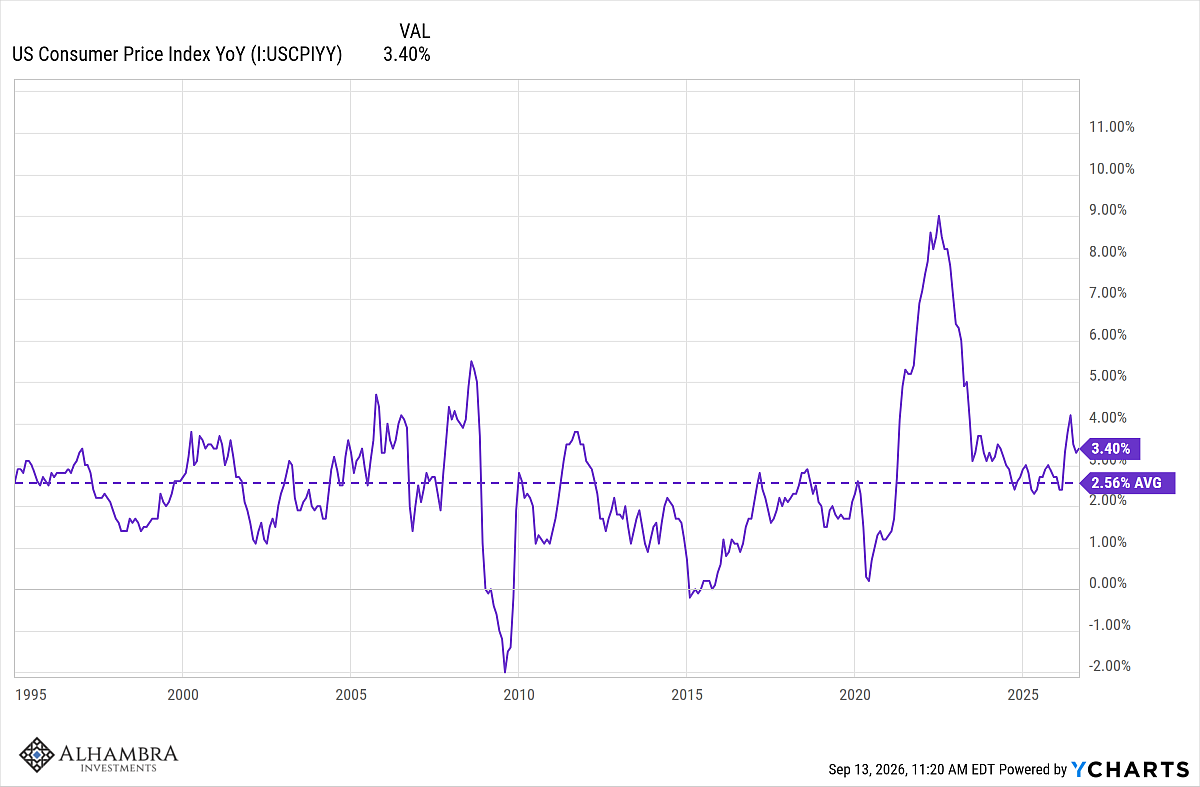
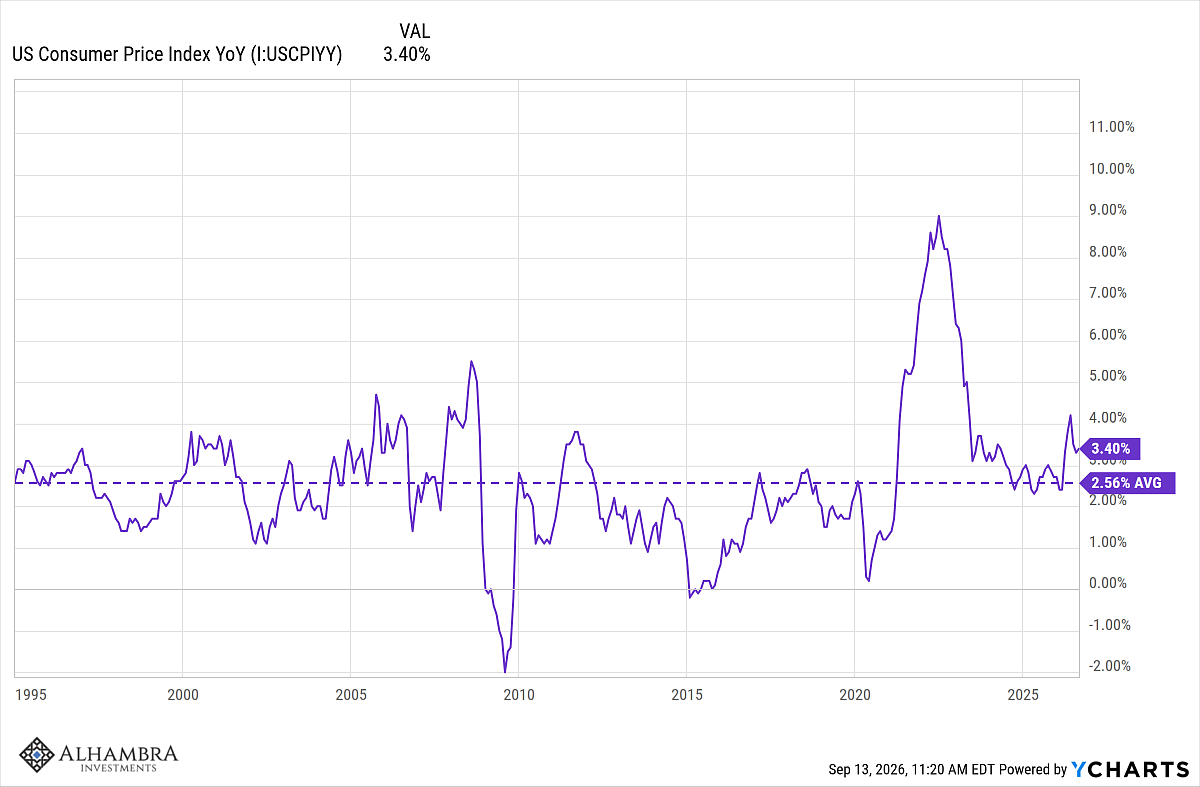
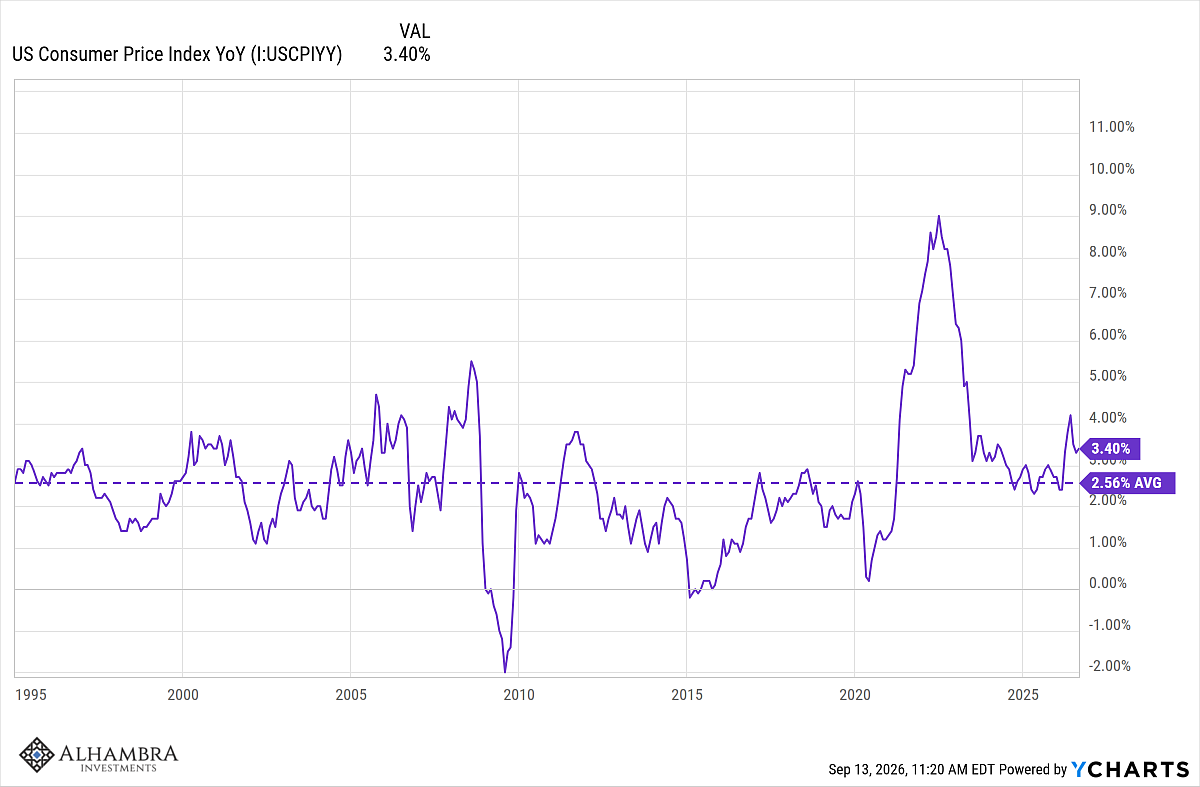
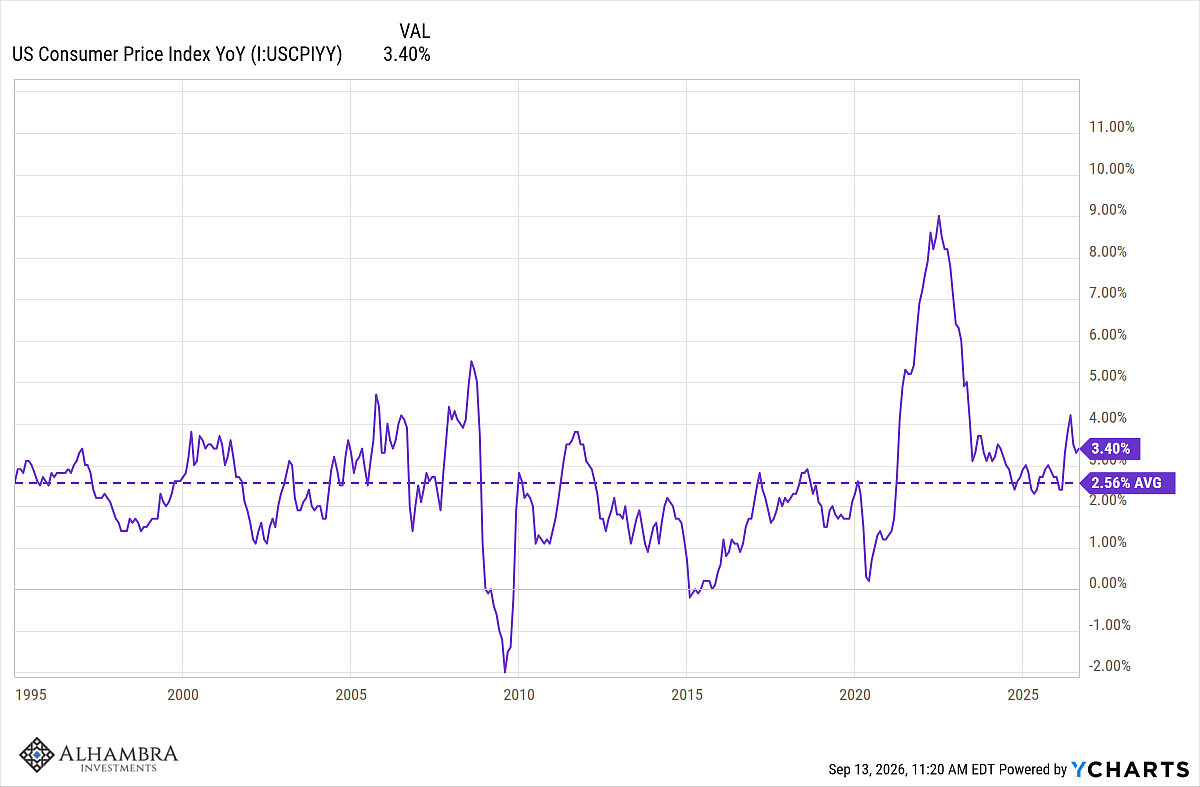
The inflation reports last week really weren’t that bad but Warsh and others on the FOMC have said they wanted to see improvement to hold rates steady and that was hard to find. The year over year change in the headline CPI is still above the long term average but that is primarily driven by the rise in energy prices. The energy index is up 16.3% yoy and 2.1% MoM; gasoline was up 3.9% from last month while heating fuels & power rose 52% yoy.
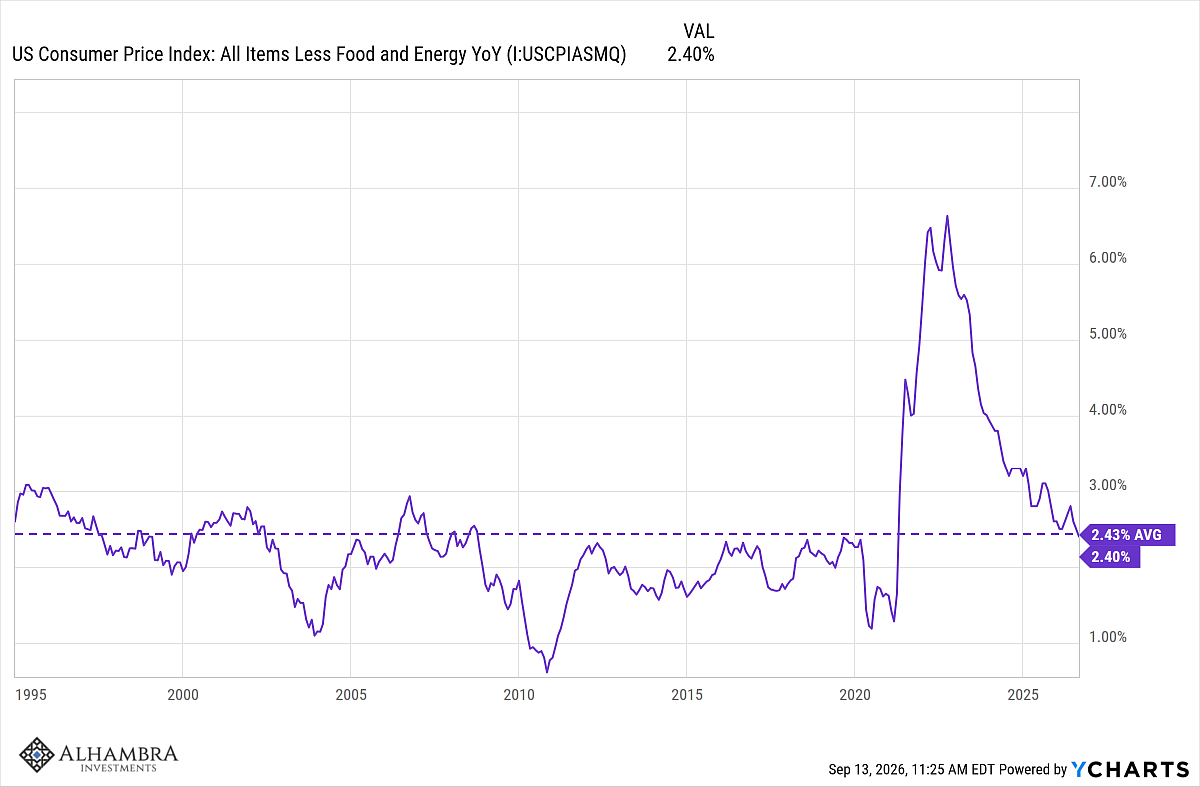
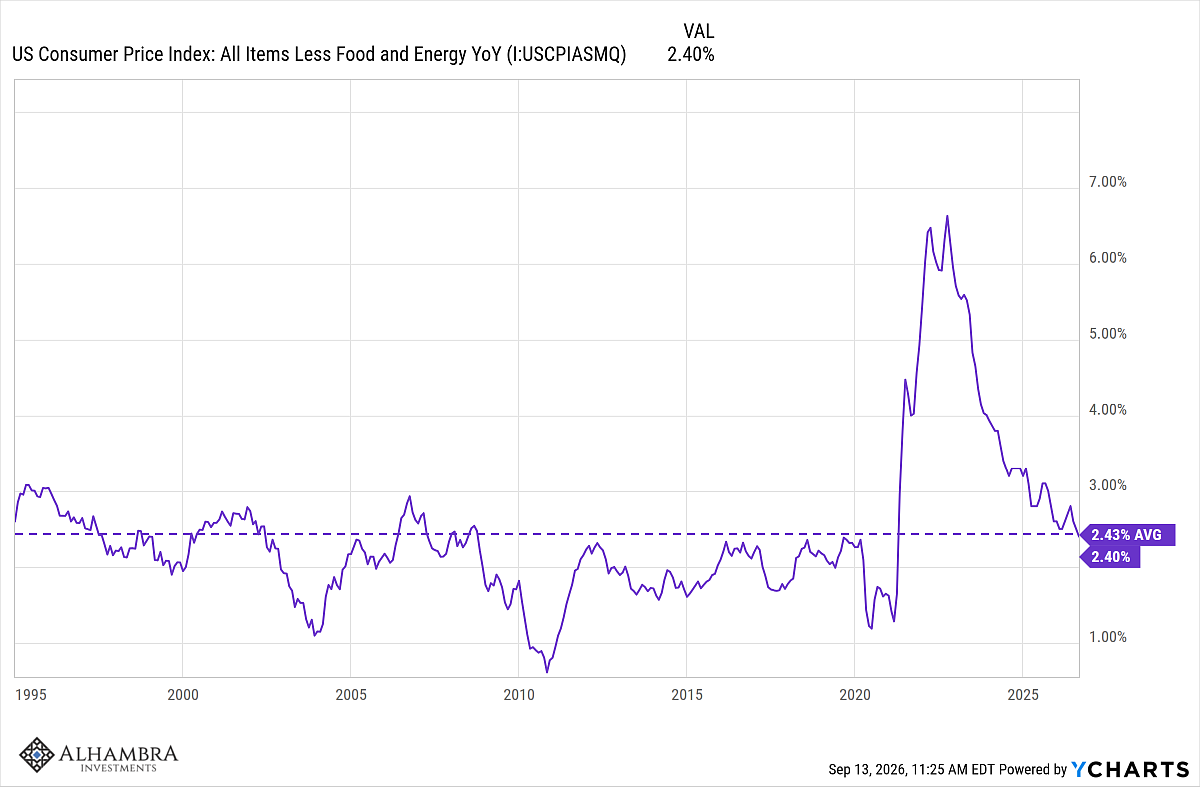
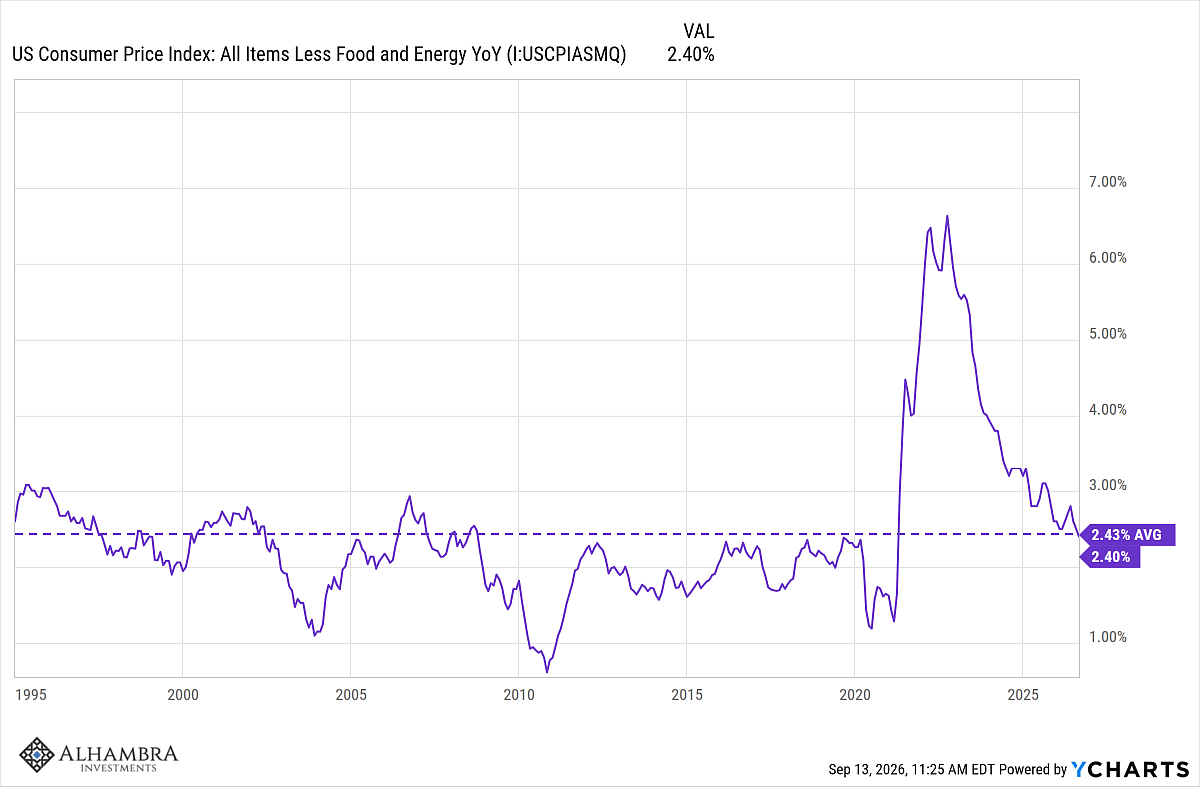
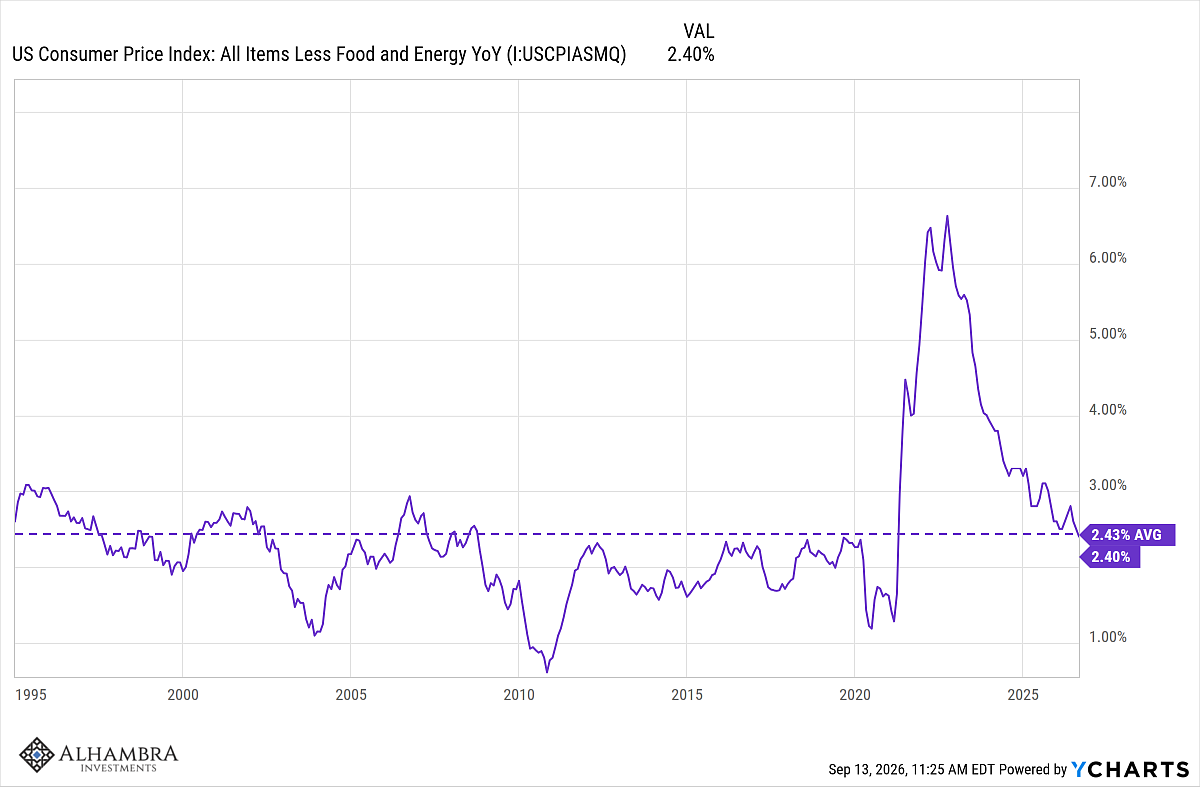
Core inflation, on the other hand continues to moderate, up just 2.4% yoy which is almost exactly the average since 1995. Shelter costs rose 3% yoy which is high but way down from the 5 to 6% prints we were seeing in recent years. Durable goods prices remain well contained and food inflation held steady at 2.7% yoy. Food at home, by the way, is up 2.2% yoy which is historically pretty normal.
So if CPI was largely as expected, what pushed up rates last week? A number of explanations were offered with US debt fear mongers – and political partisans – pointing to President Trump’s offer of a cash payout for Republican votes in the midterms. There are probably things that have a lower probability of happening but I can’t think of any right now so I would ignore that one. The CBO hiked its estimate of the 2026 deficit but that seems like old news. AI demand for credit is also old news and doesn’t seem likely to have suddenly moved rates last week. And by the way, with the big AI companies calling for a slowdown, will the hyperscalers keep building at the current rate? Maybe not.
The new information, in my opinion, came from the Middle East. The Houthis appear to have closed the Red Sea route for Saudi oil, the IEA revised its oil demand estimate down to 2.5 million BPD and Iran and Ukraine continued to hit refining infrastructure. The loss of Saudi supply is particularly troubling as OPEC likely cannot make it up. The vast majority of spare capacity is in UAE and Kuwait, both of which need Hormuz open to increase supply.
What had been priced as a short term disruption is now being rapidly priced for something more permanent. Demand destruction, as predicted by the IEA, may moderate prices but that likely comes at the expense of economic growth and the moat there isn’t as large as one might hope. I would question too whether a rate hike is the right response to a supply issue. Were rate hikes effective at reducing inflation in 2022? Or did inflation fall because the supply issues were resolved?
I would also point to the rate hikes that have already happened. The 3 month Tbill rate is up 37 basis points this year and at 3.91%, already above the Fed Funds rate. The 2 year rate is up a whopping 115 basis points, the 10 year 81 basis points and the 30 year 51 basis points. The rate hikes already happened; the fed raising rates this week is merely a validation of what the market already priced.
These moves in rates are already impacting borrowing costs and will have an effect on the economy. That is George Soros’ theory of reflexivity – chaos theory dressed up in market language – in a nutshell. The rise in rates will slow nominal growth and eventually cause rates to moderate. It’s the old commodity market saw of high prices being the cure for high prices.
One last word to wrap this up. Rising rates this year have not been all about inflation. 10 year TIPS yields are up 53 basis points and the 10 year inflation breakeven is only up 15 basis points. A lot of the rise in rates is about rising real growth expectations which neatly explains why stocks have been so resilient. Stock prices follow earnings and with rising NGPD, earning estimates keep going up. As long as that is the case, any correction in stock prices is likely to be temporary.
Whenever people say, ‘Oh, well, the Treasury Secretary is taking a risk,’ well, it’s my dream. I have asymmetric information. I am the house now. So when we intervene with the Japanese yen, I have pretty good insight into what the Japanese, what the Bank of Japan is going to do, what Japanese policymakers are going to do. You can bet against me if you want.
Treasury Secretary Scott Bessent, during a talk at SMU School of Business on September 8th.
Things have been going pretty well for Scott “The House” Bessent after his intervention to buy the Yen at the end of July. The Yen is up almost 7% since he and the BOJ bought on July 31st. But his purchase of the Yen was intended to head off the sale of US Treasuries by the BOJ and while he may have forestalled the Japanese monetary authority, it didn’t stop others from selling.
“The House” also announced, a couple of weeks ago, that the Treasury would increase the size of buybacks of long dated, off the run Treasuries, another move intended to keep long term rates down. Last week came the full announcement, an upsizing of the auctions to $6 billion, a $4 billion increase from the previous auctions. That did not have the intended effect; bonds sold off immediately after the announcement. He raised expectations and the market raised the stakes. There were whispers all last week that the auctions would be upsized to $8 billion or even $10 billion. Oops.
There were plenty of reasons for bonds to sell off last week so I’m not implying that Bessent’s underwhelming announcement was the cause of all of it. But the fact is that Bessent’s move to buy back long term Treasuries by issuing more short term bills backfired on both ends. Both short and long term rates rose but Tbill rates rose more than 10 year rates – the total cost of the debt to the Treasury rose. And 10 year rates are up 32 basis points since he first announced the change; if he has asymetric information it won’t matter until the market figures out what it is.
I’ve been saying over and over that interest rates have been locked in a range for the last few years and that until that changes, investors need to just sit tight. That got a little harder last week as rates moved up across the board. I can say, at least for now, that rates are still in those ranges but it is looking more and more that rates will eventually break out to the upside. What changed last week? Actually, not as much as you might expect given the move in rates.
What happened last week is that the market priced in a rate hike at the Fed meeting this week. The odds aren’t 100% but at 87.5% the market is quite sure of itself. I’m not nearly as sure but in this case the market is “the house” and it is right more often than wrong. I’d also add that in the case of games of chance, the house also loses quite a bit. We don’t have to wait long to find out; this Wednesday could be…eventful.
Why is the market so sure the Fed will hike? To read the financial press it is merely a matter of inflation and with some parts of last week’s inflation reports hotter than expected and crude oil rising nearly 10%, the market’s fate is sealed. But the market moves across the yield curve were not uniform and that provides more information about what exactly the market priced in. The 90 day Tbill rate rose 16 basis points but the 2 year rate rose 26 while the 10 year was up 19. The 30 year was up just 10 basis points.
What does all that mean? The 90 day bill move says the Fed will hike immediately and the 2 year rising more than that means the market expects a sustained hiking campaign; traders don’t think this is one and done. The longer end of the curve rising less than the 2 year implies that the market believes the hiking campaign will succeed. From whence the market derives this confidence in the efficacy of Fed policy is a bit of a mystery. They haven’t hit their inflation target in nearly 2 decades except in transitory fashion – sorry I had to – but sure, Charlie Brown will kick the football this time.
The inflation reports last week really weren’t that bad but Warsh and others on the FOMC have said they wanted to see improvement to hold rates steady and that was hard to find. The year over year change in the headline CPI is still above the long term average but that is primarily driven by the rise in energy prices. The energy index is up 16.3% yoy and 2.1% MoM; gasoline was up 3.9% from last month while heating fuels & power rose 52% yoy.
Core inflation, on the other hand continues to moderate, up just 2.4% yoy which is almost exactly the average since 1995. Shelter costs rose 3% yoy which is high but way down from the 5 to 6% prints we were seeing in recent years. Durable goods prices remain well contained and food inflation held steady at 2.7% yoy. Food at home, by the way, is up 2.2% yoy which is historically pretty normal.
So if CPI was largely as expected, what pushed up rates last week? A number of explanations were offered with US debt fear mongers – and political partisans – pointing to President Trump’s offer of a cash payout for Republican votes in the midterms. There are probably things that have a lower probability of happening but I can’t think of any right now so I would ignore that one. The CBO hiked its estimate of the 2026 deficit but that seems like old news. AI demand for credit is also old news and doesn’t seem likely to have suddenly moved rates last week. And by the way, with the big AI companies calling for a slowdown, will the hyperscalers keep building at the current rate? Maybe not.
The new information, in my opinion, came from the Middle East. The Houthis appear to have closed the Red Sea route for Saudi oil, the IEA revised its oil demand estimate down to 2.5 million BPD and Iran and Ukraine continued to hit refining infrastructure. The loss of Saudi supply is particularly troubling as OPEC likely cannot make it up. The vast majority of spare capacity is in UAE and Kuwait, both of which need Hormuz open to increase supply.
What had been priced as a short term disruption is now being rapidly priced for something more permanent. Demand destruction, as predicted by the IEA, may moderate prices but that likely comes at the expense of economic growth and the moat there isn’t as large as one might hope. I would question too whether a rate hike is the right response to a supply issue. Were rate hikes effective at reducing inflation in 2022? Or did inflation fall because the supply issues were resolved?
I would also point to the rate hikes that have already happened. The 3 month Tbill rate is up 37 basis points this year and at 3.91%, already above the Fed Funds rate. The 2 year rate is up a whopping 115 basis points, the 10 year 81 basis points and the 30 year 51 basis points. The rate hikes already happened; the fed raising rates this week is merely a validation of what the market already priced.
These moves in rates are already impacting borrowing costs and will have an effect on the economy. That is George Soros’ theory of reflexivity – chaos theory dressed up in market language – in a nutshell. The rise in rates will slow nominal growth and eventually cause rates to moderate. It’s the old commodity market saw of high prices being the cure for high prices.
One last word to wrap this up. Rising rates this year have not been all about inflation. 10 year TIPS yields are up 53 basis points and the 10 year inflation breakeven is only up 15 basis points. A lot of the rise in rates is about rising real growth expectations which neatly explains why stocks have been so resilient. Stock prices follow earnings and with rising NGPD, earning estimates keep going up. As long as that is the case, any correction in stock prices is likely to be temporary. Whenever people say, ‘Oh, well, the Treasury Secretary is taking a risk,’ well, it’s my dream. I have asymmetric information. I am the house now. So when we intervene with the Japanese yen, I have pretty good insight into what the Japanese, what the Bank of Japan is going to do, what Japanese policymakers are going to do. You can bet against me if you want.
Treasury Secretary Scott Bessent, during a talk at SMU School of Business on September 8th.
Things have been going pretty well for Scott “The House” Bessent after his intervention to buy the Yen at the end of July. The Yen is up almost 7% since he and the BOJ bought on July 31st. But his purchase of the Yen was intended to head off the sale of US Treasuries by the BOJ and while he may have forestalled the Japanese monetary authority, it didn’t stop others from selling.
“The House” also announced, a couple of weeks ago, that the Treasury would increase the size of buybacks of long dated, off the run Treasuries, another move intended to keep long term rates down. Last week came the full announcement, an upsizing of the auctions to $6 billion, a $4 billion increase from the previous auctions. That did not have the intended effect; bonds sold off immediately after the announcement. He raised expectations and the market raised the stakes. There were whispers all last week that the auctions would be upsized to $8 billion or even $10 billion. Oops.
There were plenty of reasons for bonds to sell off last week so I’m not implying that Bessent’s underwhelming announcement was the cause of all of it. But the fact is that Bessent’s move to buy back long term Treasuries by issuing more short term bills backfired on both ends. Both short and long term rates rose but Tbill rates rose more than 10 year rates – the total cost of the debt to the Treasury rose. And 10 year rates are up 32 basis points since he first announced the change; if he has asymetric information it won’t matter until the market figures out what it is.
I’ve been saying over and over that interest rates have been locked in a range for the last few years and that until that changes, investors need to just sit tight. That got a little harder last week as rates moved up across the board. I can say, at least for now, that rates are still in those ranges but it is looking more and more that rates will eventually break out to the upside. What changed last week? Actually, not as much as you might expect given the move in rates.
What happened last week is that the market priced in a rate hike at the Fed meeting this week. The odds aren’t 100% but at 87.5% the market is quite sure of itself. I’m not nearly as sure but in this case the market is “the house” and it is right more often than wrong. I’d also add that in the case of games of chance, the house also loses quite a bit. We don’t have to wait long to find out; this Wednesday could be…eventful.
Why is the market so sure the Fed will hike? To read the financial press it is merely a matter of inflation and with some parts of last week’s inflation reports hotter than expected and crude oil rising nearly 10%, the market’s fate is sealed. But the market moves across the yield curve were not uniform and that provides more information about what exactly the market priced in. The 90 day Tbill rate rose 16 basis points but the 2 year rate rose 26 while the 10 year was up 19. The 30 year was up just 10 basis points.
What does all that mean? The 90 day bill move says the Fed will hike immediately and the 2 year rising more than that means the market expects a sustained hiking campaign; traders don’t think this is one and done. The longer end of the curve rising less than the 2 year implies that the market believes the hiking campaign will succeed. From whence the market derives this confidence in the efficacy of Fed policy is a bit of a mystery. They haven’t hit their inflation target in nearly 2 decades except in transitory fashion – sorry I had to – but sure, Charlie Brown will kick the football this time.
The inflation reports last week really weren’t that bad but Warsh and others on the FOMC have said they wanted to see improvement to hold rates steady and that was hard to find. The year over year change in the headline CPI is still above the long term average but that is primarily driven by the rise in energy prices. The energy index is up 16.3% yoy and 2.1% MoM; gasoline was up 3.9% from last month while heating fuels & power rose 52% yoy.
Core inflation, on the other hand continues to moderate, up just 2.4% yoy which is almost exactly the average since 1995. Shelter costs rose 3% yoy which is high but way down from the 5 to 6% prints we were seeing in recent years. Durable goods prices remain well contained and food inflation held steady at 2.7% yoy. Food at home, by the way, is up 2.2% yoy which is historically pretty normal.
So if CPI was largely as expected, what pushed up rates last week? A number of explanations were offered with US debt fear mongers – and political partisans – pointing to President Trump’s offer of a cash payout for Republican votes in the midterms. There are probably things that have a lower probability of happening but I can’t think of any right now so I would ignore that one. The CBO hiked its estimate of the 2026 deficit but that seems like old news. AI demand for credit is also old news and doesn’t seem likely to have suddenly moved rates last week. And by the way, with the big AI companies calling for a slowdown, will the hyperscalers keep building at the current rate? Maybe not.
The new information, in my opinion, came from the Middle East. The Houthis appear to have closed the Red Sea route for Saudi oil, the IEA revised its oil demand estimate down to 2.5 million BPD and Iran and Ukraine continued to hit refining infrastructure. The loss of Saudi supply is particularly troubling as OPEC likely cannot make it up. The vast majority of spare capacity is in UAE and Kuwait, both of which need Hormuz open to increase supply.
What had been priced as a short term disruption is now being rapidly priced for something more permanent. Demand destruction, as predicted by the IEA, may moderate prices but that likely comes at the expense of economic growth and the moat there isn’t as large as one might hope. I would question too whether a rate hike is the right response to a supply issue. Were rate hikes effective at reducing inflation in 2022? Or did inflation fall because the supply issues were resolved?
I would also point to the rate hikes that have already happened. The 3 month Tbill rate is up 37 basis points this year and at 3.91%, already above the Fed Funds rate. The 2 year rate is up a whopping 115 basis points, the 10 year 81 basis points and the 30 year 51 basis points. The rate hikes already happened; the fed raising rates this week is merely a validation of what the market already priced.
These moves in rates are already impacting borrowing costs and will have an effect on the economy. That is George Soros’ theory of reflexivity – chaos theory dressed up in market language – in a nutshell. The rise in rates will slow nominal growth and eventually cause rates to moderate. It’s the old commodity market saw of high prices being the cure for high prices.
One last word to wrap this up. Rising rates this year have not been all about inflation. 10 year TIPS yields are up 53 basis points and the 10 year inflation breakeven is only up 15 basis points. A lot of the rise in rates is about rising real growth expectations which neatly explains why stocks have been so resilient. Stock prices follow earnings and with rising NGPD, earning estimates keep going up. As long as that is the case, any correction in stock prices is likely to be temporary. Whenever people say, ‘Oh, well, the Treasury Secretary is taking a risk,’ well, it’s my dream. I have asymmetric information. I am the house now. So when we intervene with the Japanese yen, I have pretty good insight into what the Japanese, what the Bank of Japan is going to do, what Japanese policymakers are going to do. You can bet against me if you want.
Treasury Secretary Scott Bessent, during a talk at SMU School of Business on September 8th.
Things have been going pretty well for Scott “The House” Bessent after his intervention to buy the Yen at the end of July. The Yen is up almost 7% since he and the BOJ bought on July 31st. But his purchase of the Yen was intended to head off the sale of US Treasuries by the BOJ and while he may have forestalled the Japanese monetary authority, it didn’t stop others from selling.
“The House” also announced, a couple of weeks ago, that the Treasury would increase the size of buybacks of long dated, off the run Treasuries, another move intended to keep long term rates down. Last week came the full announcement, an upsizing of the auctions to $6 billion, a $4 billion increase from the previous auctions. That did not have the intended effect; bonds sold off immediately after the announcement. He raised expectations and the market raised the stakes. There were whispers all last week that the auctions would be upsized to $8 billion or even $10 billion. Oops.
There were plenty of reasons for bonds to sell off last week so I’m not implying that Bessent’s underwhelming announcement was the cause of all of it. But the fact is that Bessent’s move to buy back long term Treasuries by issuing more short term bills backfired on both ends. Both short and long term rates rose but Tbill rates rose more than 10 year rates – the total cost of the debt to the Treasury rose. And 10 year rates are up 32 basis points since he first announced the change; if he has asymetric information it won’t matter until the market figures out what it is.
I’ve been saying over and over that interest rates have been locked in a range for the last few years and that until that changes, investors need to just sit tight. That got a little harder last week as rates moved up across the board. I can say, at least for now, that rates are still in those ranges but it is looking more and more that rates will eventually break out to the upside. What changed last week? Actually, not as much as you might expect given the move in rates.
What happened last week is that the market priced in a rate hike at the Fed meeting this week. The odds aren’t 100% but at 87.5% the market is quite sure of itself. I’m not nearly as sure but in this case the market is “the house” and it is right more often than wrong. I’d also add that in the case of games of chance, the house also loses quite a bit. We don’t have to wait long to find out; this Wednesday could be…eventful.
Why is the market so sure the Fed will hike? To read the financial press it is merely a matter of inflation and with some parts of last week’s inflation reports hotter than expected and crude oil rising nearly 10%, the market’s fate is sealed. But the market moves across the yield curve were not uniform and that provides more information about what exactly the market priced in. The 90 day Tbill rate rose 16 basis points but the 2 year rate rose 26 while the 10 year was up 19. The 30 year was up just 10 basis points.
What does all that mean? The 90 day bill move says the Fed will hike immediately and the 2 year rising more than that means the market expects a sustained hiking campaign; traders don’t think this is one and done. The longer end of the curve rising less than the 2 year implies that the market believes the hiking campaign will succeed. From whence the market derives this confidence in the efficacy of Fed policy is a bit of a mystery. They haven’t hit their inflation target in nearly 2 decades except in transitory fashion – sorry I had to – but sure, Charlie Brown will kick the football this time.
The inflation reports last week really weren’t that bad but Warsh and others on the FOMC have said they wanted to see improvement to hold rates steady and that was hard to find. The year over year change in the headline CPI is still above the long term average but that is primarily driven by the rise in energy prices. The energy index is up 16.3% yoy and 2.1% MoM; gasoline was up 3.9% from last month while heating fuels & power rose 52% yoy.
Core inflation, on the other hand continues to moderate, up just 2.4% yoy which is almost exactly the average since 1995. Shelter costs rose 3% yoy which is high but way down from the 5 to 6% prints we were seeing in recent years. Durable goods prices remain well contained and food inflation held steady at 2.7% yoy. Food at home, by the way, is up 2.2% yoy which is historically pretty normal.
So if CPI was largely as expected, what pushed up rates last week? A number of explanations were offered with US debt fear mongers – and political partisans – pointing to President Trump’s offer of a cash payout for Republican votes in the midterms. There are probably things that have a lower probability of happening but I can’t think of any right now so I would ignore that one. The CBO hiked its estimate of the 2026 deficit but that seems like old news. AI demand for credit is also old news and doesn’t seem likely to have suddenly moved rates last week. And by the way, with the big AI companies calling for a slowdown, will the hyperscalers keep building at the current rate? Maybe not.
The new information, in my opinion, came from the Middle East. The Houthis appear to have closed the Red Sea route for Saudi oil, the IEA revised its oil demand estimate down to 2.5 million BPD and Iran and Ukraine continued to hit refining infrastructure. The loss of Saudi supply is particularly troubling as OPEC likely cannot make it up. The vast majority of spare capacity is in UAE and Kuwait, both of which need Hormuz open to increase supply.
What had been priced as a short term disruption is now being rapidly priced for something more permanent. Demand destruction, as predicted by the IEA, may moderate prices but that likely comes at the expense of economic growth and the moat there isn’t as large as one might hope. I would question too whether a rate hike is the right response to a supply issue. Were rate hikes effective at reducing inflation in 2022? Or did inflation fall because the supply issues were resolved?
I would also point to the rate hikes that have already happened. The 3 month Tbill rate is up 37 basis points this year and at 3.91%, already above the Fed Funds rate. The 2 year rate is up a whopping 115 basis points, the 10 year 81 basis points and the 30 year 51 basis points. The rate hikes already happened; the fed raising rates this week is merely a validation of what the market already priced.
These moves in rates are already impacting borrowing costs and will have an effect on the economy. That is George Soros’ theory of reflexivity – chaos theory dressed up in market language – in a nutshell. The rise in rates will slow nominal growth and eventually cause rates to moderate. It’s the old commodity market saw of high prices being the cure for high prices.
One last word to wrap this up. Rising rates this year have not been all about inflation. 10 year TIPS yields are up 53 basis points and the 10 year inflation breakeven is only up 15 basis points. A lot of the rise in rates is about rising real growth expectations which neatly explains why stocks have been so resilient. Stock prices follow earnings and with rising NGPD, earning estimates keep going up. As long as that is the case, any correction in stock prices is likely to be temporary.
Disclosure:
This material has been distributed for informational purposes only. It is the opinion of the author and should not be considered as investment advice or a recommendation of any particular security, strategy, or investment product. Investments involve risk and you can lose money. Past investing and economic performance is not indicative of future performance. Alhambra Investment Partners, LLC expressly disclaims all liability in respect to actions taken based on all of the information in this writing. If an investor does not understand the risks associated with certain securities, he/she should seek the advice of an independent adviser.
Click here to sign up for our free weekly e-newsletter.


Comments
Log in or sign up to join the conversation.