

Everyone is watching the wrong thing this morning.
The headline is that President Trump rejected Iran’s proposal to reopen the Strait of Hormuz over the weekend. Oil jumped. Brent is back above $106. The pundits are calling it another setback for peace.
They’re missing what actually happened.
Iran offered to reopen the Strait within seven days if the U.S. lifted its naval blockade, released frozen assets, and eased sanctions. Six months ago, that offer would have been taken seriously. Hormuz was the single most valuable card Tehran held. Twenty percent of the world’s oil ran through it, and Iran could turn the flow on and off with a few drone strikes.
Trump said no. And the reason he could say no is sitting in the shipping data.
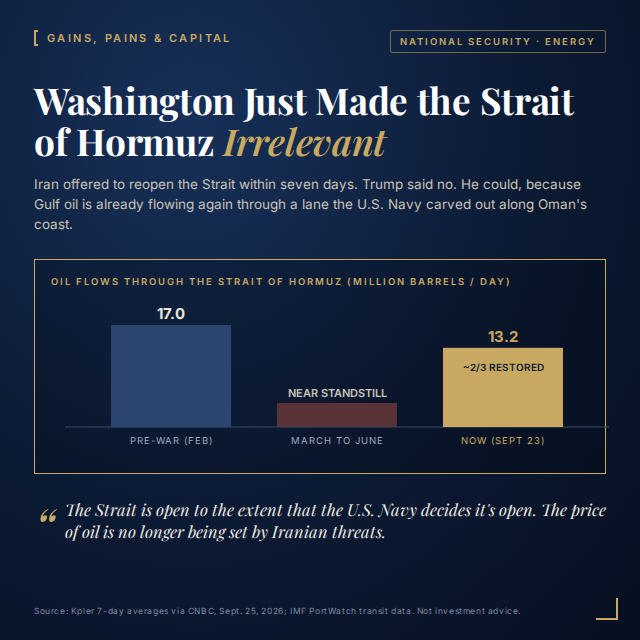
According to Kpler, oil flows through Hormuz have recovered to roughly two-thirds of prewar levels. Not because Iran stopped attacking tankers. It hasn’t. Flows recovered because the U.S. Navy carved out a protected shipping lane along Oman’s coast, and the Gulf producers moved their loadings into it. Saudi Arabia alone loaded seven supertankers from its Gulf terminals in a single weekend. Saudi crude exports in September are up nearly 80% over August.
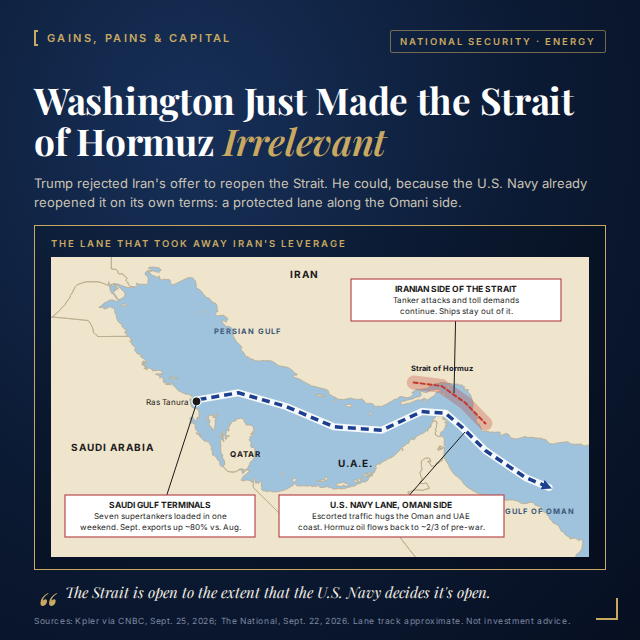
Flows recovered because the U.S. Navy carved out a protected shipping lane along Oman’s coast, and the Gulf producers moved their loadings into it. Saudi Arabia alone loaded seven supertankers from its Gulf terminals in a single weekend. Saudi crude exports in September are up nearly 80% over August.
At the same time, the Saudis restarted the East-West pipeline to the Red Sea eleven days after a drone strike shut it down. It’s running at reduced volume for now, but it’s running.
Put simply, the U.S. and its Gulf partners spent the summer building a workaround to Iran’s chokepoint. And it’s working well enough that Washington can now reject a reopening deal without the oil market falling apart.
Now for the piece that matters for your portfolio.
When a reporter asked Trump whether he would strike Iran after the midterms, he didn’t dismiss the question. He said he was rejecting their deal because Iran is losing so badly it wants the Strait open immediately.
That’s the President telling you the timetable. The pressure campaign continues, the workaround keeps Gulf oil flowing, and the next major escalation decision is scheduled for after November 3.
Here is what that means.
First, oil is likely to stay elevated but capped. The Navy lane and the Saudi pipeline put a ceiling on how bad supply can get. Iran’s ability to spike prices has been degraded. Brent above $100 with two-thirds of flows restored is a risk premium, not a shortage.
Second, energy infrastructure that bypasses chokepoints is now a strategic asset class. Pipelines that avoid Hormuz, LNG export terminals on the U.S. Gulf Coast, Red Sea and Mediterranean loading capacity. Every one of these just proved its worth in real time, and governments are going to fund more of them.
Third, the midterms are now a hard date on the geopolitical calendar. The window between now and early November is the window in which the market prices a contained conflict. What happens after is a separate question, and one worth being positioned for before it arrives.
This is the “two maps” I keep coming back to. Iran is fighting on a map of chokepoints. Washington is fighting on a map of alternatives, and it’s winning.
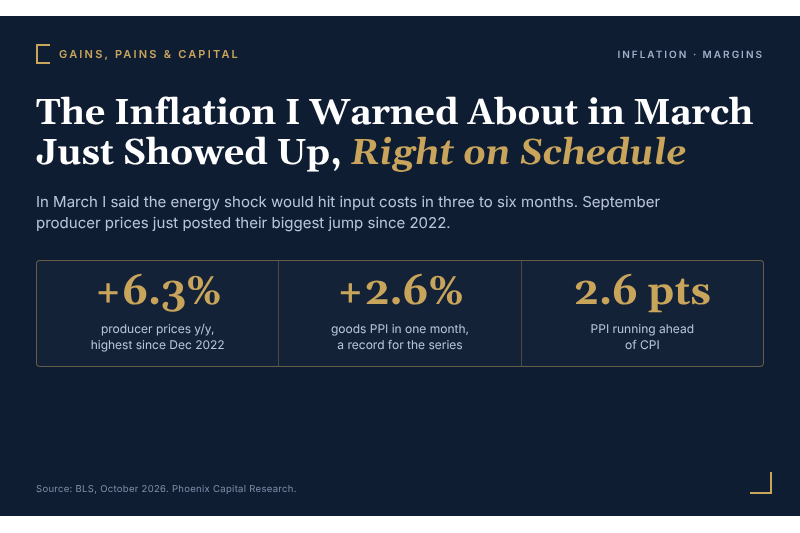
This is the kind of shift that separates investors who make money from the ones who get blindsided. The Fed can’t fix a wartime economy with rate hikes, the Gulf is being rerouted by the U.S. Navy, and inflation is going to stay with us far longer than Wall Street’s models suggest.

Comments
Log in or sign up to join the conversation.