

The following graph compares average tariff levels across countries.
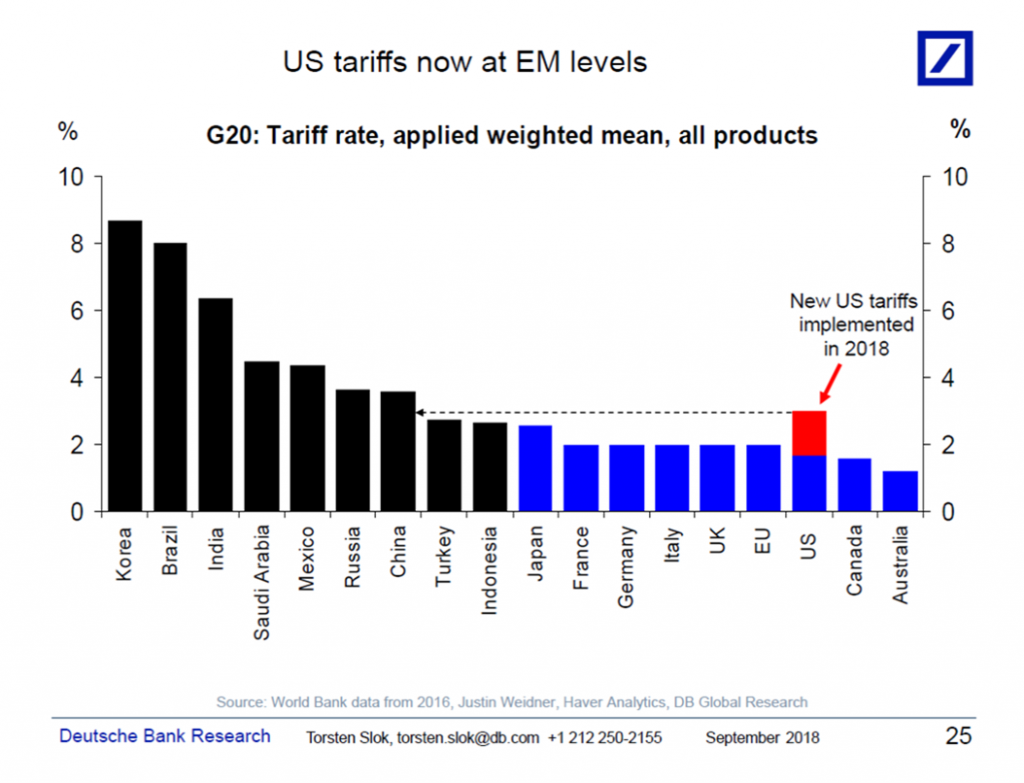
One can take comfort from the fact US tariff rates are historically low.
I have two observations:
- We live in an era of global value chains so that the value added has been chopped up and split across nations. In this context, a tariff of 10% on final value is a lot more than 10% on value added.
- This shock to global value chains comes on the back of an already stretched logistics network.
The latter point is highlighted by the following graph:
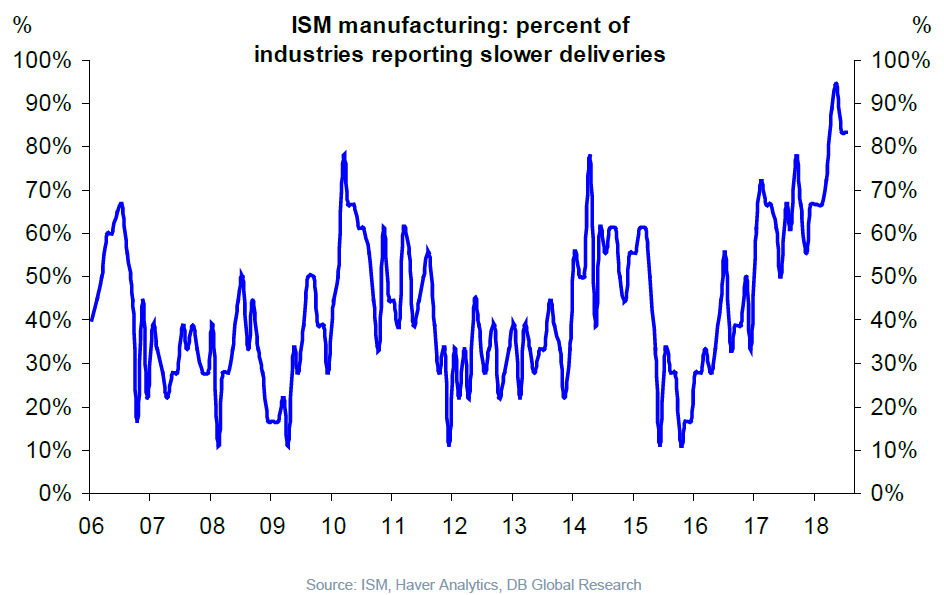
The latter is perhaps a temporary phenomenon, likely to end when the economy goes into recession. However, the former is likely more persistent.
Global value chains have been built up over decades; rejiggering these chains to accommodate tariffs of indefinite duration is sure to be disruptive, possibly inflationary (although that depends on monetary policy).


Comments
Log in or sign up to join the conversation.