


US Treasury yields climb as energy prices remain high, amid US President Donald Trump's rejection of a peace agreement with Tehran. Also, investors pricing in further tightening by the Federal Reserve to tackle high inflation above the central bank’s 2% goal is another reason for investors demanding a higher premium on US debt.
Energy risks and Fed tightening bets keep pressure on US debt
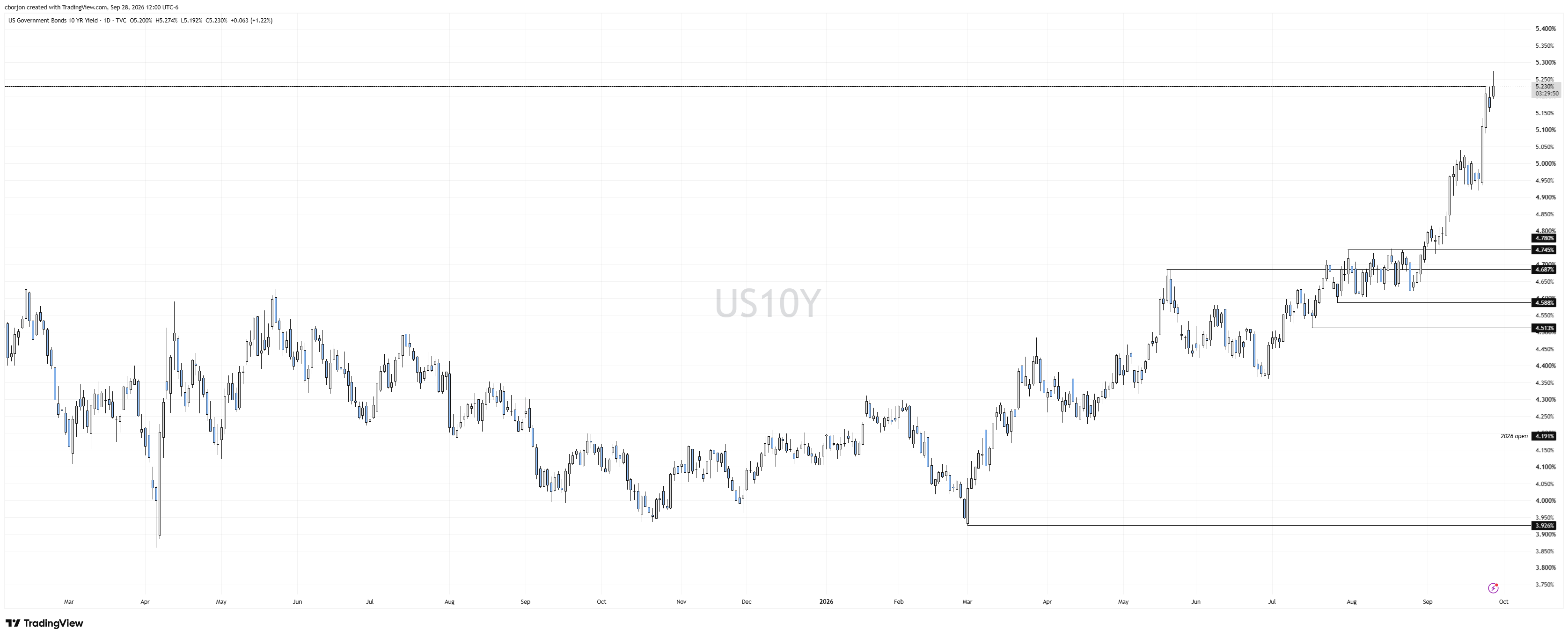
The US 10-year Treasury note yield rose to its highest level since June 2007 at 5.274%, before trimming some of its gains to 5.247%, up over eight basis points.
In the meantime, contradictory US-Iran news headlines keep the financial markets volatile. News that Iran agreed to halt its uranium enrichment program, reported by Al Hadath, was followed by Al Arabiya reporting that the chances of an agreement between the two countries are extremely slim, according to a US source involved in negotiations with Tehran.
Fed speaking is keeping US Treasury yields higher as well. Governor Lisa Cook was hawkish, expecting continued inflationary pressures in the coming months from AI and hostilities in the Middle East.
Consequently, traders still see a 65% chance of a 25-basis-point rate hike by the Federal Reserve at the October meeting. Although it seems like a coin flip, the December meeting is almost certain, with odds of 94%, according to Prime Terminal data.
Meanwhile, the US 30-year bond yield is up almost 7 basis points to 5.559%.
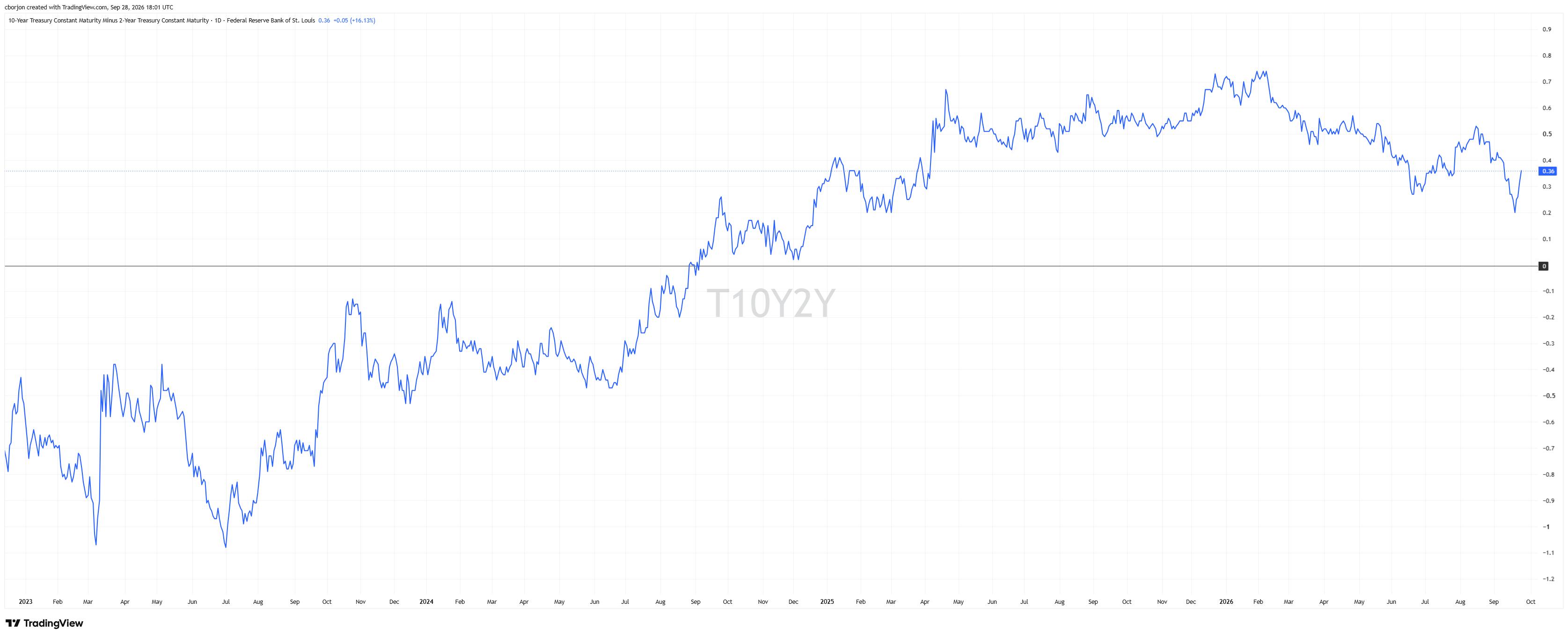
Worth noting that the yield differential between the US 10-year and the US 2-year narrowed to as low as 17 basis points, an indication that a possible yield curve inversion looms, as it flattens on expectations of further tightening.
Ahead, the US economic docket will feature GDP data, the Fed’s preferred inflation gauge, the Core Personal Consumption Expenditures (PCE) Price Index and September’s US Nonfarm Payrolls on Friday.
US 10-year Treasury yield



Comments
Log in or sign up to join the conversation.