Who benefits when cattle prices rise?A rancher sells cattle. A beef processor buys cattle and turns them into meat and other saleable products. A higher cattle price can help the rancher while squeezing the processor.
|
Tyson needs the money it receives from those products to cover the animal's purchase price, labor, transport and the cost of running its plants. Expensive beef at the grocery store tells us little about what Tyson keeps after paying those bills.
|
Scarce cattle create another problem: underused plants. Some costs remain even when fewer animals move through a facility. Spread those costs across less production, and each unit becomes more expensive to produce.
|
Moving work into fewer, better used plants can help. The important part is removing costs, rather than simply shutting a building. Even an unprofitable plant may generate sales that help pay bills Tyson would still owe after closing it. The savings must outweigh any lost contribution and the expense of moving the work.
|
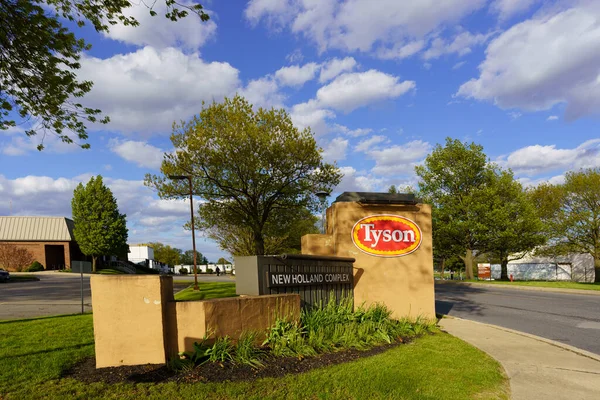
Closing plants while restoring a shiftThe restructuring plan predates the earnings announcement. In its August 13 plan, Tyson announced it would end operations at its Joslin, Illinois, beef facility and its Eagle Mountain, Utah, meat packaging facility, and pursue a sale of its Pasco, Washington, beef facility. The plan centered the beef network on Dakota City, Nebraska; Holcomb, Kansas; and Amarillo, Texas.
|
Tyson also planned to move capacity into other facilities. On November 9, it announced plans for an Allied Beef partnership and said it had begun restoring selected second shift operations at Amarillo. It targeted full second shift operation by summer 2027.
|
Closing plants while restoring a shift elsewhere can make sense if the remaining locations can do the work more efficiently. The intended partnership could support cattle availability at Amarillo, although the announcement does not establish the commercial terms or guarantee that the arrangement will be profitable.
|
Changing the plant network does not create more cattle. Breeding and raising cattle take time, and weather and feed availability affect those decisions. Keeping more female animals for breeding can also mean fewer animals available for near term slaughter before future supply expands. Tyson's plan therefore needs to work while cattle remain scarce.
|
Follow the profit across the businessesBeef recorded an adjusted operating loss of $654 million in fiscal 2026. Management's fiscal 2027 forecast ranges from a $300 million loss to a $100 million profit on the same adjusted measure. Every point in that range would represent an improvement, but part of the range still leaves Beef losing money.
|
The word adjusted matters. Tyson's reported Beef operating loss was larger, at $1.215 billion. Its adjustments include restructuring and legal charges, along with the effect of an extra reporting week. Adjusted figures help compare operations, but excluding charges from that comparison does not erase them from the company's reported results.
|
Chicken is a major source of profit. It generated $1.859 billion in adjusted operating income in fiscal 2026, while management expects $1.3 billion to $1.6 billion in fiscal 2027. That decline could offset some of the improvement in Beef.
|
Prepared Foods, which adds processing, convenience and brands to raw protein, has a different set of drivers. Consumer demand, product mix and input costs matter alongside factory efficiency. Its adjusted operating income forecast of $1.25 billion to $1.4 billion allows either a decline or an increase from fiscal 2026's $1.332 billion.
|
For the whole company, Tyson forecasts adjusted operating income of $1.7 billion to $2.15 billion, compared with $1.977 billion in fiscal 2026. Better Beef results could therefore accompany lower total company operating earnings.
|
Operating income measures profit from operations before interest and income taxes. Tyson's segment figures also exclude corporate expenses and amortization, so adding the segment results together would not give you company operating profit. All dollar figures here are US dollars.
|
The extra week is already accounted forFiscal 2026 had 53 weeks rather than the usual 52. An extra week gives a business more time to sell products, which can make a growth comparison look stronger.
|
Tyson's fiscal 2027 sales forecast already compares against fiscal 2026 adjusted to 52 weeks. The expected 3.5% to 5.5% decline therefore reflects more than simply losing a week. The fiscal 2026 adjusted annual earnings figures above also use Tyson's 52 week presentation.
|
What would show the plan is working?Smaller Beef losses would be encouraging. Stronger evidence would be smaller losses supported by lower operating costs and fuller use of the retained plants. Amarillo's progress will help show whether Tyson is matching production capacity with available cattle.
|
A better relationship between the price Tyson pays for cattle and the money it receives from beef products could also improve earnings. That alone would tell us less about whether the plant changes are delivering savings. Losses that fail to narrow as expected or expensive transitions would weaken the case for the restructuring, while lower Chicken earnings could limit the benefit to the whole company.
|
Selling less is not the achievement. Running a more efficient, more profitable beef network would be. Tyson has a plausible route to that outcome; the next results need to show how much of the improvement reaches overall operating earnings. |
|





Comments
Log in or sign up to join the conversation.