

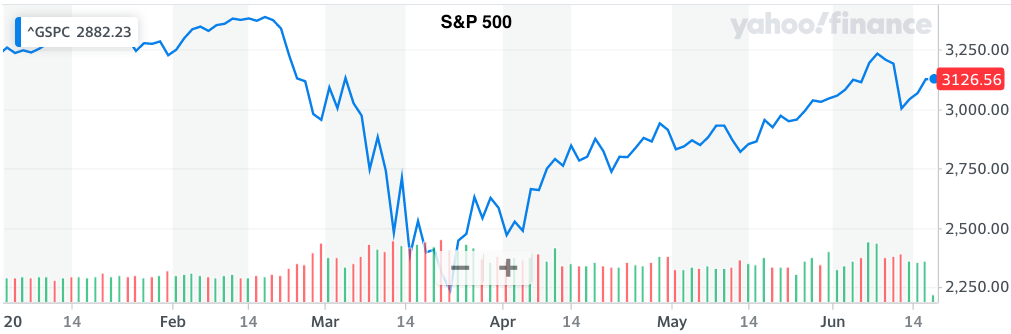
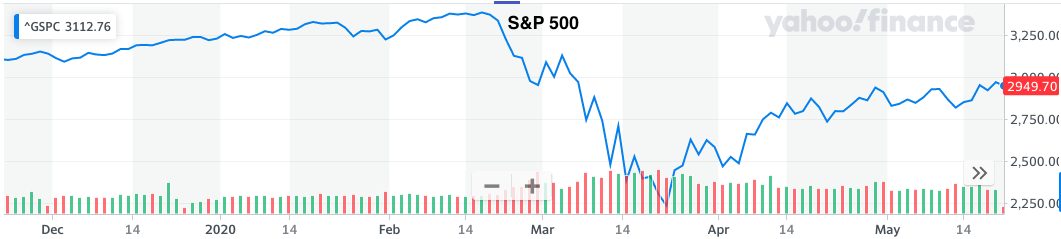
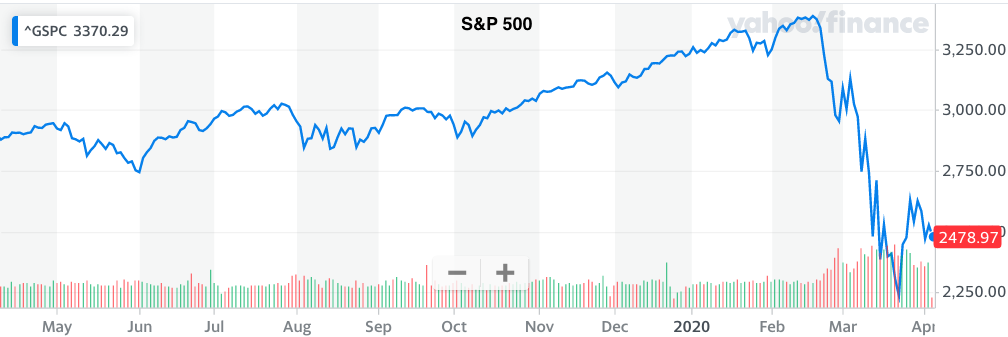
The stunning rally in the stock market off the March 23rd low has perplexed several professional investors. Unprecedented levels of monetary and fiscal stimulus, moving closer to discovering a vaccine/drug against COVID-19, and the reopening of the economy have all helped propel stock prices higher. Not even the resurgence of coronavirus cases in some States seems to be able to meaningfully stop this market from marching higher. It is no secret that retail investors have played a significant role in driving asset prices higher in these past few months. The signs that this is a dangerous bubble are everywhere, and yet even some of Wall Street’s greatest market experts are convinced that this market can continue to climb higher, advising people to buy any dips along the way. While that could potentially work for a finite amount of time, in essence, market participants are really playing a game of ‘hot potato’ as the bubble gets closer to bursting.
Valuations
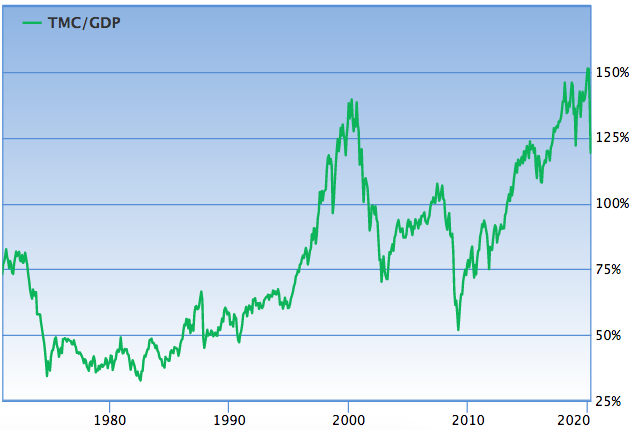
The total stock market capitalization to GDP ratio currently stands at 148% (1.48), at levels last seen at the peak of the dotcom bubble. That too at a time when future GDP growth rates have become increasingly uncertain given the risk of potential future waves, and more enduringly the transformative impact this pandemic will have on how certain sectors/industries operate, and their respective productivity levels.
The S&P 500 is trading at a forward PE multiple of 24.15x, the Nasdaq 100 index at 29.02x, and the Russell 2000 at 71.94x. Market participants seem to have become overly optimistic about future earnings given the multiples they are willing to pay for them. That’s assuming of course that those participants that are buying stocks are taking such metrics into consideration. Many traders/ investors, particularly the nascent retail “investor” herd, seem to be under the impression that as long as the Federal Reserve is engaging in record stimulus, stock prices will continue climbing higher. While that has been true so far, persistent negligence of valuation metrics, the likes of which was experienced during the dotcom bubble, have turned this market into a casino, and will undoubtedly end in severe wealth destruction.
The Fed can not resolve all predicaments
Some may argue that this time is different due to the unprecedented levels of Fed stimulus. However, no matter how much liquidity the Fed pumps into the market, an overvalued asset is an overvalued asset. The higher these prices go, the greater the erosion of future expected returns from these assets. At some point (if not already so for several speculative securities), the absence of future returns potential will make these assets meaningless to buy.
With an increasing number of “investors” neglecting fundamentals and buying assets simply because the Fed is pumping record levels of liquidity into the market, we are inevitably creating a stock market bubble. And when these bubbles burst, many complacent investors will get a rude awakening that the Fed can not save the market from all plights. Over the past decade following the financial crisis, the investment concept of “Don’t fight the Fed” served investors well. As a result, today many market participants, particularly inexperienced day-traders, misleadingly believe this mantra will serve them well going forward amid unprecedented stimulus from the Fed. But what they are not acknowledging is that something that has worked in the past will not necessarily work in the future. One must remember that economies and financial markets witness paradigm shifts roughly around every decade, and the biggest mistake naïve investors tend to make around these times of paradigm shifts is doing what worked since the last paradigm shift (in our case the global financial crisis). The paradigm shift that we are currently witnessing will awaken investors to the fact that the Fed can not save the market from every adversity.
Yes, the recent rally off the March 23rd low in the stock market certainly makes it harder to dismiss the “Don’t fight the Fed” mantra, as people that bought following the stimulus announcements by the Fed in March have done well so far. But unfortunately, it is this herd mentality and behavior that is forming the perfect recipe for the peak to form in the stock market. The formations of bubbles (and their peaks) in the past have been confirmed by the influx of retail investors into the market, and this time is no different.
Bottom Line
Buying the dip could potentially be profitable in the short-term, but will prove to be a costly strategy once the peak of the bubble is in the rear-view mirror, at which point it may be too late to avoid significant losses, particularly for inexperienced day traders. Long-term investors should book any profits to be made, and wait patiently on the sidelines until the market insanity phase has passed and asset prices trade at more acceptable prices again.
Comments
Log in or sign up to join the conversation.