


It’s not always clear what triggers an abrupt change in investors’ mindsets, and this morning is no exception. Late yesterday afternoon, with futures holding onto the day’s gains after some well-received high-profile earnings, I logged out and headed to dinner with a group of friends. When I woke up early this morning, both equity index futures and bond yields were sharply lower. It was clear that global investors were aggressively de-risking their portfolios.
The nature of the movement is evident in a chart of overnight trading in ES (E-mini S&P 500 (SPX)) and ZN (10-Year US Treasury Notes) December futures. They diverged steadily, with ES declining and ZN rising as the session progressed. (Remember, higher bond and note prices reflect lower yields.) By 10AM ET, we saw SPX down by more than 1% while yields were generally 10 basis points lower across the curve. Nonetheless, the ugly overnight session did not deter traders from buying the dip when US stocks opened. Note the failed bounce (highlighted with an arrow) on the chart below.
2-Days, December Futures, ES (candles), ZN (blue line), with arrow at US stock market open
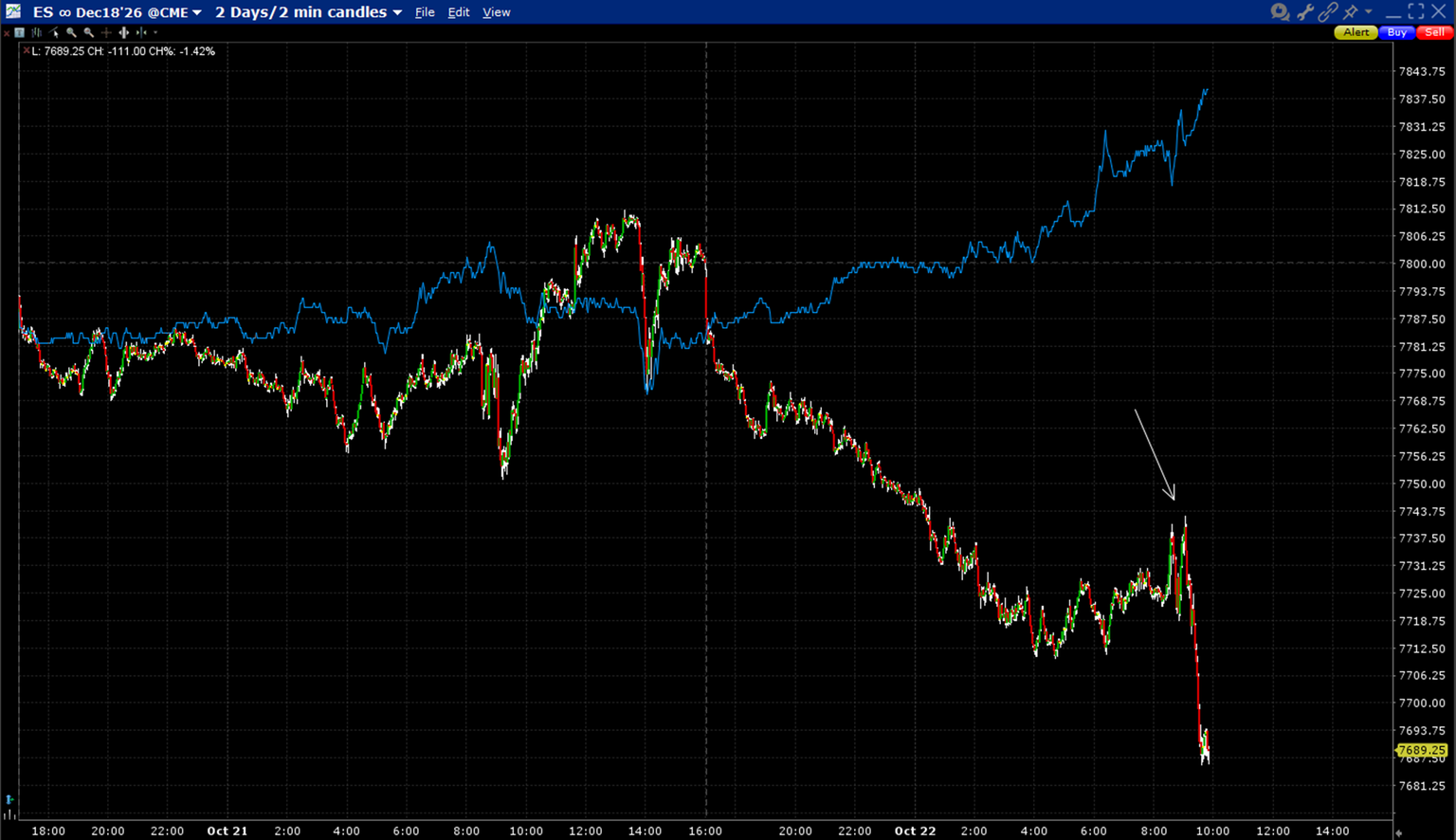
On days like today it’s valuable to consider what made the market mood change so abruptly. Some of the blame can be placed on concerns about a resumption of hostilities in the Persian Gulf. The chart above shows drops in both stocks and bonds around 2PM ET yesterday. At that time, there were reports about the US moving diplomatic personnel out of the region, though both recovered somewhat when the reporting was amended to say that only embassies and consulates in Saudi Arabia would be affected. A 2% rise in Brent futures, however, tells us that oil traders remain on edge about supplies.
That is another reason why the move in bonds is so notable. Bond yields have tended to correlate with oil futures on an intraday basis since April. It is more typical to see bond yields rise alongside oil futures, and vice versa. Today we see the opposite, with bond yields falling sharply even as oil futures gain. It tells us that money is flowing into the bond market in spite of, not because of, changing perceptions about conditions in oil-producing regions.
It is also important to note that this is not a “get me out” day for equity investors overall. By late morning, 5 of the 11 SPX sectors were trading higher. All of them are either classic defensive plays (consumer staples, healthcare) or interest rate sensitive (financials, utilities, real estate). For that matter, the disparate Dow Jones Industrial Average (INDU) and Russell 2000 (RTY) are both down only marginally – the former because of its relatively heavy weighting in the first two sectors noted above, and the latter because of the interest rate sensitivity of smaller companies with relatively heavy borrowing needs – while NYSE advances and declines are roughly equal.
The problem for investors who own index funds or are overweight technology-related shares stems from the tech sector’s heavy weight in key market-capitalization-weighted indexes. If the megacap tech shares that make up about 40% of SPX are generally lower – in some cases, quite sharply – then the index will succumb. In the spirit of the facts noted above, there are 150 more stocks rising in SPX than declining this morning. Unfortunately, it’s not a matter of “how many” but instead about “which ones.”
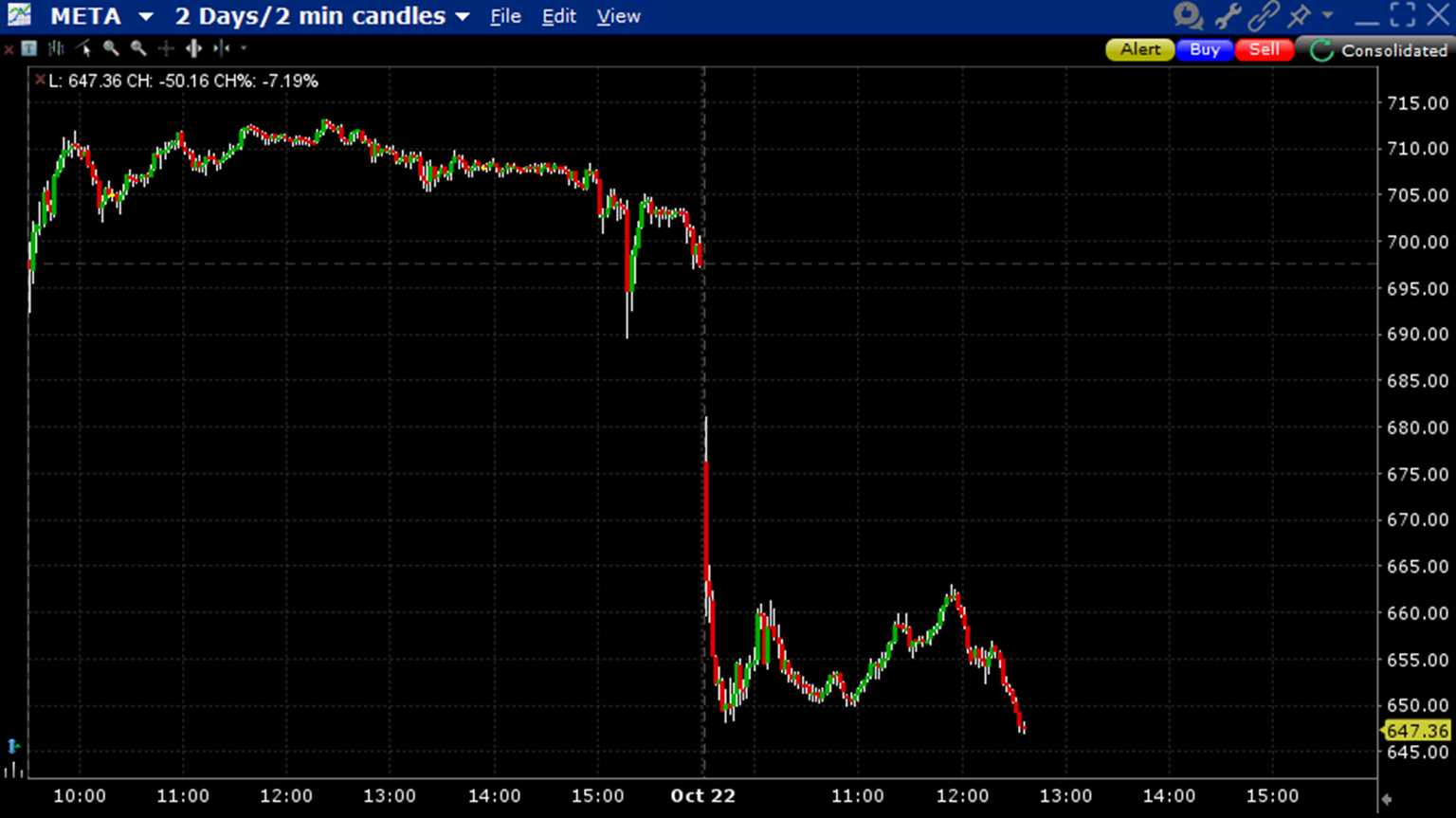
One of the “which ones” is Meta Platforms (META). That the stock is down about 6% after yesterday afternoon’s earnings report is notable, but its roughly 15% range since that report is the more stunning feature. Traders originally liked the company’s EPS beat and solid guidance, but they then chose to focus on META’s negative free cash flow and the fact that it raised the floor on full-year capital expenditures. Many also perceived META’s 1:1 distribution of new non-voting C shares less as a stock split (which it effectively is) and more as a backdoor route to issuing more stock. Investors have begun to question whether all the copious AI-related spending will pay off as handsomely as once hoped. That was at the root of the concerns about CoreWeave’s (CRWV) creditworthiness last week and has permeated the nervousness underlying semiconductor stocks recently.
Today hardly signifies the end of the tech trade. But it seems to be pointing to a changing mindset about some of the assumptions underlying it. We’ll have a clearer sense of that next week after other key tech stocks like Microsoft (MSFT), Alphabet (GOOG, GOOGL), and Amazon (AMZN) tell us about demand for cloud computing and other pieces of the AI buildout. For now, investors are choosing to switch the focus of their investments rather than stuffing cash in their mattresses or paying enormously for volatility protection even if the intraday swings have accelerated quite a bit.
META, 2-Days, 2-Minute Candles



Comments
Log in or sign up to join the conversation.